
How To Finish Shiplap Edges
Finishing shiplap edges is the part that makes the difference between “DIY weekend project” and wow… that looks like a pro did it
The good news? You don’t need fancy tools or complicated trim work. You just need to pick the right finish for where your shiplap ends — outside corner, inside corner, ceiling line, window/door, or a random open edge
In this guide, I’ll walk you through the easiest ways to finish shiplap edges, when to use each one, and exactly how to do it

This post may contain affiliate links, which means I’ll receive a commission if you purchase through my links, at no extra cost to you. Please read full disclosure for more information.
Quick answer: What’s the easiest way to finish shiplap edges?
Most of the time, the easiest (and cleanest) option is:
- Outside corners: use outside corner trim (simple, forgiving, looks finished)
- Ends that stop on a wall: use a small trim board or L-trim
- Around windows/doors: use trim casing (like you would around any window)
- Tiny gaps: paintable caulk + paint
If you want the “no trim” look, the easiest beginner-friendly method is the return edge (I’ll show you exactly how)
Tools + materials you’ll need (simple list)
You probably already have most of this
Tools
- Tape measure
- Pencil
- Level (or a straight edge)
- Miter saw or hand saw (miter saw is easiest)
- Nail gun (or finish nails + hammer)
- Caulk gun
- Sanding block
Materials
- Trim boards (depends on method)
- Wood filler
- Paintable caulk
- Primer + paint (or paint + trim paint)
DIY tip: You don’t need expensive trim. Even a simple 1×2 or 1×3 can look amazing once it’s caulked + painted
Before you start: pick your “edge type”
This is the key. Find the situation that matches your wall:
- Outside corner (two walls meet and wrap outward)
- Inside corner (two walls meet inward)
- Open end (shiplap stops mid-wall or on one side)
- Window or door edge
- Top edge (where shiplap meets the ceiling)
- Bottom edge (where shiplap meets baseboards)
Now let’s go method by method
Method 1: Outside corner trim (best for beginners)
If you want the easiest option with the cleanest finish, this is it
Outside corner trim hides uneven cuts, covers tiny gaps, and makes corners look crisp
Best for: beginners, textured walls, older homes that aren’t perfectly square
Looks like: clean “finished wall” with a trim corner
Steps
- Install your shiplap up to the corner on both walls
- Measure the height of the corner from floor to ceiling
- Cut your outside corner trim to length
- Place the trim so it covers both edges evenly
- Nail it in place (hit studs if you can)
- Fill nail holes with wood filler
- Caulk the edges where trim meets shiplap
- Paint (or touch up)
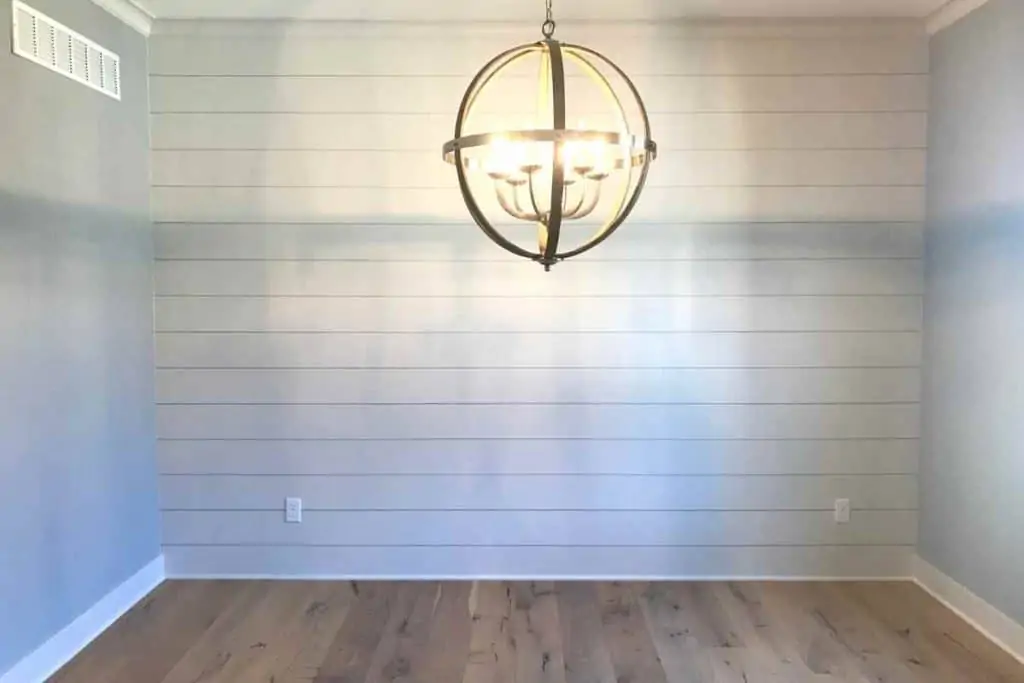
Pro tip: If your walls are a little wavy, use caulk to hide any tiny gaps — it makes it look seamless
Method 2: L-trim or edge trim (clean modern finish)
L-trim (sometimes called edge trim) gives a simple, modern finish without looking bulky
Best for: shiplap ends that stop on one side, modern style rooms
Looks like: clean edge with a small “frame” finish
Steps
- Measure the full length of the edge you need to cover
- Cut your L-trim to size
- Dry fit it first (make sure it covers the raw edge)
- Nail it in place
- Fill holes
- Caulk lightly (don’t overdo it)
- Paint

Pro tip: L-trim is great when you want a clean finish but don’t want a chunky corner piece
To make it even easier, have Home Depot or your local store cut the trim for you.
Method 3: Return edge (best “no trim” look for beginners)
If you love the seamless “no trim” look, a return edge is the easiest way to do it without needing perfect cuts
A return edge means you cut a small piece of shiplap that wraps the edge so you don’t see the raw end grain
Best for: feature walls, fireplace walls, shiplap that stops mid-wall
Looks like: finished edge that blends in
Steps
- Install your last full shiplap board like normal
- Measure the thickness of the shiplap + wall (you only need a small wrap piece)
- Cut a thin strip of shiplap to wrap the edge
- Cut a small piece for the front face if needed
- Attach with construction adhesive + a few nails
- Fill seams lightly with wood filler
- Sand smooth
- Prime + paint

Method 4: Finish shiplap edges where it meets drywall (simple trim board)
If your shiplap stops on one side and meets drywall (like a half wall, hallway, or accent wall), the easiest finish is a simple trim board like a 1×2 or 1×3
Best for: accent walls, one-wall shiplap, DIY feature walls
Looks like: framed-in edge (very intentional)
Steps
- Measure the height/length of the edge
- Choose a trim board width that looks balanced (1×2 is usually perfect)
- Cut to size
- Nail into studs if possible
- Fill nail holes
- Caulk both sides
- Paint
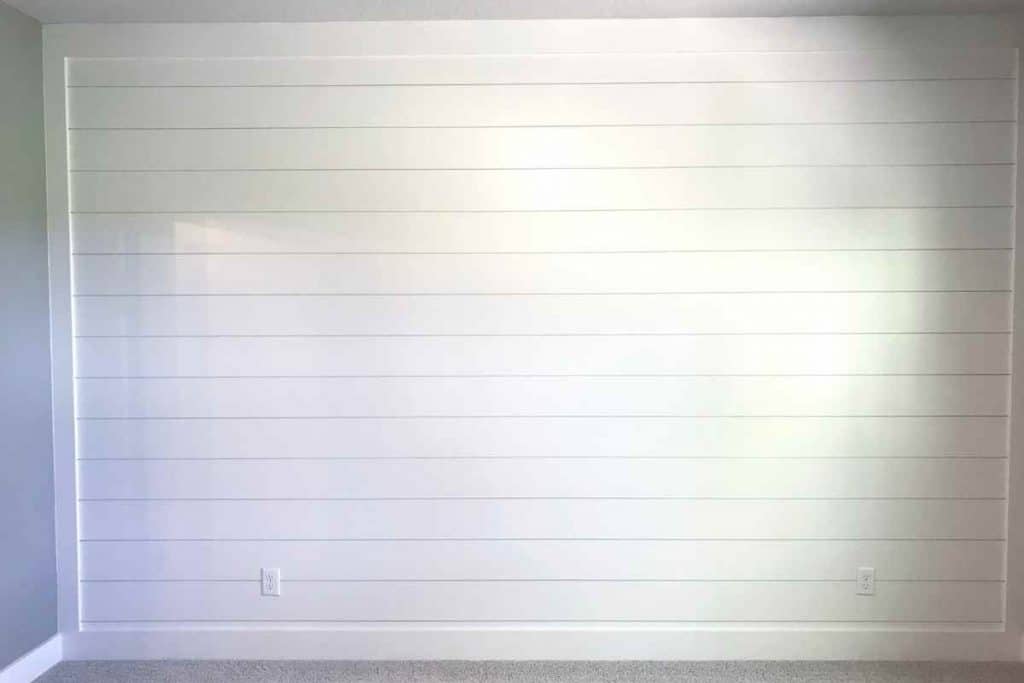
Pro tip: This is one of the most forgiving options — it hides uneven edges instantly
Method 5: Around windows and doors (keep it simple)
If you’re adding shiplap around a window or door, treat it like trim work — don’t overthink it
Best for: any shiplap wall with windows/doors
Looks like: standard clean casing trim around the opening
Steps
- Install shiplap up to the window/door edge
- Add casing trim around the window/door (top and sides)
- Add a sill if you want it to look extra finished
- Caulk seams
- Fill holes
- Paint

Beginner tip: If your cuts around the window aren’t perfect, casing trim covers it — that’s why it’s the easiest option
Related Articles
- Can You Install Shiplap Directly to Studs?
- Creating a Stunning Shiplap Fireplace Wall
- Shiplap Fireplace Ideas for Your Home
- Shiplap Guide: Everything You Need to know
Method 6: Where shiplap meets the ceiling (clean options)
You have two easy choices:
Option A: Leave it clean (modern look)
If your ceiling line is straight, you can finish the top with caulk + paint and call it done
Option B: Add crown molding (traditional look)
If you want a more classic look, crown molding gives a finished edge
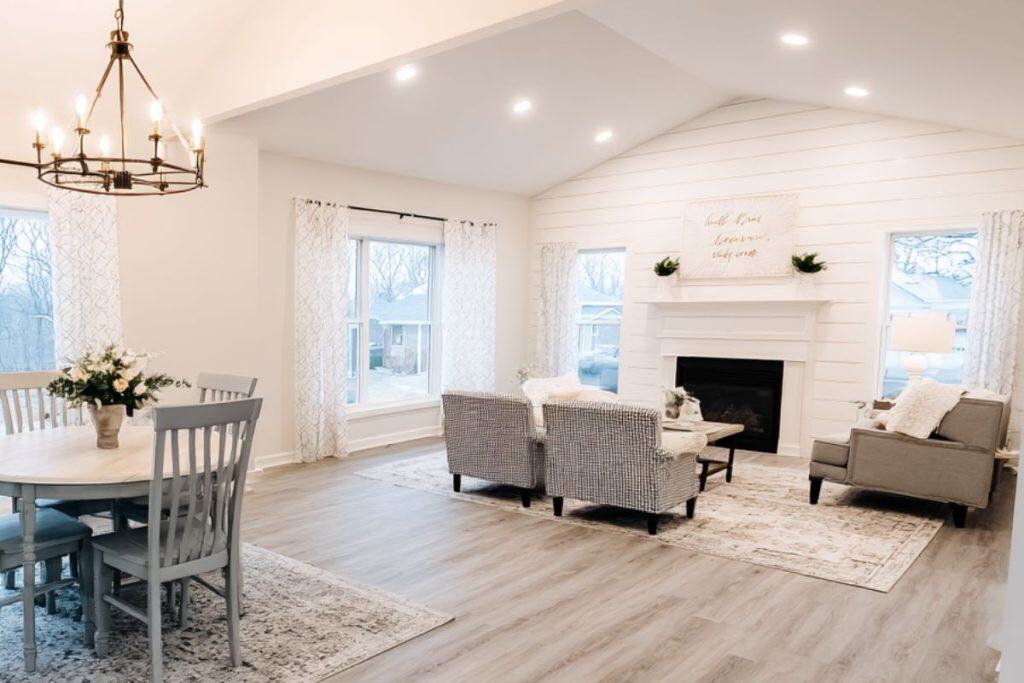
Pro tip: If the ceiling line is uneven, trim is usually easier than trying to caulk a wavy gap
Common shiplap edge problems (and easy fixes)
These are the things that trip up average DIYers — and how to fix them fast
“My corners have gaps”
- Use corner trim OR caulk and paintable filler
- Walls are rarely perfectly square — trim makes it forgiving
“My edge looks rough”
- Sand lightly
- Use wood filler on the end grain
- Prime before painting
“My caulk cracked”
- Use paintable caulk meant for trim (not the cheapest one)
- Don’t apply it too thick
“My seam is showing through paint”
- Do a second coat of paint
- Prime first (this matters more than people think)
Final thoughts
If you’re an average DIYer and you want the easiest, most professional-looking finish, here’s the cheat sheet again:
- Tiny gaps: caulk + paint
- Outside corners: outside corner trim
- Accent wall ends: simple trim board (1×2 or 1×3)
- No-trim look: return edge
- Windows/doors: casing trim
Love Shiplap? Explore These Popular Wall and Fireplace Ideas
Shiplap is one of the easiest ways to add character, texture, and farmhouse charm to a space. If you’re planning a project, these ideas will give you even more inspiration.