30 Wall Decor Ideas That Make Any Room Look Finished
Blank walls can make a room feel unfinished, even when the furniture and decor are beautiful.
The right wall decor adds personality, creates a focal point and helps everything in the room feel more connected. It can also solve common decorating problems, such as filling the space above a couch, balancing a large piece of furniture or making a small room feel brighter.
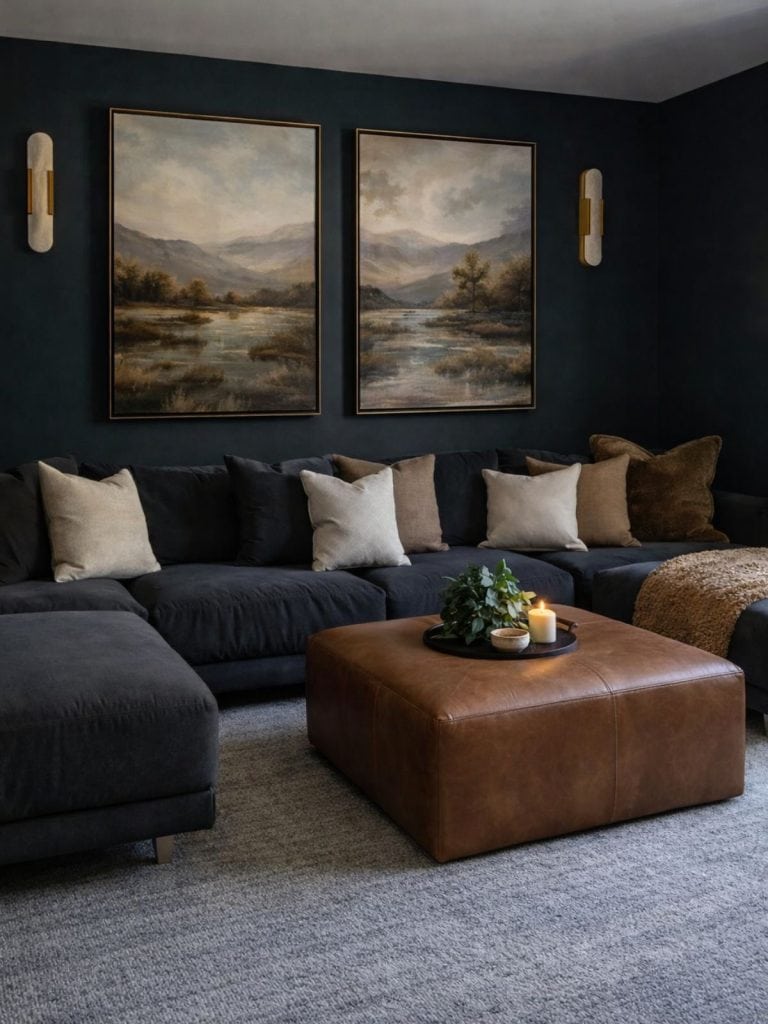
You do not need to cover every wall or spend a fortune on expensive artwork. One oversized print, a thoughtfully arranged gallery wall or a decorative mirror can completely change how a room feels.
The best option depends on the size of the wall, the furniture below it and the overall style of the room.
These wall decor ideas include inspiration for living rooms, bedrooms, dining rooms, entryways and other challenging spaces throughout the home. You will find simple artwork arrangements, architectural wall treatments and affordable ideas that make a home look polished and complete.
Wall Art and Gallery Wall Ideas
Artwork is one of the easiest ways to bring color, character and visual interest to a blank wall.
The most important thing to consider is scale. Wall art should feel substantial enough for the space and visually connected to any furniture placed beneath it.
1. Hang One Oversized Piece of Art
One large piece of artwork can make a room feel more polished than several small pieces scattered across the wall.
Oversized art creates a clear focal point while keeping the space from looking overly busy. It works especially well above a couch, bed, console table or dining room buffet.
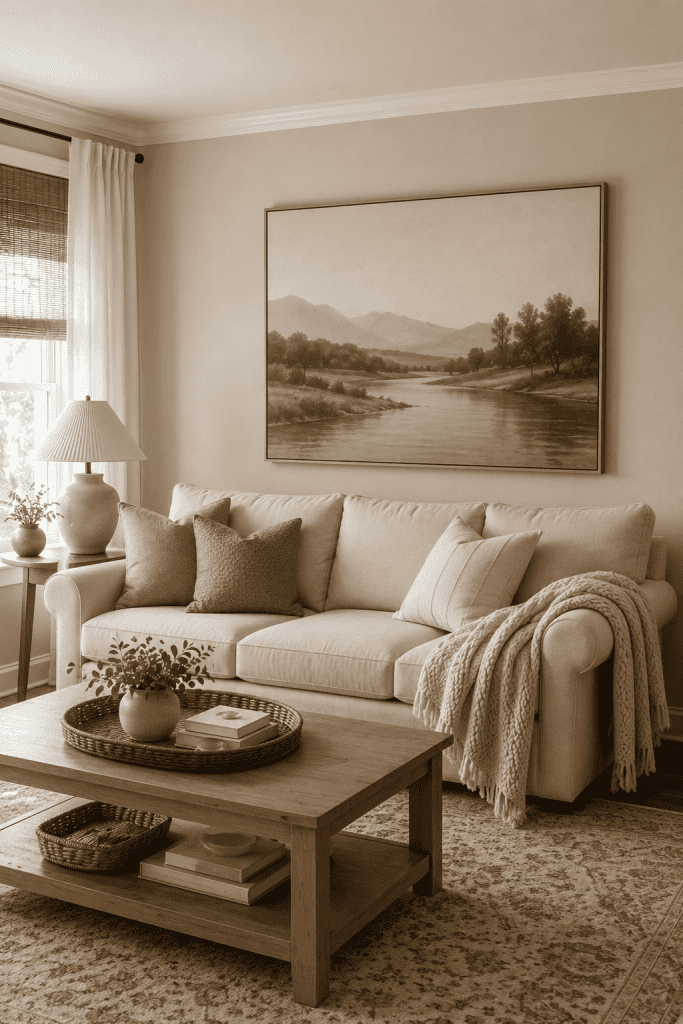
Choose artwork that is approximately two-thirds to three-quarters the width of the furniture below it. This helps the art and furniture feel like one connected arrangement.
Landscapes, abstract canvases and vintage-inspired prints are all versatile choices. You can also make your own statement piece with this easy textured canvas art project.
2. Create a Collected Gallery Wall
A gallery wall allows you to display artwork, photographs and meaningful pieces together in one arrangement.
The frames do not need to match perfectly. Mixing frame sizes and styles can make the display feel as though it was collected over time.
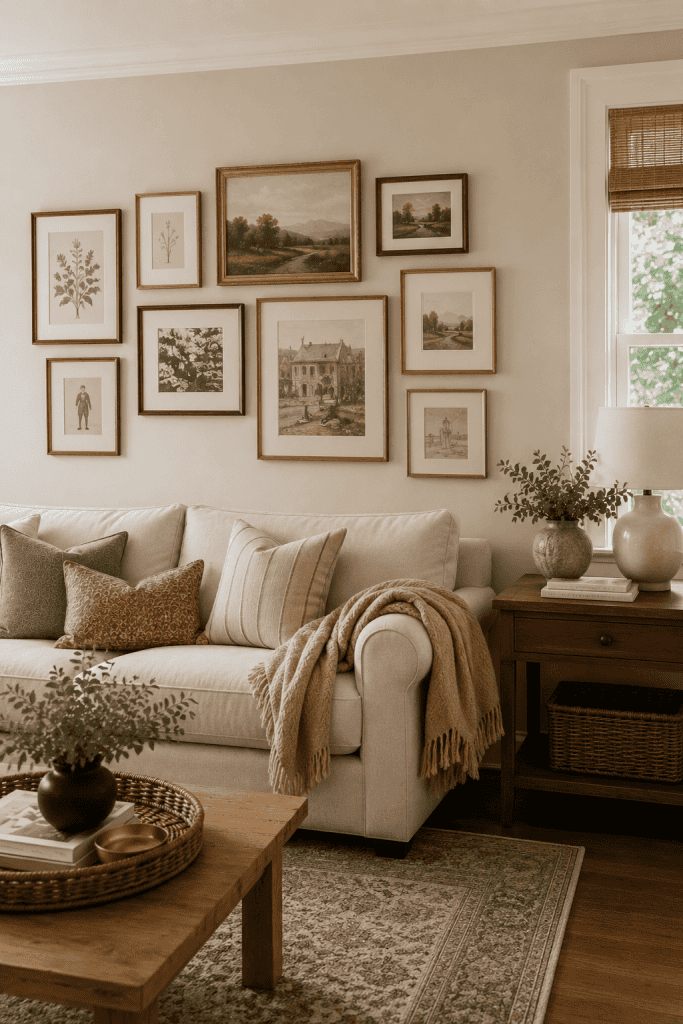
Start with the largest piece near the center and arrange smaller frames around it. Leave approximately two to three inches between each piece so the display feels connected.
Repeat at least one element throughout the arrangement, such as the frame color, artwork style or color palette.
These gallery wall ideas and styling tips will help you plan a balanced layout before making holes in the wall.
3. Display a Collection of Family Photos
Family photographs can become beautiful wall decor when they are displayed as one intentional collection.
For a timeless appearance, convert the photographs to black and white and place them in matching frames. This makes pictures taken at different times feel more cohesive.
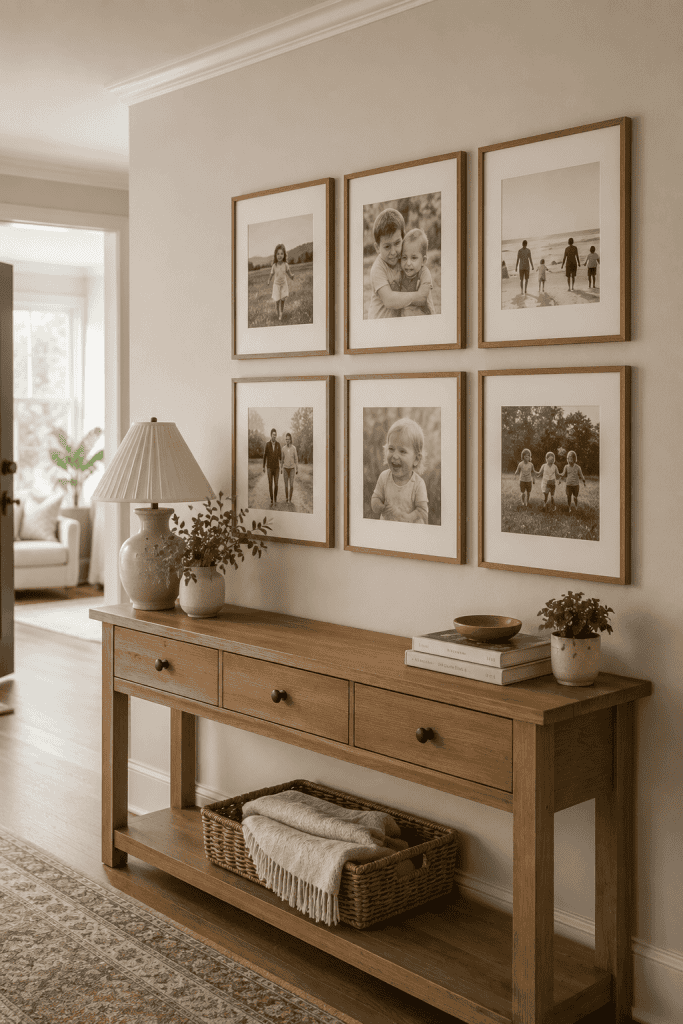
A clean grid works well in traditional and transitional homes. For a more relaxed look, combine frames in several sizes and arrange them like a gallery wall.
Include a mix of family portraits, candid moments, vacation photos and meaningful milestones.
Lay the frames on the floor before hanging them, or use paper templates to test the spacing directly on the wall.
4. Hang a Gallery Wall Above the Couch
The wall above a couch is often one of the largest blank spaces in a living room.
A gallery wall fills that space while bringing more personality into the room than one small piece of artwork.
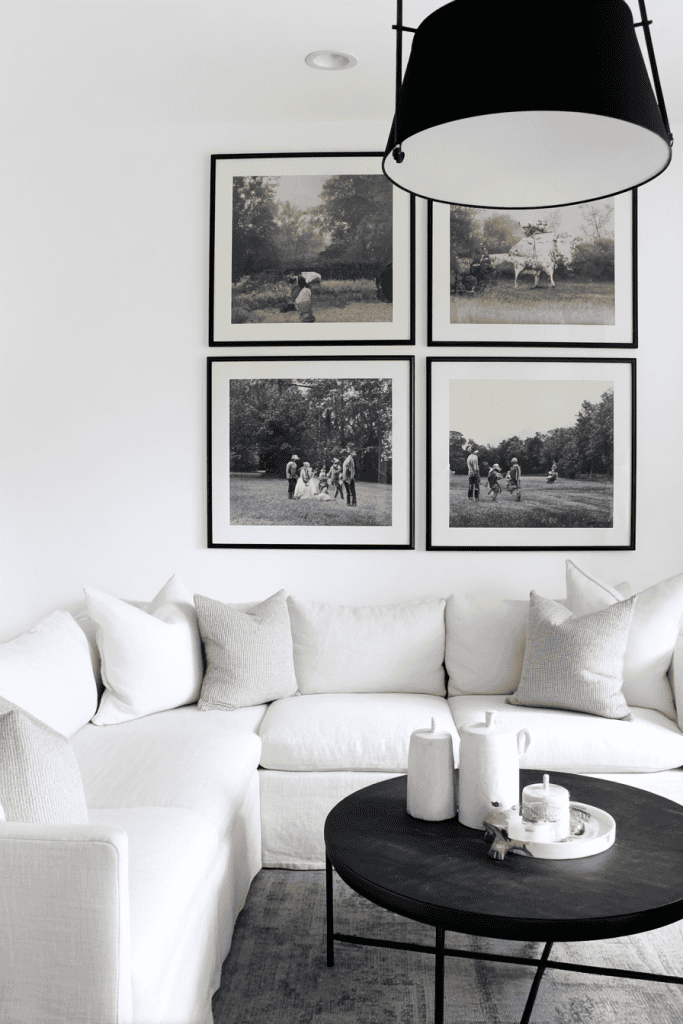
Keep the complete arrangement narrower than the couch. The lowest frames should usually hang approximately six to ten inches above the back of the sofa.
Matching frames create a clean, polished appearance. Mixed frames and artwork create a more relaxed and collected look.
These gallery wall above couch ideas include arrangements that work with different couch sizes and decorating styles.
5. Add a Picture Ledge
A picture ledge gives you the layered appearance of a gallery wall without requiring you to hang every frame individually.
Place the ledge above a couch, bed, desk or console table. Lean artwork against the wall and slightly overlap frames in different sizes.
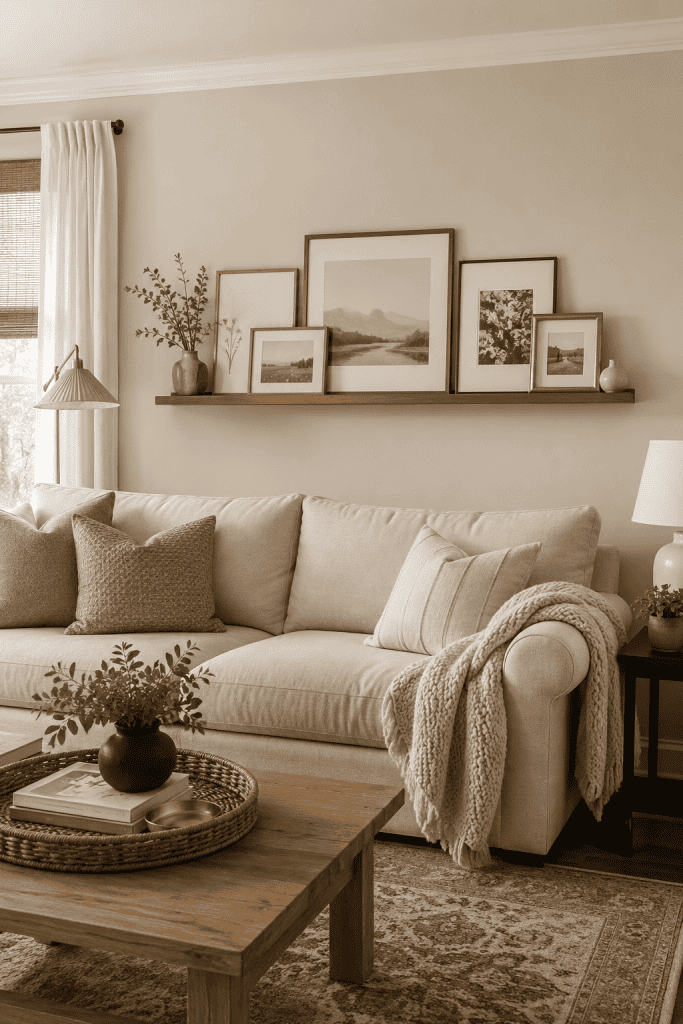
Start with the largest frame in the back. Add smaller artwork in front and include one or two decorative accents, such as a small vase or sculptural object.
Picture ledges are also easy to update. Artwork and photographs can be changed seasonally without measuring a new layout or making additional holes.
Avoid filling every inch of the ledge. A little open space will keep the arrangement from looking cluttered.
6. Use a Set of Coordinating Prints
A set of coordinating prints is an easy way to fill a wall while maintaining a clean and orderly appearance.
This works well for anyone who likes the look of grouped artwork but does not want to arrange a large gallery wall.
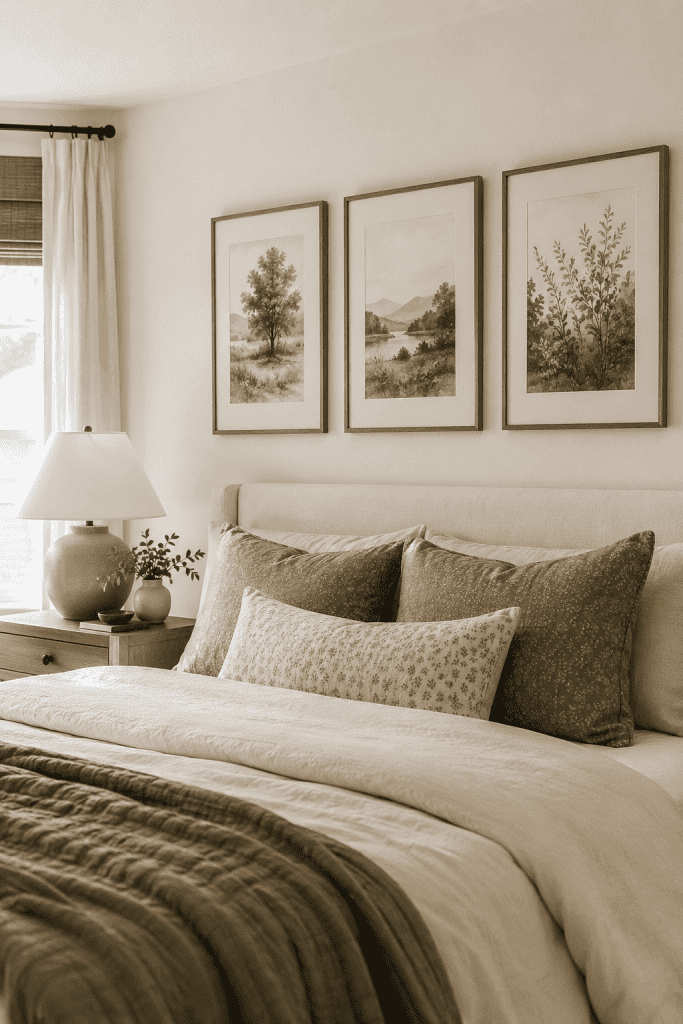
Try a set of two oversized landscapes, three botanical prints or four black-and-white photographs. Matching frames and mats will make the individual pieces look like one larger display.
Leave consistent spacing between the frames, usually around two to four inches.
Coordinating artwork works especially well above beds, couches, dining room buffets and long console tables.
7. Decorate With Vintage Artwork
Vintage artwork adds warmth and character to a room filled with newer furniture and finishes.
Traditional landscapes, floral paintings, portraits and still-life artwork are all beautiful choices. Thrift stores, estate sales and antique shops can be great places to find affordable pieces.
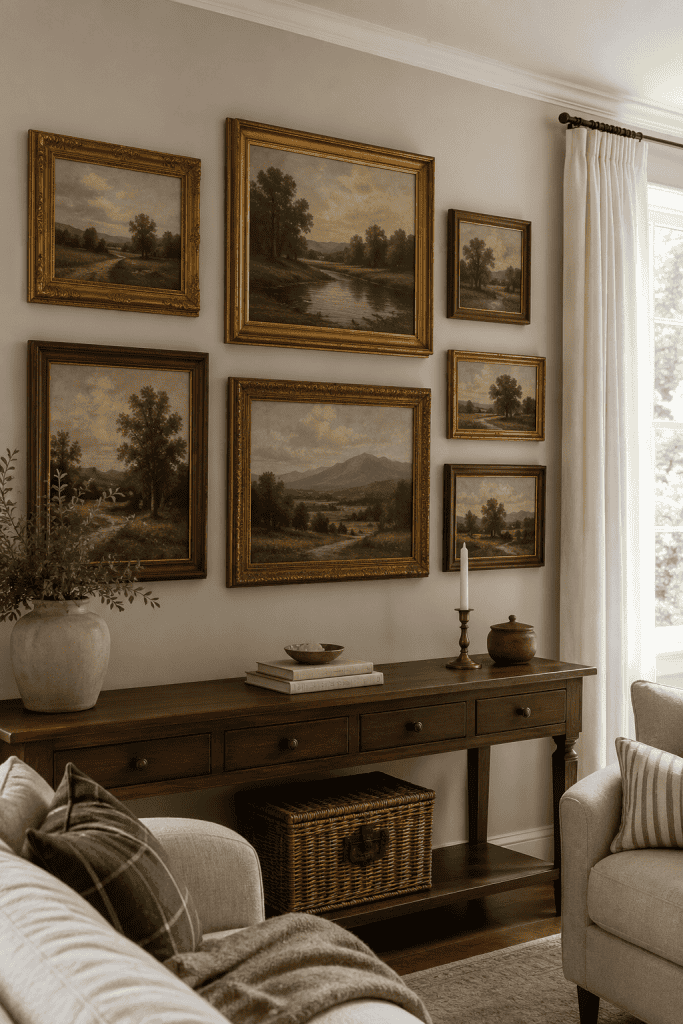
The frames do not need to match. Dark wood, antique gold and aged brass finishes can work together when the artwork shares a similar color palette.
Try leaning one small painting on a shelf, layering artwork in front of a mirror or combining several pieces in a gallery wall.
Vintage artwork is also an easy way to introduce deeper colors into a neutral room.
8. Create a Decorative Plate Wall
A collection of decorative plates can turn an ordinary wall into a unique focal point.
Plate walls work especially well in dining rooms, breakfast nooks and kitchens. The look can feel traditional, coastal or cottage-inspired depending on the colors and patterns you choose.
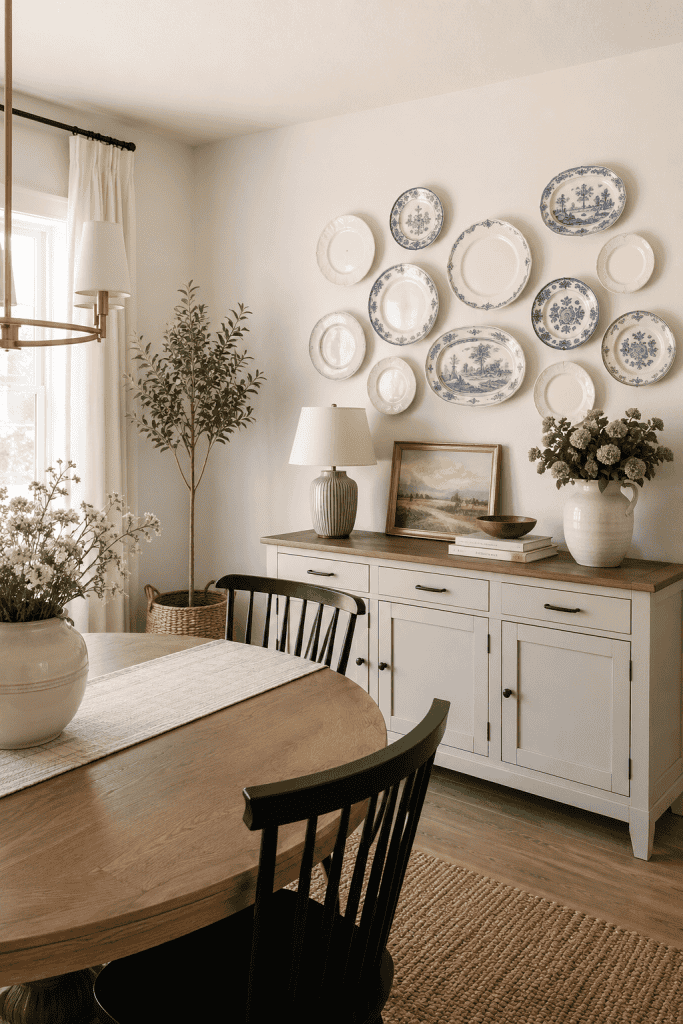
Choose plates from a similar color palette while varying their shapes, patterns and sizes. Begin with one or two larger plates and build the arrangement outward with smaller pieces.
Arrange the entire collection on the floor before hanging it. You can also trace the plates onto paper and tape the templates to the wall.
Use hangers or adhesive discs designed for plates and rated for the correct weight.
Mirror and Dimensional Wall Decor Ideas
Wall decor does not have to be flat or limited to framed artwork.
Mirrors, baskets, shelves and sculptural pieces add dimension to a room while making a blank wall feel more interesting. These options are especially useful when you want texture without introducing too many additional colors or patterns.
For more examples using everything from oversized statement pieces to grouped arrangements, explore these mirror wall decor ideas.
9. Make a Statement With an Oversized Mirror
An oversized mirror can fill a large blank wall while making the entire room feel brighter and more open.
This works especially well in an entryway, living room, bedroom or dining room. Arched mirrors add architectural interest, while round mirrors soften rooms filled with straight lines and rectangular furniture.
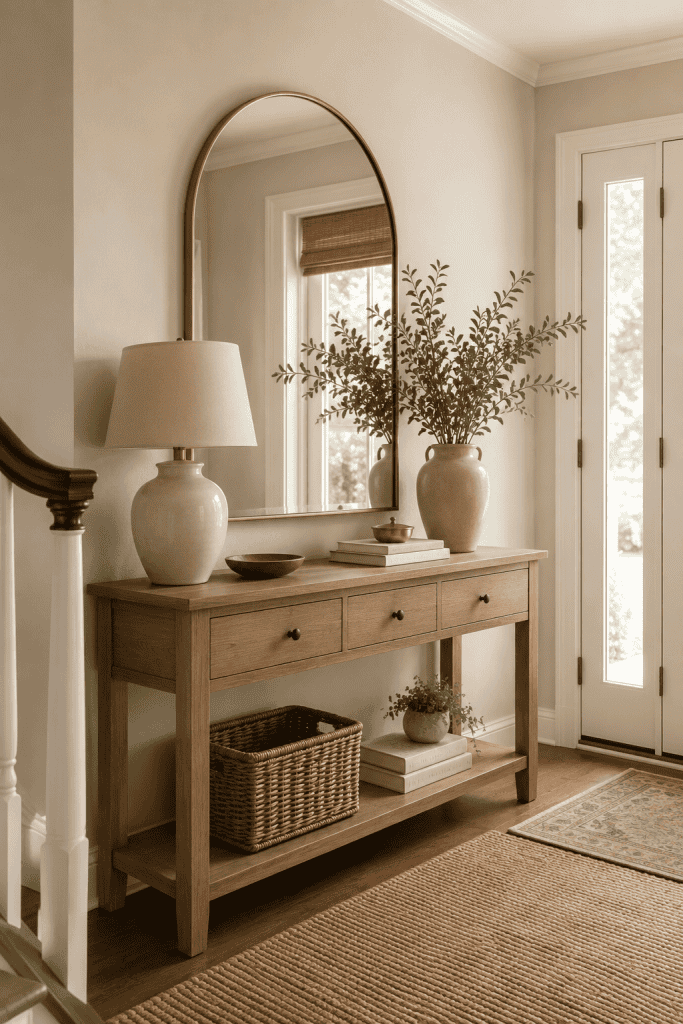
When placing a mirror above furniture, choose one that is approximately two-thirds to three-quarters the width of the piece below it.
You can also lean a tall mirror against the wall to create a more relaxed, layered look. Just be sure to secure it with an anti-tip kit.
Explore these oversized floor mirror ideas for more ways to use a large mirror as a focal point.
10. Create a Vintage Mirror Gallery Wall
A collection of smaller mirrors can create the same visual impact as a traditional gallery wall.
Mix oval, round, rectangular and arched mirrors for a collected-over-time appearance. Antique gold, aged brass and dark wood frames look especially beautiful together.
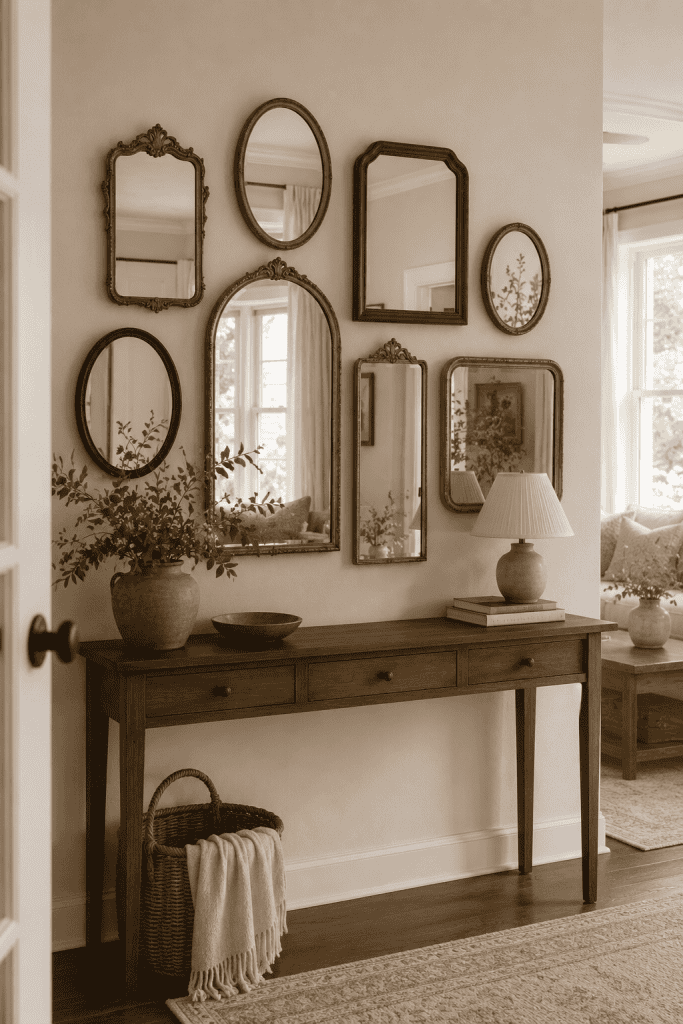
Begin with the largest mirror near the center and arrange the smaller pieces around it. Keep the spacing relatively consistent so the collection feels connected.
The frames do not need to match, but repeating one finish or style will keep the arrangement from looking random.
This idea works well in entryways, powder rooms, stairways and above narrow console tables. You can also review these tips on where to buy beautiful mirrors before starting your collection.
11. Decorate With Woven Wall Baskets
Woven baskets bring warmth and natural texture to a blank wall.
They work particularly well in neutral living rooms, dining rooms, bedrooms and entryways. The woven material adds visual interest without making the space feel too colorful or busy.
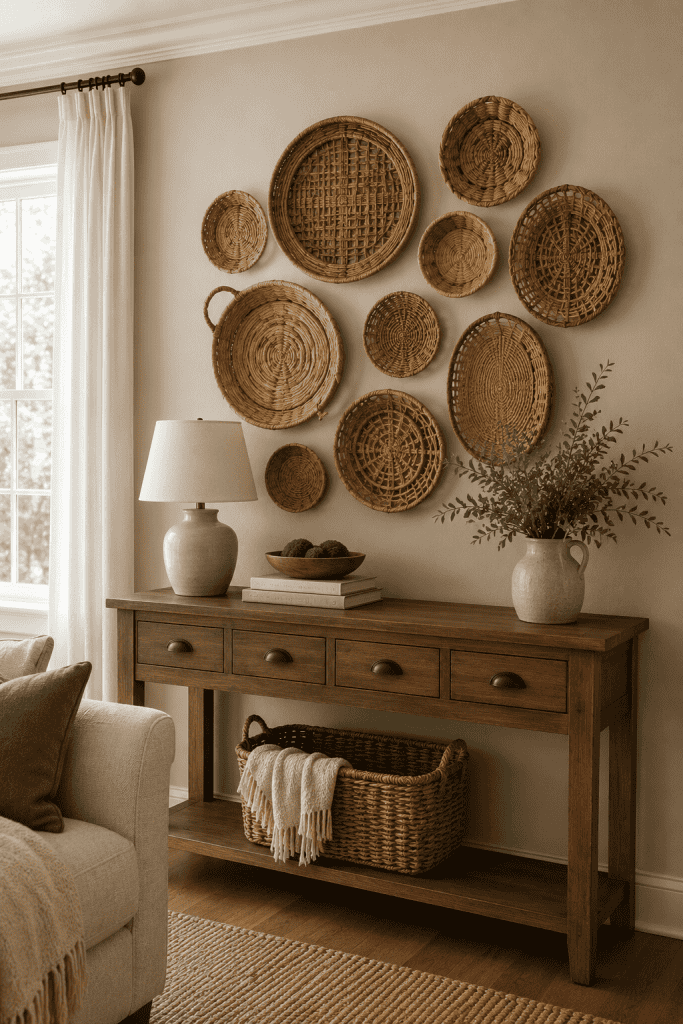
Choose baskets or decorative trays in several sizes, then arrange them in a loose cluster. Start with the largest piece and fill the surrounding space with smaller baskets.
Use a similar color palette, such as natural tan, warm brown and black, to keep the collection cohesive.
Flat woven trays are often easier to hang than deeper storage baskets. Look for pieces with loops on the back, or use clear fishing line and small picture hooks.
12. Add Sculptural Wall Decor
Sculptural wall decor can make a room feel more layered and thoughtfully designed.
Instead of framed artwork, consider a carved wood panel, metal wall sculpture, ceramic wall piece or decorative architectural fragment.
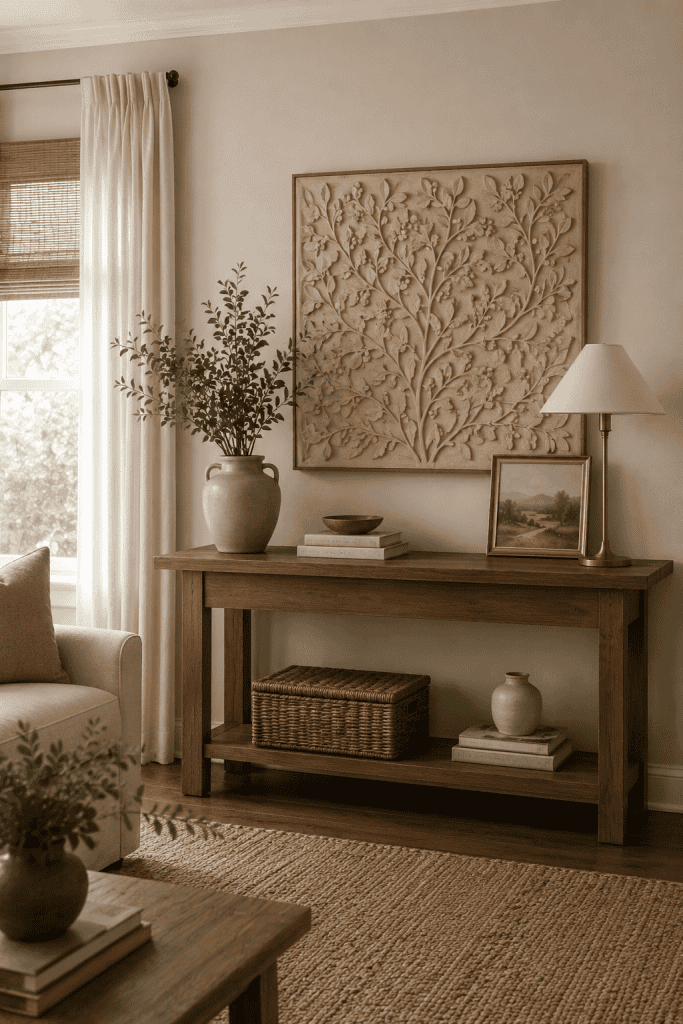
Choose one substantial piece for a clean focal point, or arrange several smaller objects together like a gallery wall.
Sculptural decor works especially well in rooms with a simple color palette because it adds shape and texture without requiring a bold pattern.
Keep the furniture and accessories below it relatively understated. This allows the dimensional wall piece to become the main feature rather than competing with several other decorations.
13. Hang a Textile or Woven Wall Hanging
A textile wall hanging can soften a room and add texture to an otherwise plain wall.
Macramé, woven fibers, quilts and fabric panels all create a warmer appearance than traditional framed artwork.
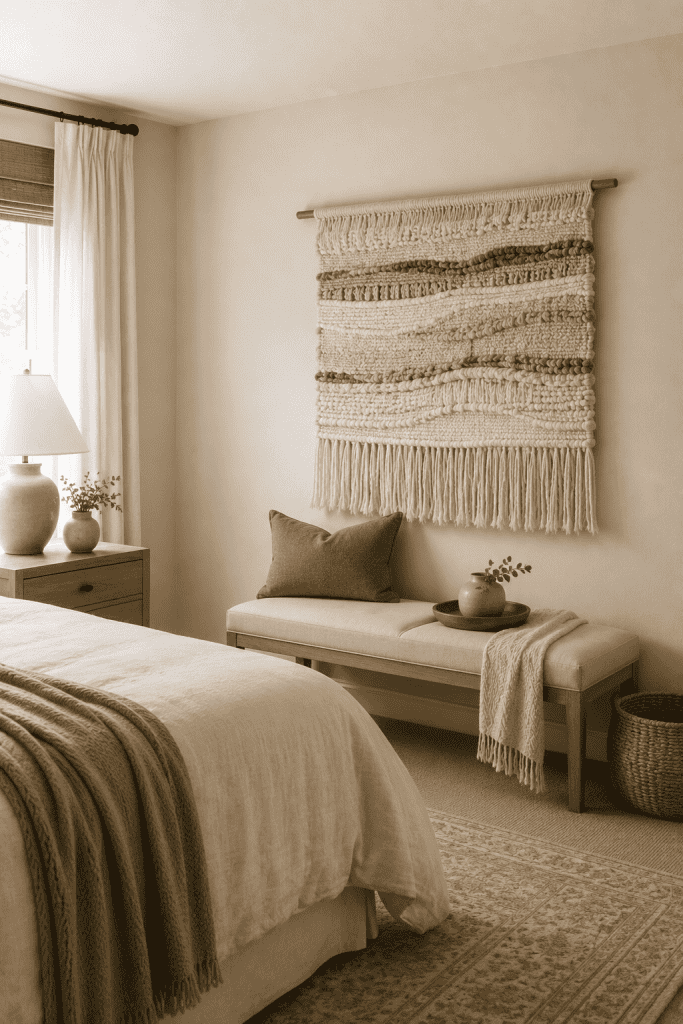
This type of wall decor works especially well in bedrooms, nurseries, reading corners and casual living spaces.
Choose a piece that is large enough for the wall. A small hanging placed alone above wide furniture can look out of proportion.
For an affordable handmade option, try this easy DIY yarn wall hanging. It is a simple way to customize the colors and size for your space.
14. Use a Large Wall Clock
A large wall clock can function as both a practical item and a decorative focal point.
This idea works particularly well in kitchens, breakfast areas, home offices and casual living rooms.
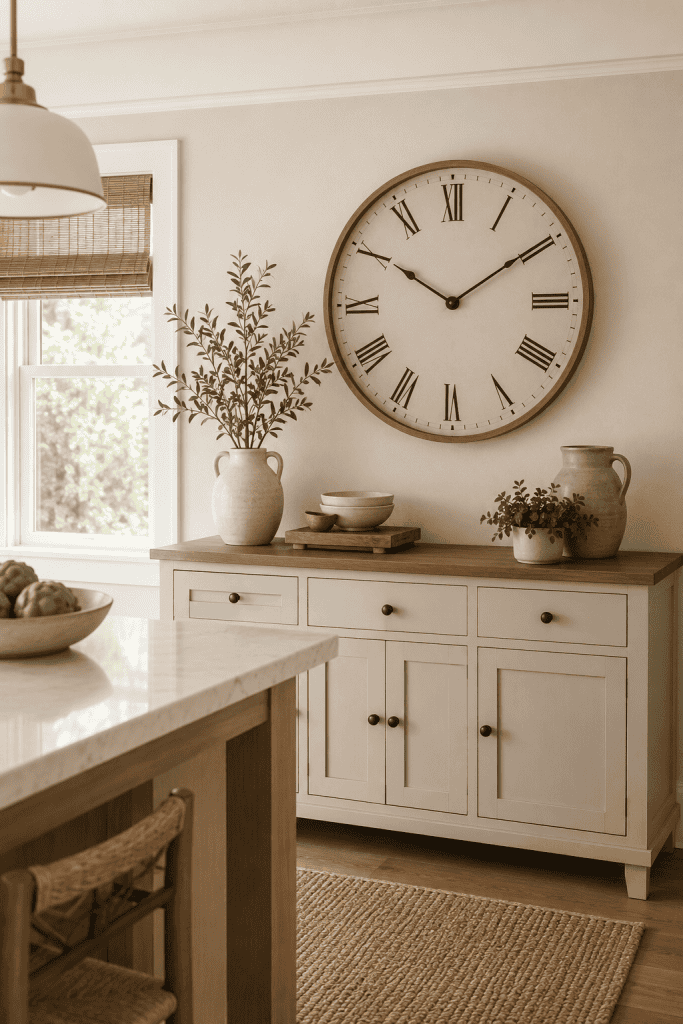
Choose a clock that is substantial enough for the wall. A small clock can easily feel lost above a wide cabinet, console or bench.
Wood frames feel warm and traditional, while thin black metal frames create a cleaner, more modern appearance.
Avoid surrounding the clock with too many small decorations. One large clock often looks best when it has enough open wall space around it to stand out.
15. Add Wall-Mounted Planters
Wall-mounted planters bring greenery into a room without using valuable floor or tabletop space.
They are a good solution for small walls, narrow hallways, kitchens and rooms with limited surface space.
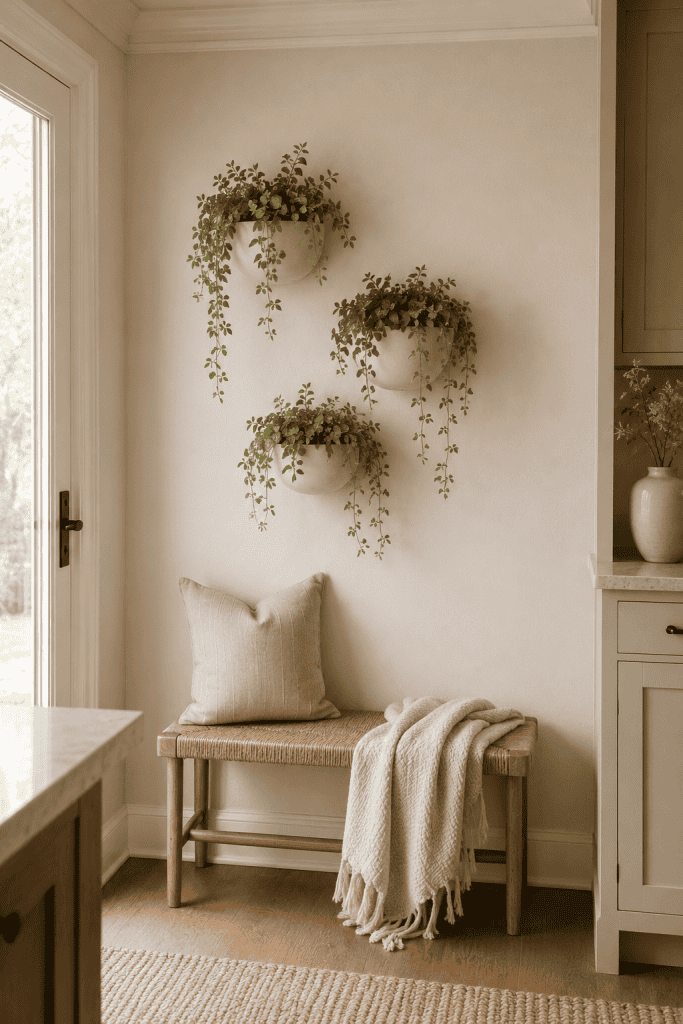
Use a set of matching planters for a clean arrangement, or combine several shapes for a more collected look.
Real plants work best when the wall receives adequate natural light. In darker spaces, high-quality faux greenery can create the same visual effect without requiring ongoing care.
Choose lightweight planters and use wall anchors rated for the combined weight of the container, soil and plant.
16. Style Floating Wall Shelves
Floating shelves provide both decoration and practical storage.
They can fill an empty wall while giving you a place to display framed artwork, books, plants and small decorative objects.
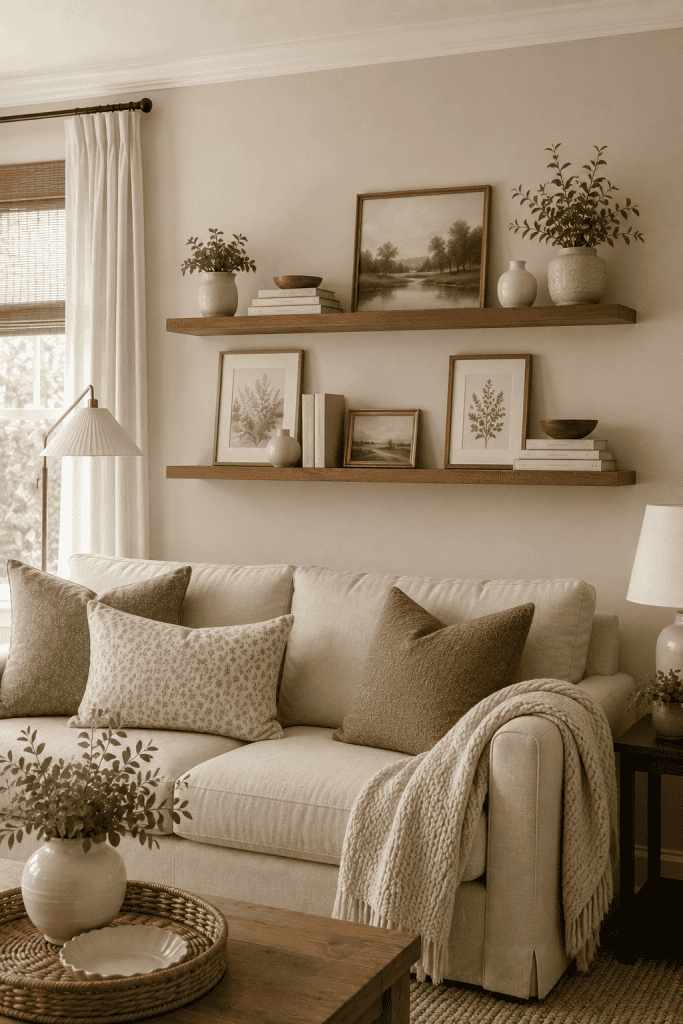
Use two or three shelves with generous space between them rather than stacking too many close together.
Begin with the largest objects, such as framed artwork or a vase. Fill the remaining space with smaller items, but leave some open areas so the shelves do not feel cluttered.
Vary the height and shape of the objects while repeating a few colors or materials. For example, combine warm wood frames, white ceramics and small touches of greenery for a cohesive display.
Accent Walls and Architectural Wall Ideas
Wall decor does not always have to be something you hang.
Paint, molding and wall treatments can add texture and architectural interest while turning the entire wall into a focal point. These ideas work especially well in builder-grade homes that need more character.
17. Paint a Simple Accent Wall
Paint is one of the easiest and most affordable ways to transform a blank wall.
An accent wall can define a room, highlight a focal point and add color without committing to painting the entire space.
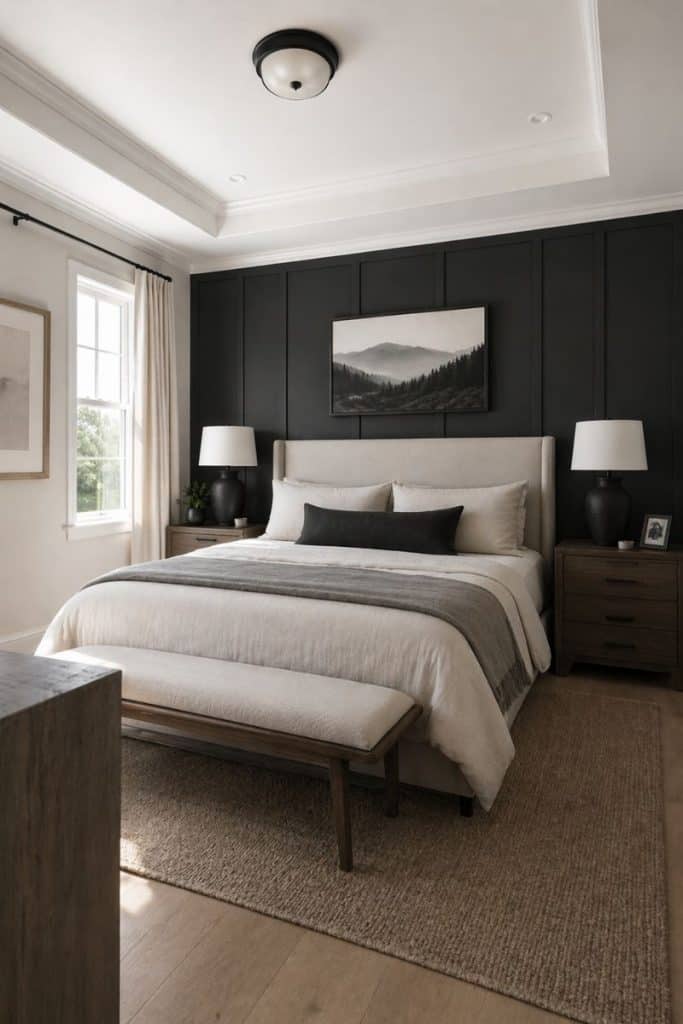
Choose the wall that naturally attracts attention, such as the wall behind a bed, sofa, fireplace or dining table.
Colors pulled from rugs, pillows or artwork will help the accent wall feel connected to the rest of the room.
These DIY accent wall ideas include several simple ways to add interest using paint and affordable materials.
18. Try a Dark or Black Accent Wall
A dark accent wall can make a room feel warm, dramatic and surprisingly cozy.
Black, charcoal and deep brown walls also create a beautiful backdrop for lighter furniture, artwork and wood tones.
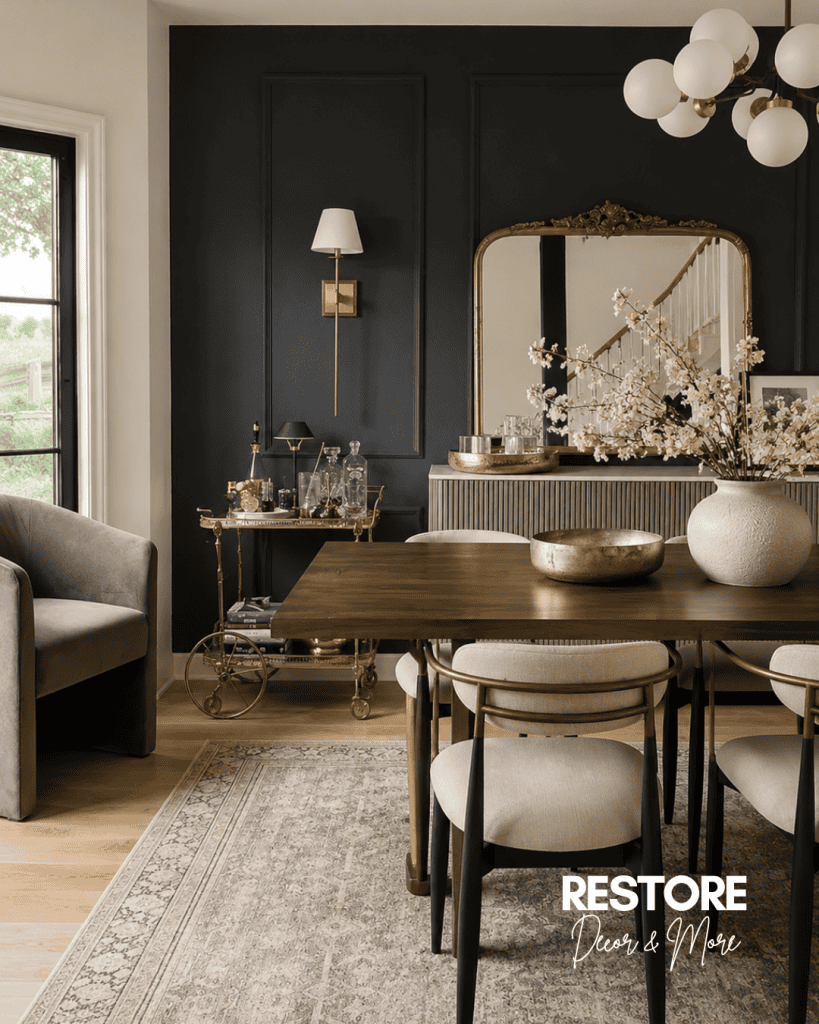
Use a dark wall where the room receives enough natural light, and repeat the color in small details such as frames, lamps or cabinet hardware.
Warm wood furniture and cream textiles keep a black wall from feeling harsh or overly modern.
See these black accent wall ideas for examples in bedrooms, living rooms, offices and other spaces.
19. Install Board and Batten
Board and batten adds dimension and architectural character to a plain wall.
It can cover the entire wall or be installed only on the lower portion, depending on the look you want.
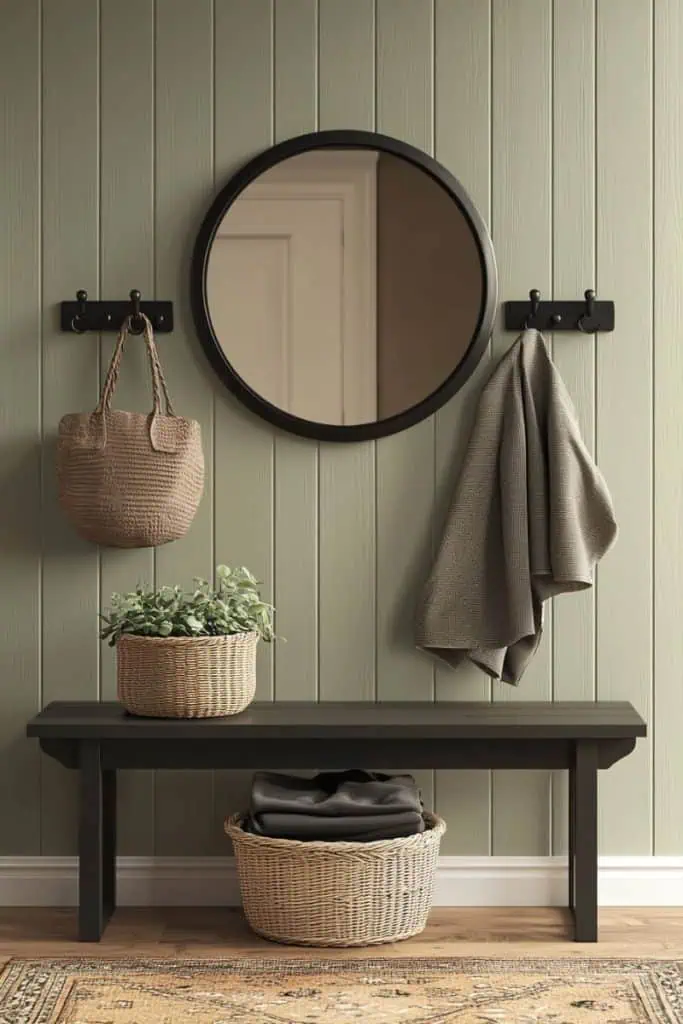
Full-height board and batten creates a stronger focal point, while a half-wall treatment feels more traditional and subtle.
Paint the molding and wall the same color for a clean, cohesive finish.
These board and batten wall ideas show how the treatment can work in living rooms, bedrooms, entryways and dining spaces.
20. Add Beadboard to the Wall
Beadboard brings texture and charm to a room without making the wall feel overly busy.
It works especially well in entryways, bathrooms, dining rooms, bedrooms and cottage-inspired spaces.
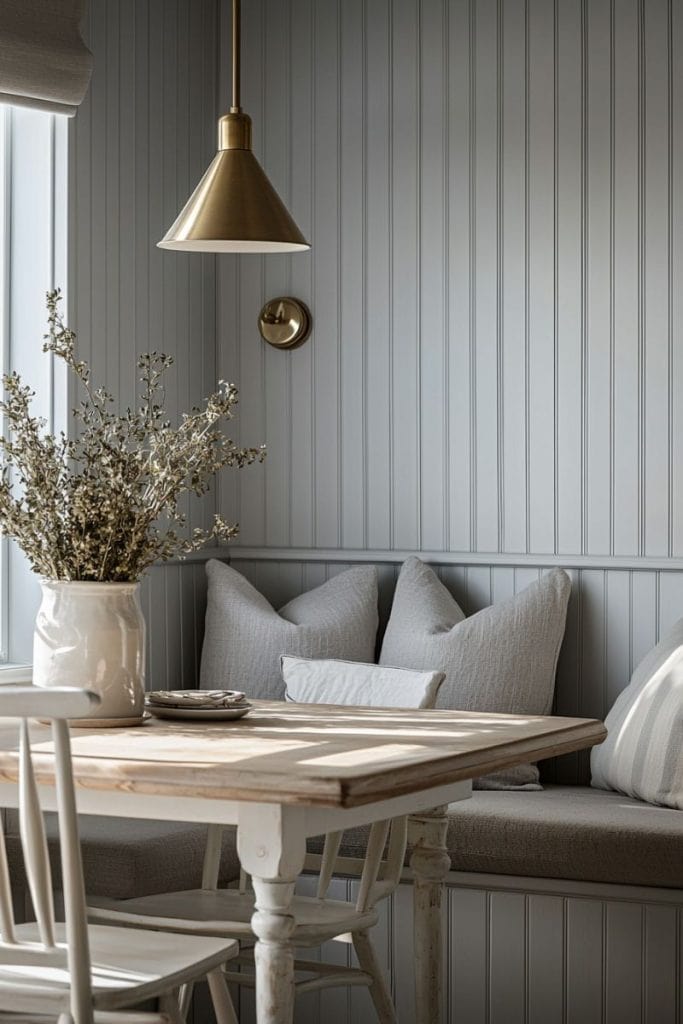
Install beadboard on the lower half of the wall and finish it with a simple chair rail or narrow ledge.
White beadboard creates a classic look, while sage green, soft blue or warm beige can make it feel more updated.
Explore these beadboard wall ideas for full walls, half walls and painted designs.
21. Use Shiplap for Added Texture
Shiplap can give a plain wall more depth while maintaining a clean and simple appearance.
The horizontal lines make a narrow wall feel wider, while vertical shiplap can visually increase the height of a room.
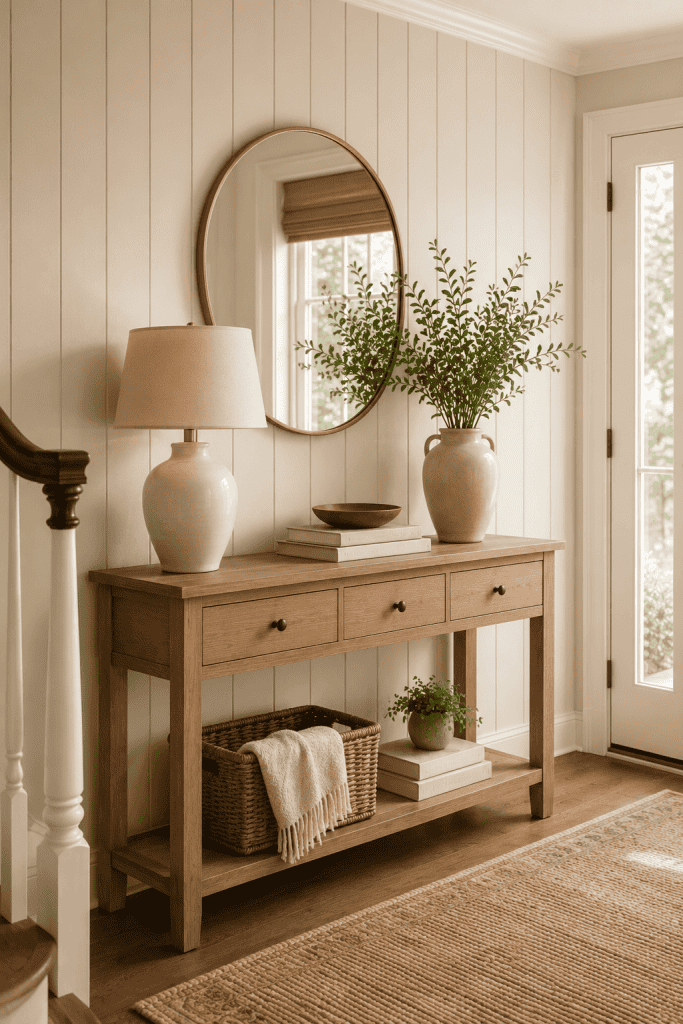
Use shiplap behind a fireplace, bed, television or entryway console to create a defined focal point.
White and cream finishes feel light and timeless. Dark green, charcoal or natural wood can create a warmer and more dramatic effect.
This complete shiplap guide explains the different styles, installation options and places to use it throughout the home.
22. Create a Faux Brick Feature Wall
A faux brick wall adds warmth, texture and character without the expense of installing real masonry.
It works well in living rooms, kitchens, home offices and basement spaces that need more architectural interest.
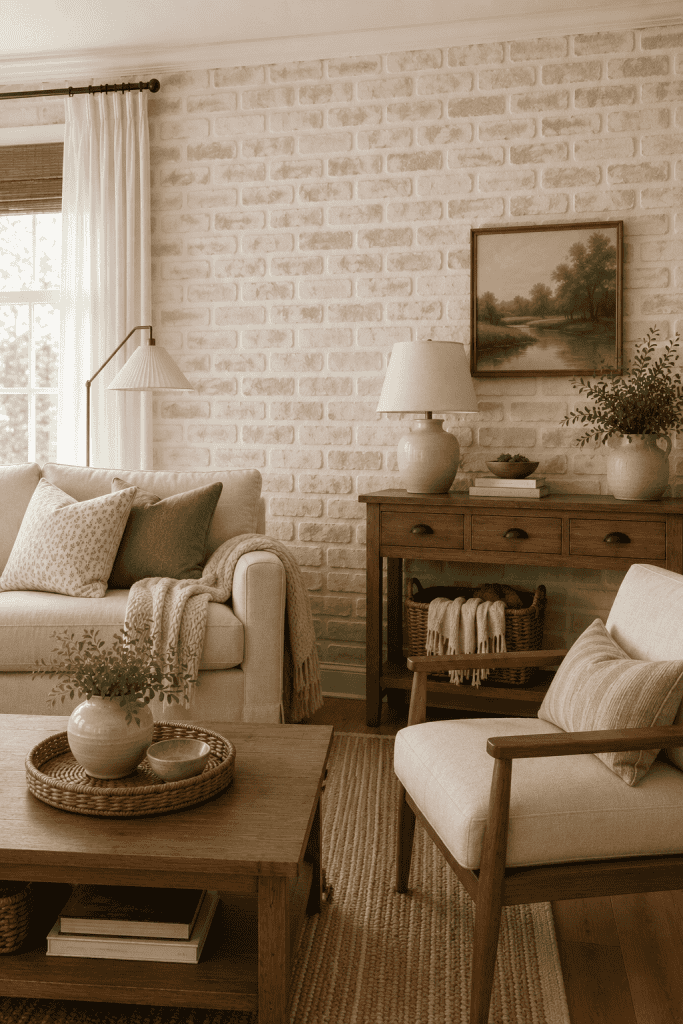
Leave the brick in a traditional red finish for a rustic look, or use whitewash or German schmear for a softer, more neutral appearance.
Keep the surrounding decor relatively simple so the texture of the wall remains the main feature.
This DIY faux brick wall tutorial shows how to create the look using an affordable wall treatment.
23. Add Picture-Frame Molding
Picture-frame molding can make a plain wall look more architectural and expensive.
The trim creates a series of decorative rectangular panels across the wall. It works beautifully in living rooms, dining rooms, bedrooms, entryways and hallways.
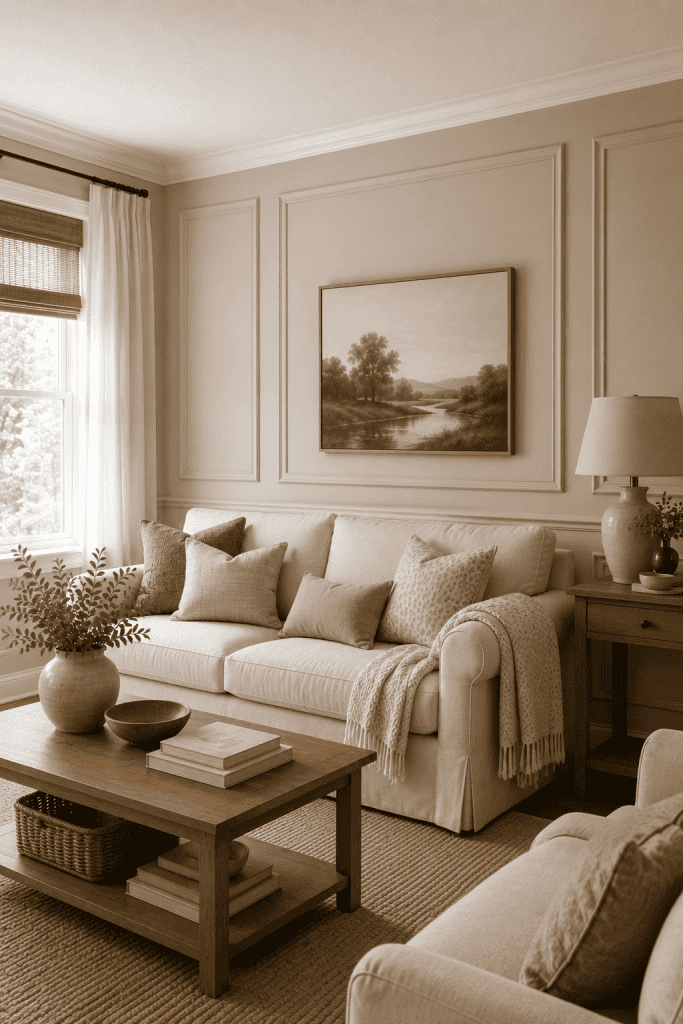
Paint the molding the same color as the wall for a subtle, high-end appearance. A contrasting color can create a stronger and more traditional statement.
You can leave the panels empty or place artwork, sconces or mirrors inside them.
Keep the spacing consistent between each panel. Simple, evenly sized rectangles usually look cleaner than an overly complicated design.
24. Use Wallpaper to Create a Focal Wall
Wallpaper can introduce color, pattern and personality without adding several separate pieces of wall decor.
It is especially effective behind a bed, dining table, bathroom vanity or entryway console.
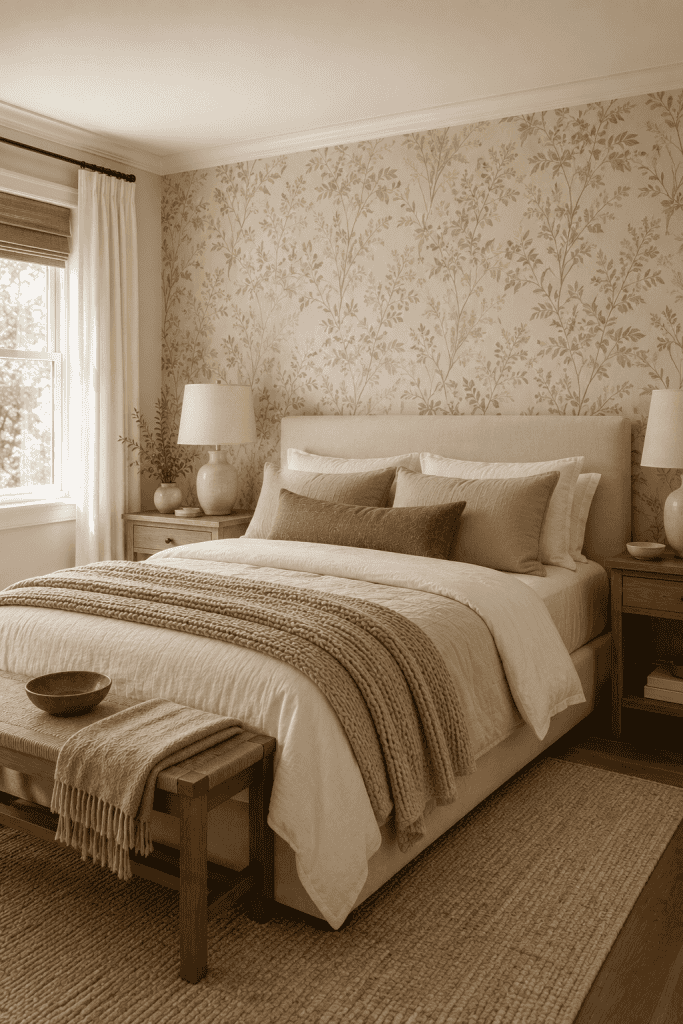
Choose a pattern that complements the room rather than competing with everything in it. Subtle botanicals, small-scale prints and textured grasscloth-style designs are easier to decorate around than very bold patterns.
Peel-and-stick wallpaper is a good option for renters or anyone who enjoys changing their decor.
When the wallpaper has a noticeable pattern, keep the artwork and accessories on that wall relatively simple.
Wall Decor Ideas for Tricky Spaces
Some walls are harder to decorate because of their size, location or the furniture placed beneath them.
The following ideas address the blank spaces above couches, beds, televisions and fireplaces, along with narrow or awkward walls that are easy to overlook.
25. Decorate the Wall Above a Couch
The wall above a couch should feel visually connected to the furniture beneath it.
One oversized piece of art, a decorative mirror, a gallery wall or a set of coordinating prints can all fill the space effectively.
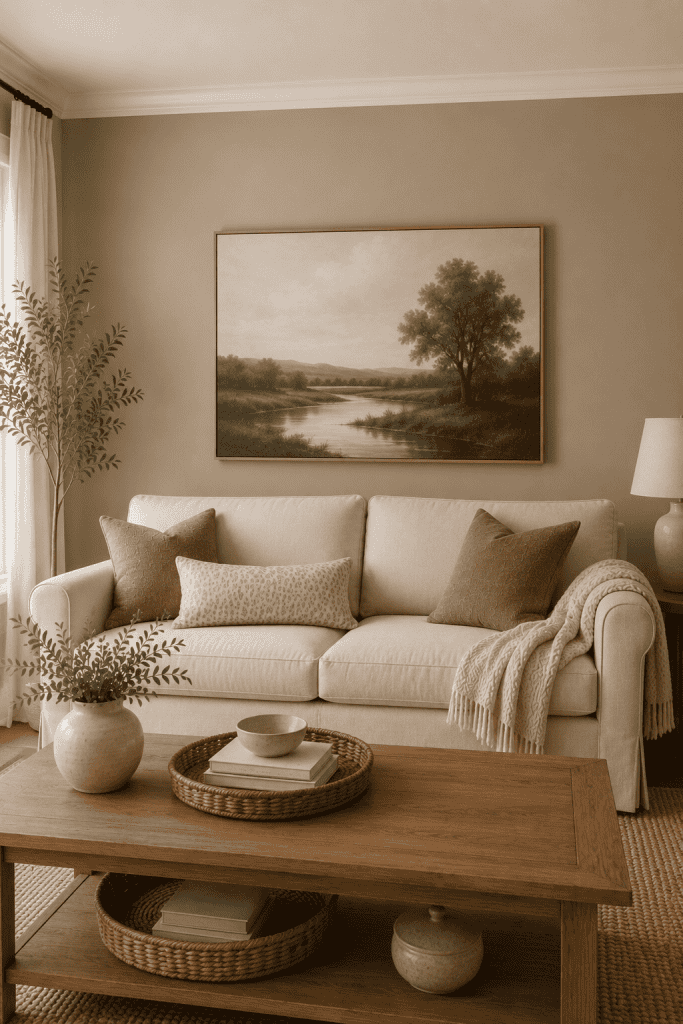
Keep the complete arrangement narrower than the sofa. Wall decor that extends beyond the couch can make the room feel unbalanced.
Hang the lowest portion approximately six to ten inches above the back of the sofa.
These above-the-couch decor ideas include options for large blank walls, sectionals and smaller living rooms.
26. Finish the Wall Above a Bed
The space above the bed is a natural focal point in a bedroom.
Artwork, mirrors, decorative panels and small gallery walls can make the bed feel more anchored within the room.
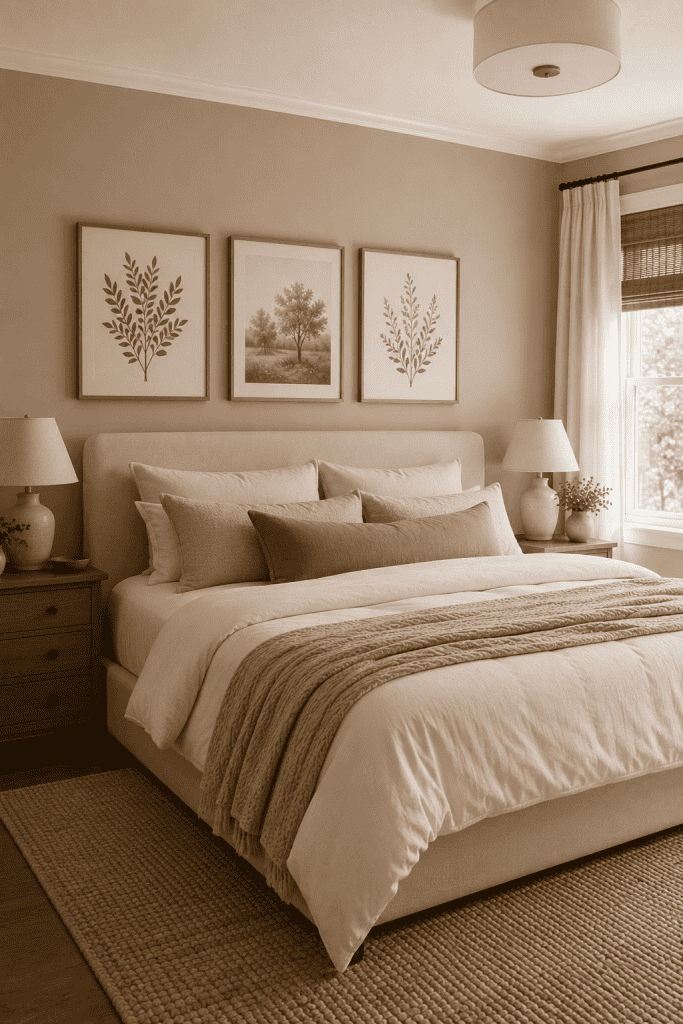
Choose decor that relates to the width of the bed and headboard. One small frame can look lost above a king-size bed, while an overly wide arrangement can overwhelm a twin or full-size bed.
A large landscape, three coordinating prints or one decorative mirror are all simple options.
Explore these above-bed decor ideas for inspiration that works with different bed sizes and decorating styles.
27. Decorate Around a Television
A television often becomes the default focal point of a living room, but the surrounding wall can help it feel more intentional.
Start with a media console that is wider than the television. This visually anchors the screen and gives you space to add balanced decor.
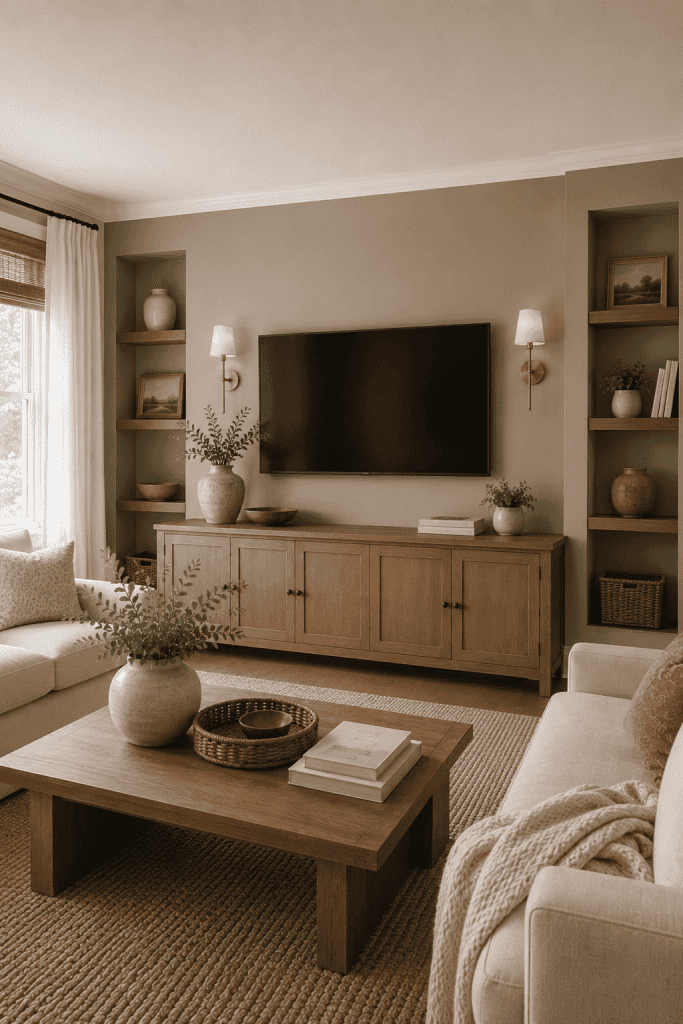
Consider adding sconces, floating shelves, framed artwork or narrow cabinets on either side of the television.
A dark painted wall can also help the television blend into the background when it is turned off.
For a softer, minimalist approach, see these Japandi TV wall ideas. If the television is mounted over the fireplace, these fireplace TV wall ideas include several ways to create a balanced arrangement.
28. Turn the Fireplace Wall Into a Focal Point
A fireplace wall is usually one of the first things people notice when entering a living room.
Use the wall surrounding it to add architectural interest through built-ins, shiplap, stone, tile or a contrasting paint color.
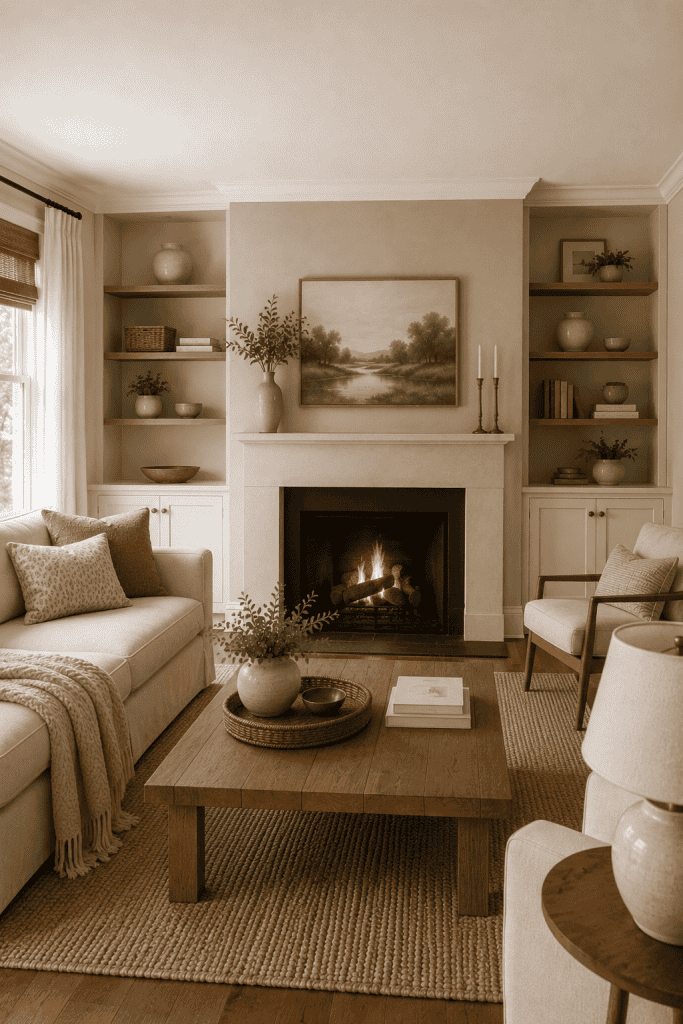
The mantel decor should complement the scale of the fireplace. One large mirror or piece of artwork often looks more polished than several undersized accessories.
When a television is mounted above the mantel, keep the remaining decor relatively simple so the wall does not feel overcrowded.
Built-in shelves or cabinets on either side of the fireplace can help the entire wall feel more substantial while adding useful storage.
29. Decorate a Narrow Hallway or Staircase
Hallways and staircases provide useful wall space, but their narrow dimensions require a little more planning.
A linear gallery wall, framed family photos or a row of coordinating prints can add interest without taking up floor space.
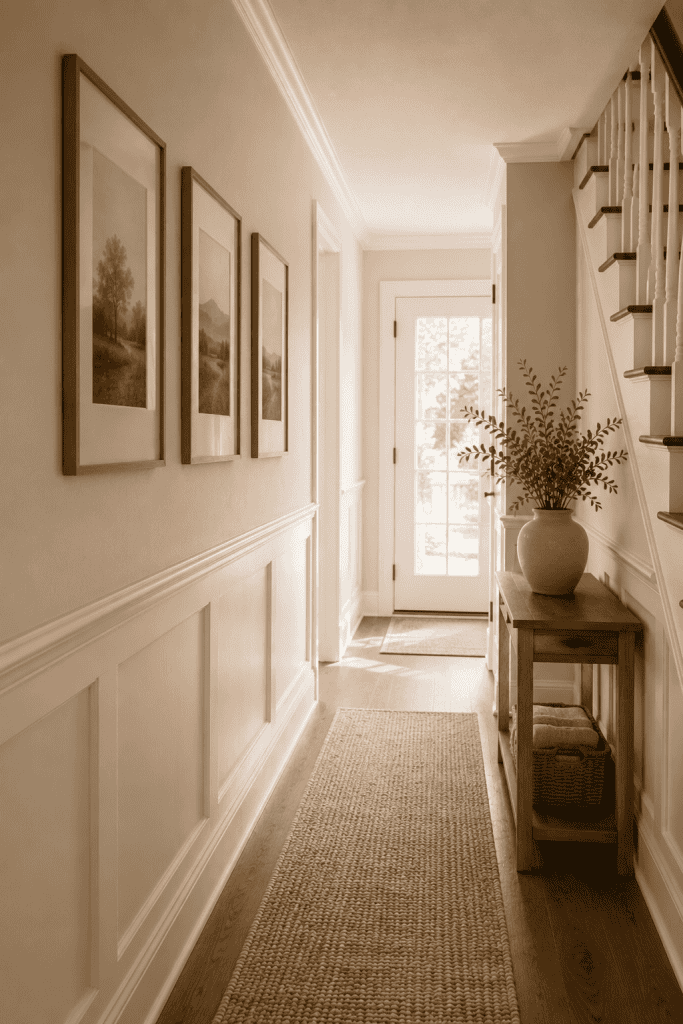
In a hallway, hang artwork in a consistent row to create a calm and orderly appearance. You can also place one oversized mirror or print at the end of the hallway to create a focal point.
For a staircase, follow the angle of the steps when arranging frames. Keep the spacing consistent so the display flows naturally upward.
Avoid adding deeply framed objects or shelves in very narrow walkways where people may bump into them.
30. Fill a Small or Awkward Wall
Small walls do not need elaborate decorating arrangements.
One thoughtfully chosen object can often make an awkward corner or narrow wall feel complete.
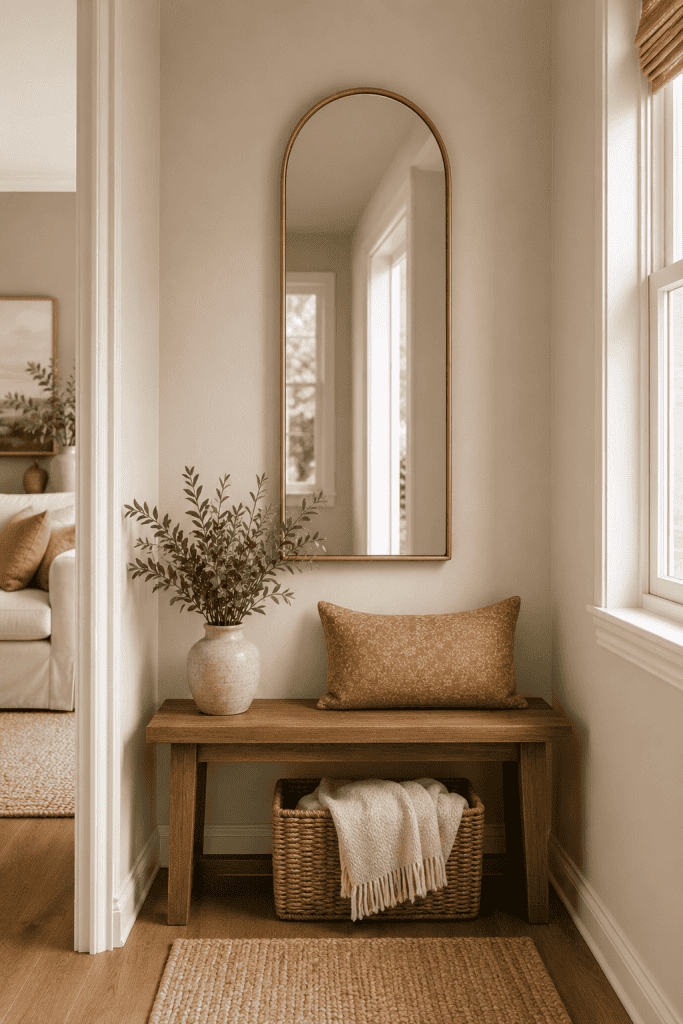
Try one of these simple solutions:
- A narrow vertical mirror
- One framed print
- A small woven basket
- A plug-in wall sconce
- A floating shelf
- A wall-mounted planter
- A decorative hook rail
Choose something that fits comfortably within the wall rather than trying to fill every inch.
Leaving a little open space around the object helps the arrangement feel intentional.
Wall Decor Ideas by Room
The best wall decor depends on how the room is used, the furniture it contains and the amount of available wall space.
These room-by-room tips can help you narrow down the options.
Living Room Wall Decor Ideas
Living rooms often contain several walls that compete for attention, including the sofa wall, television wall and fireplace wall.
Choose one primary focal wall and keep the surrounding walls simpler.
An oversized landscape or gallery wall can anchor the sofa. Built-ins, molding or a contrasting paint color can emphasize the fireplace, while a long media console and balanced accessories can improve the television wall.
Repeat a few materials throughout the room, such as warm wood frames, black metal or antique brass. This helps the different walls feel connected.
Bedroom Wall Decor Ideas
The bed wall should usually be the main focal point of a bedroom.
Artwork, wallpaper, panel molding or an accent wall can all make the bed feel more anchored. Keep the wall decor proportional to the headboard and bed size.
The wall above a dresser is another good place for a decorative mirror. A mirror adds height while providing a practical place to get ready.
For more inspiration, see these bedroom accent wall ideas and this guide on how to decorate a bedroom.
Dining Room Wall Decor Ideas
Dining rooms are ideal for slightly more formal or collected wall decor.
Try an oversized mirror above a buffet, a decorative plate collection, a large landscape painting or traditional picture-frame molding.
A pair of sconces can help a mirror or piece of artwork feel more substantial.
Consider what the mirror reflects before hanging it. A reflection of the chandelier, window or styled dining table will add to the room’s overall appearance.
Kitchen Wall Decor Ideas
Kitchen wall decor should add personality without creating unnecessary clutter.
Vintage artwork, framed botanical prints, cutting boards, open shelves and small decorative plates can all work well.
Use a narrow blank wall for one framed print or a small wall-mounted planter. Larger walls near a breakfast table can hold a clock, plate collection or coordinating set of artwork.
Keep delicate artwork away from areas exposed to cooking grease, steam or frequent splashes.
Home Office Wall Decor Ideas
A home office should feel inspiring without becoming visually distracting.
Hang artwork that introduces color or personality, create an organized inspiration board or use floating shelves for both decor and storage.
A gallery wall can work particularly well behind a desk or on the wall visible during video calls.
These home office wall decor ideas include inspiration for large offices, small workspaces and multipurpose rooms.
Entryway and Hallway Wall Decor Ideas
Entryways benefit from wall decor that is both attractive and practical.
A large mirror above a console provides a place for one last check before leaving home. Hooks, small shelves and wall-mounted baskets can also provide storage.
In a narrow entryway, keep the furniture and wall decor relatively shallow. A slim console or bench combined with one substantial mirror often looks better than several small accessories.
Use these entryway table decor ideas to style the space beneath the wall decor.
How to Choose the Right Wall Decor
With so many options available, choosing wall decor can quickly become overwhelming.
Start by evaluating the wall, the furniture beneath it and the surrounding room.
Consider the Size of the Wall
Large walls need pieces with enough scale to make an impact.
One oversized painting, large mirror or substantial gallery wall will usually look better than a few small frames spread too far apart.
Small walls can often be finished with one narrow mirror, framed print or sculptural object.
Match the Scale of the Furniture
Wall decor should feel connected to any furniture placed below it.
As a general guideline, artwork or mirrors above furniture should measure approximately two-thirds to three-quarters the width of the furniture.
The wall decor should usually remain narrower than the couch, bed, console or buffet beneath it.
Repeat Colors and Materials
Repeat a few colors or finishes already used within the room.
A black-framed mirror can connect with black cabinet hardware, while a warm wood frame can coordinate with a coffee table or console.
The items do not need to match exactly. Repeating similar finishes simply helps the room feel more intentional.
Consider the Room’s Existing Focal Point
Not every wall needs to compete for attention.
If the room already has a dramatic fireplace, large window or bold wallpaper, use simpler wall decor on the surrounding walls.
Allowing some walls to remain quiet gives the primary focal point more impact.
Leave Some Empty Wall Space
Empty space is an important part of decorating.
Covering every wall can make a room feel cluttered and smaller than it actually is.
Choose the walls that need a focal point, then leave breathing room around the artwork and between separate arrangements.
How High Should You Hang Wall Decor?
Wall art is commonly hung too high, which makes it feel disconnected from the rest of the room.
When hanging artwork on an empty wall, position the center of the piece approximately 57 to 60 inches from the floor. This places it near average eye level.
Above a couch, bed, dresser or console, leave approximately six to ten inches between the furniture and the bottom of the wall decor.
Treat a gallery wall as one large piece. Find the center of the complete arrangement rather than measuring each individual frame from the floor.
Before making holes, use painter’s tape or paper templates to test the size and placement.
These common mistakes people make when hanging art can help you avoid problems with scale, spacing and height.
Frequently Asked Questions About Wall Decor
What can I put on a blank wall?
Blank walls can be decorated with artwork, mirrors, shelves, baskets, clocks, plates, wall-mounted planters or architectural treatments.
The best option depends on the wall’s size and the furniture placed below it.
Large walls generally need fewer, more substantial pieces. Small walls often look better with one simple object.
How do I decorate a large empty wall?
Begin by identifying the center of the wall or the furniture beneath it.
Use one oversized piece of artwork, a large mirror, a substantial gallery wall or an architectural treatment such as board and batten.
Avoid spreading several small objects across the entire wall. Grouping pieces together creates more visual impact.
How can I decorate a wall without using artwork?
There are many alternatives to framed wall art.
Consider mirrors, woven baskets, decorative plates, textiles, floating shelves, wall-mounted plants, sculptural objects or a large clock.
You can also turn the entire wall into the feature using paint, wallpaper, beadboard, shiplap or molding.
Should every wall in a room have decor?
No. Decorating every wall can make a room feel cluttered.
Choose one or two focal walls, then allow some of the surrounding walls to remain simple.
This creates visual balance and gives the most important features more attention.
How do I make inexpensive wall decor look more expensive?
Pay close attention to scale, spacing and frame selection.
Use larger pieces rather than several tiny decorations. Choose frames with substantial mats, repeat a consistent finish and avoid hanging artwork too high.
Simple arrangements with plenty of open space often look more elevated than crowded displays.
What wall decor makes a room look bigger?
Mirrors are one of the best choices for making a room feel larger and brighter.
Position a mirror across from or near a window to reflect natural light. Large mirrors tend to have a stronger visual effect than several small mirrors.
Light-colored artwork, simple frames and uncluttered arrangements can also help a small room feel more open.
Final Thoughts
The right wall decor can make an ordinary room feel polished, personal and complete.
Start by identifying the wall that needs the most attention. Consider its size, the furniture beneath it and whether the room already has a natural focal point.
One oversized piece of artwork may be all a living room needs, while another space may benefit from a collected gallery wall, decorative mirror or architectural wall treatment.
Do not feel pressured to decorate every wall at once. Begin with one focal area, choose pieces that fit the scale of the space and leave enough open room for the arrangement to breathe.
Whether you prefer simple framed art, dimensional wall decor or a full accent-wall treatment, these ideas can help you create a home that feels thoughtfully decorated and beautifully finished.