25+ Color Drenching Bathroom Ideas for a Bold, Designer Look
Color drenching can completely change the way a bathroom feels.
Instead of stopping the wall color at the trim or ceiling, this look carries one color — or closely related shades — across the walls, doors, trim, and often the ceiling too.
In a bathroom, that can make even a small space feel more intentional, polished, and surprisingly cozy.
And while dark green and navy bathrooms may be the first thing that comes to mind, color drenching can work just as beautifully with warm beige, dusty blue, muted pink, taupe, brown, and other softer shades.
If you’re thinking about giving your bathroom a fresh new look, these color drenching bathroom ideas will show you just how versatile this trend can be.
New to the look? Start with my complete guide to color drenching to see how it works throughout the home.
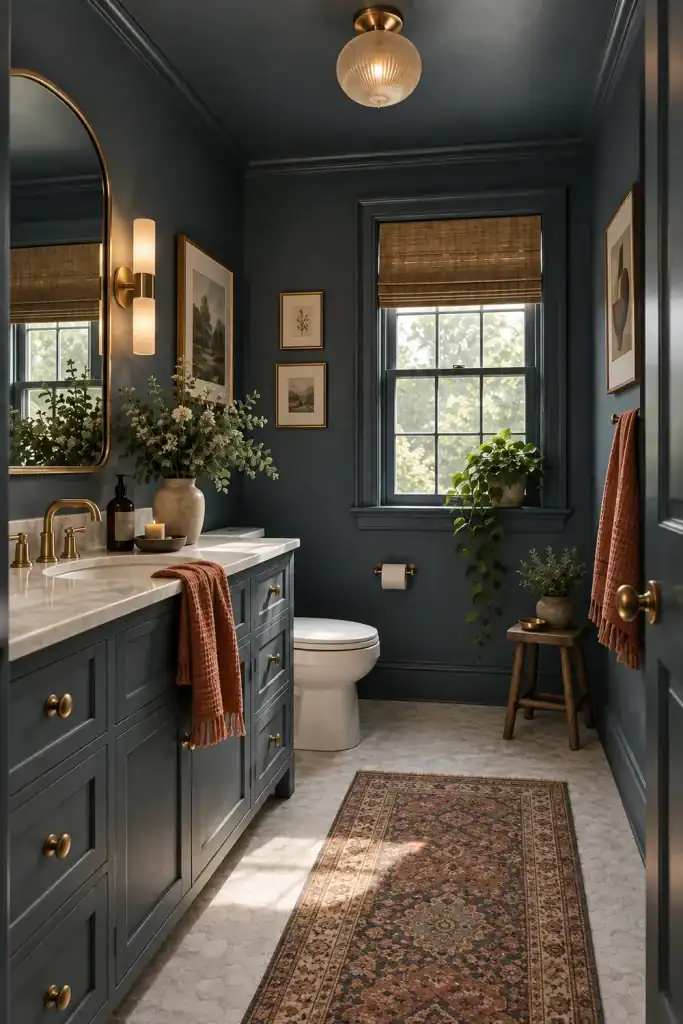
What Is a Color Drenched Bathroom?
A color drenched bathroom uses one dominant color across most of the painted surfaces in the space.
That might include:
- Walls
- Ceiling
- Baseboards
- Crown molding
- Window trim
- Doors
- Door frames
- Built-in cabinetry
- Sometimes even the vanity
Instead of breaking up the room with white trim and a white ceiling, the color continues throughout the space.
The effect is more seamless and can make a bathroom feel much more custom.
You don’t necessarily need to use the exact same paint finish everywhere. Using different sheens in the same color can actually add subtle dimension.
For example, you might use a softer finish on the walls and ceiling while choosing satin or semi-gloss for trim and doors.
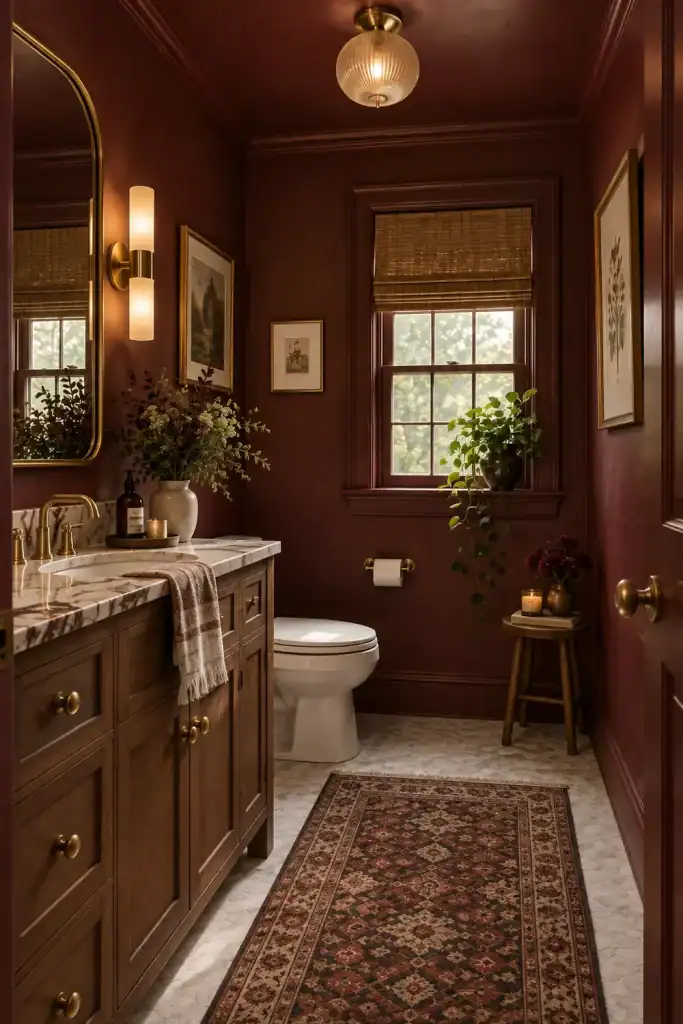
Why Color Drenching Works So Well in Bathrooms
Bathrooms are a great place to experiment with color because they’re often smaller than the rest of the rooms in your home.
That means you can take a little more of a design risk without committing to an entire living room or bedroom.
Color drenching also helps reduce the number of visual breaks in a small space.
Instead of seeing one color on the wall, another on the trim, another on the door, and white on the ceiling, your eye sees one continuous backdrop.
The result can make the room feel calmer and more intentional.
If you love this look in other spaces too, don’t miss these color drenching bedroom ideas.
Best Colors for Color Drenching a Bathroom
Almost any color can work, but some shades are especially pretty in bathrooms.
For a lighter, softer look, consider:
- Warm beige
- Dusty blue
- Sage green
- Soft taupe
- Muted blush
- Warm greige
For something more dramatic:
- Olive green
- Forest green
- Navy blue
- Burgundy
- Chocolate brown
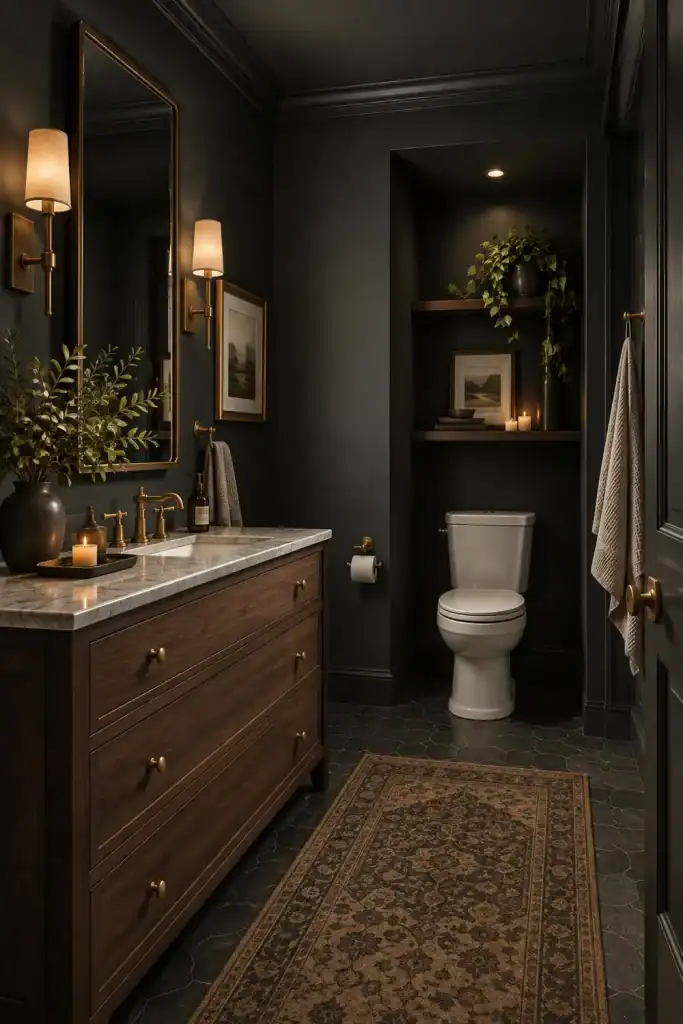
- Charcoal
- Deep blue-gray
The best color will depend on the amount of natural light in the room, your flooring and tile, and the overall feeling you want to create.
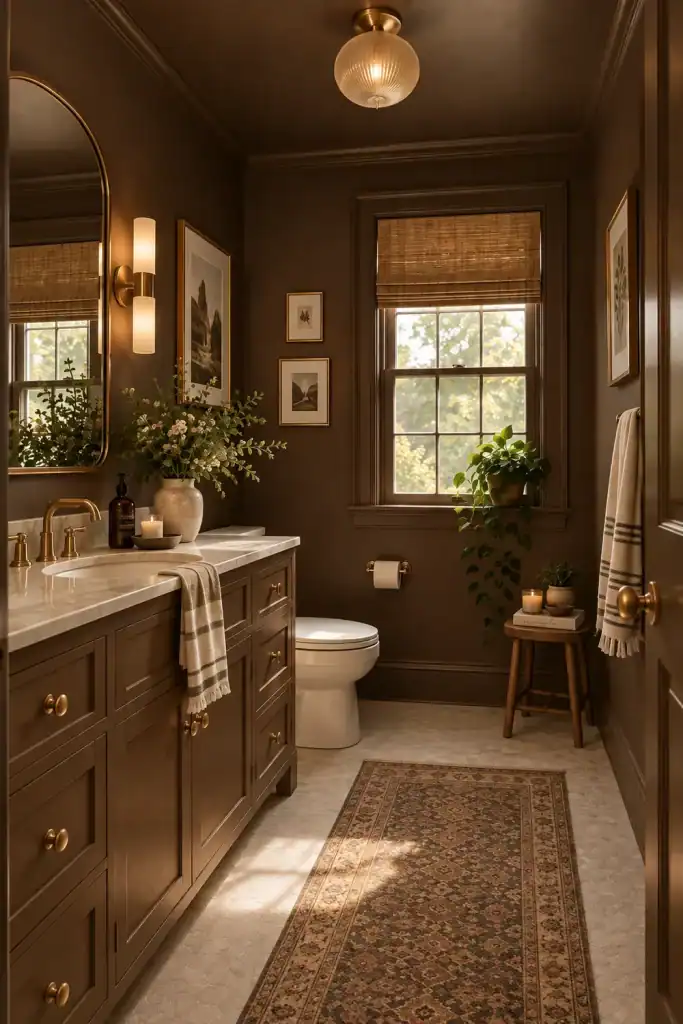
Color Drenching Bathroom Ideas
1. Try a Deep Green Bathroom
Deep green is one of the easiest colors to use if you want a dramatic bathroom that still feels grounded.
Paint the walls, trim, ceiling, and door in the same green and pair it with warm wood, brass, stone, and cream accents.
The natural tones help soften the darker color.
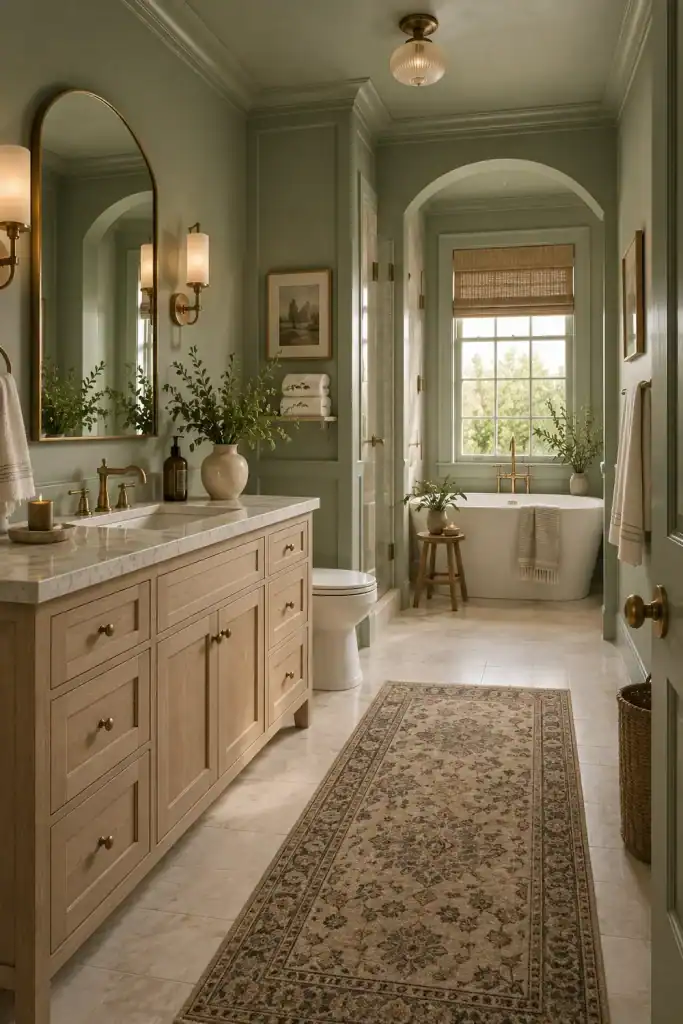
2. Use Sage Green for a Softer Look
Sage gives you the same enveloping effect without making the bathroom feel too dark.
It works particularly well with:
- Light oak
- White or cream tile
- Brass fixtures
- Natural stone
- Woven baskets
If you love this color, my guide to colors that go with sage green has even more pairing ideas.
3. Color Drench a Small Bathroom
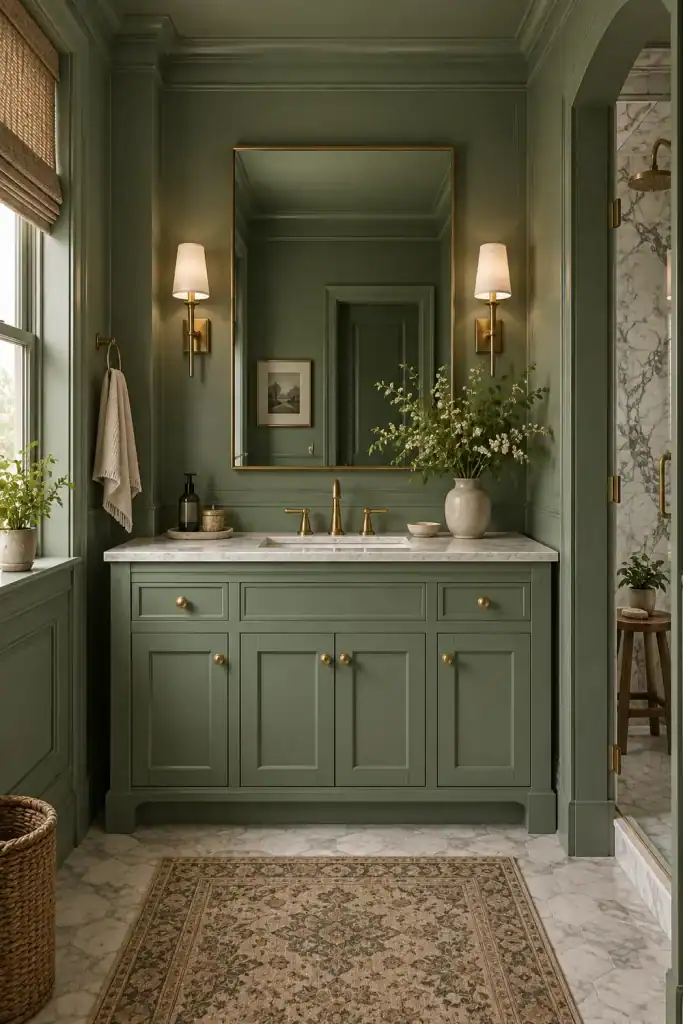
Small bathrooms can actually be perfect for color drenching.
Painting the trim and ceiling to match the walls removes some of the visual lines that can make a small room feel choppy.
Instead of trying to make the bathroom look larger with white everywhere, embrace the size and make the room feel intentionally cozy.
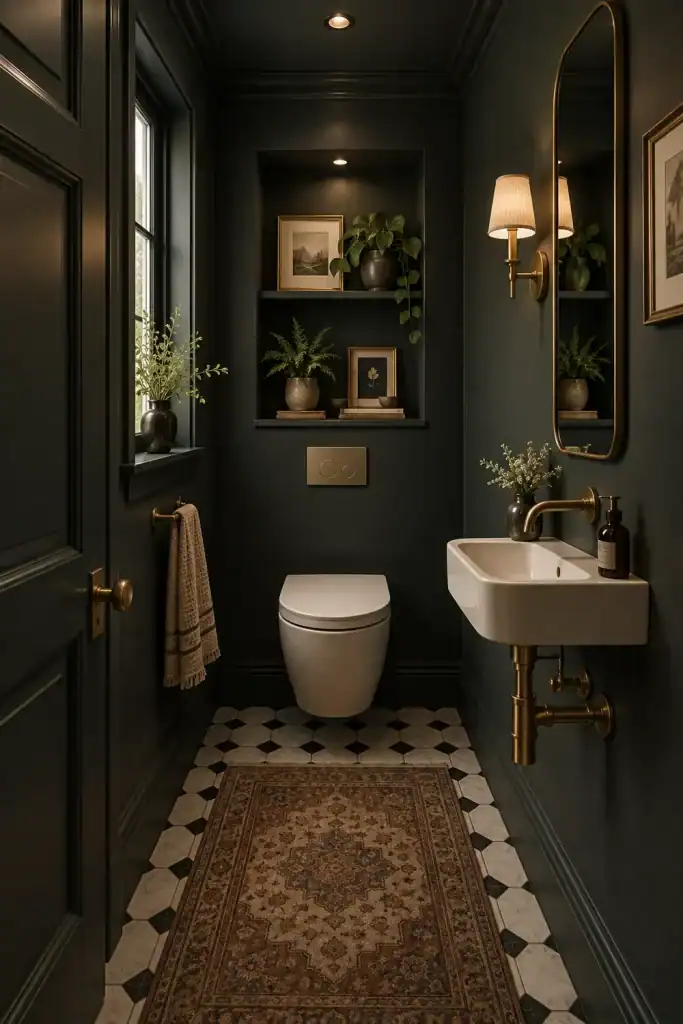
4. Try Color Drenching in a Powder Room
A powder room is one of the easiest places in your home to experiment with a bold color.
Because it’s a small, contained space, you can choose something you might not use throughout the rest of the house.
Try:
- Burgundy
- Forest green
- Navy
- Chocolate brown
- Plum
- Charcoal
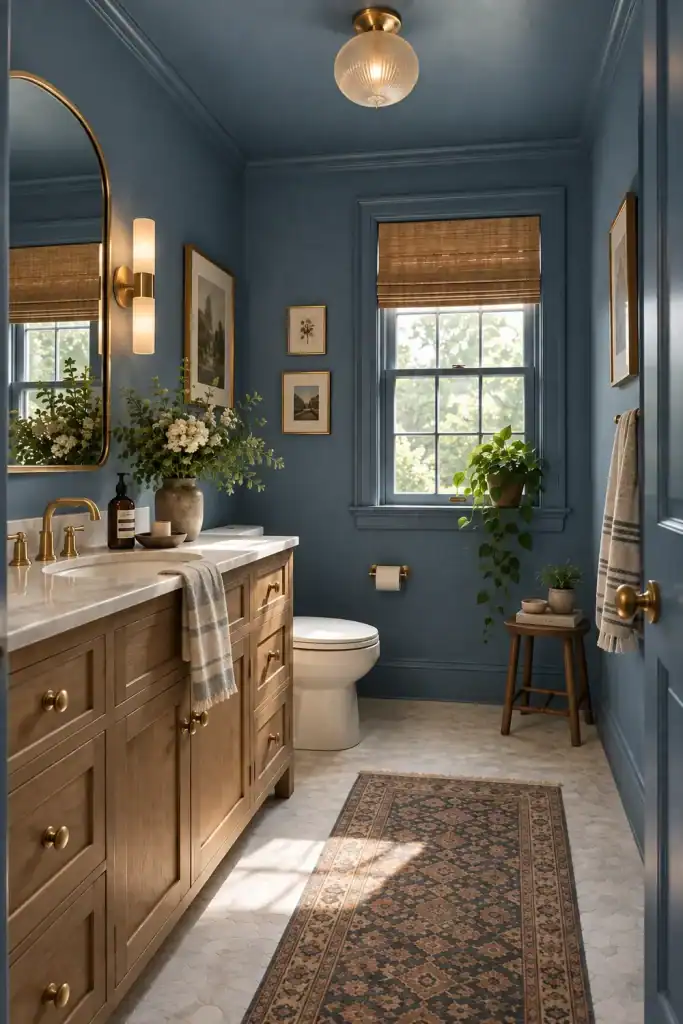
5. Use Dusty Blue
Dusty blue can make a bathroom feel soft, calming, and timeless.
Carry the blue onto the trim and ceiling, then add warm wood and antique brass to keep the room from feeling too cool.
6. Try Navy Blue
Navy is a great choice if you want something bold but still classic.
A navy color drenched bathroom works especially well with:
- Brass
- Marble
- Warm white
- Dark walnut
- Natural linen
For more pairing inspiration, see my guide to colors that go with navy blue.
7. Go Warm With Beige
Warm beige can give you a color drenched look without feeling trendy or dramatic.
Paint the walls, trim, ceiling, and door in one warm neutral and let texture create the interest.
This works especially well with stone, oak, woven baskets, and cream towels.
8. Try Taupe or Mushroom
Taupe and mushroom shades are perfect if you want something a little deeper than beige.
They create a soft, cocooning look while still feeling neutral.
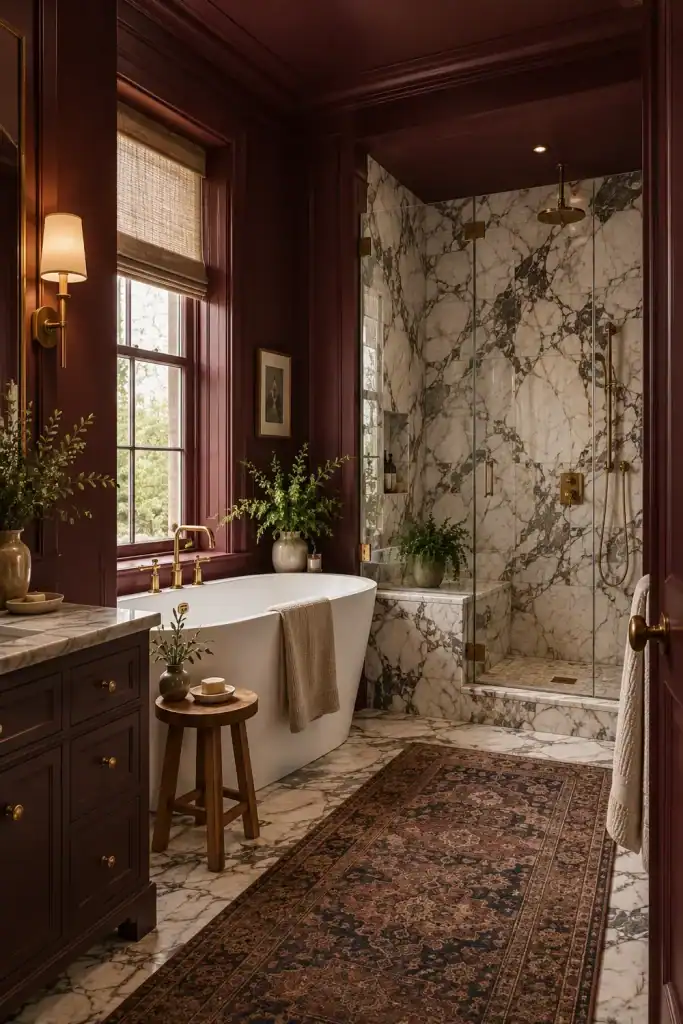
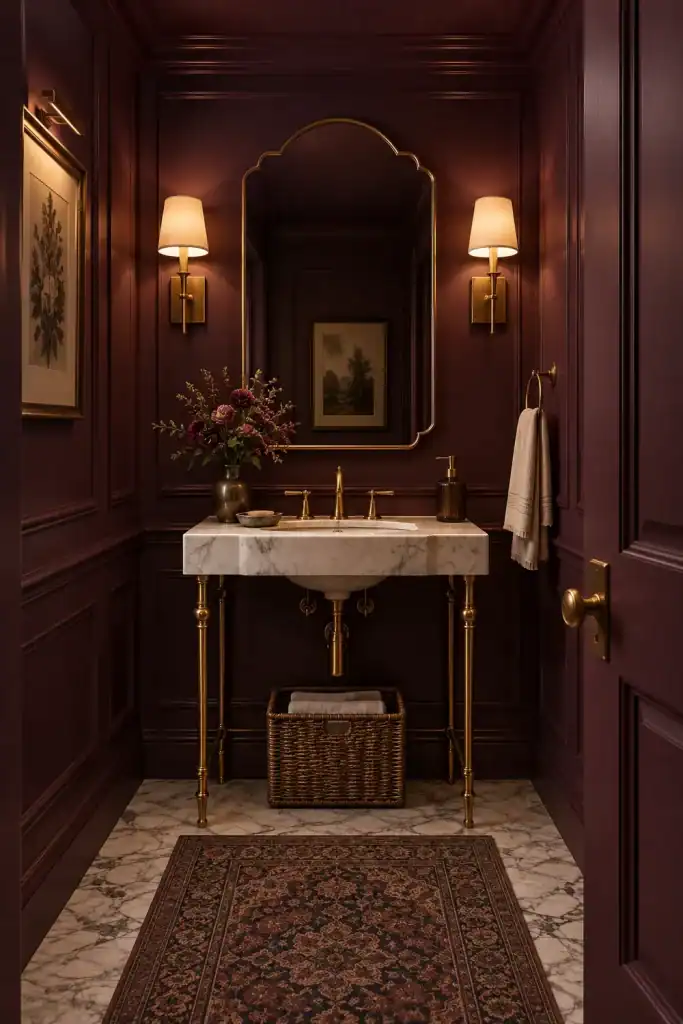
9. Use Burgundy for a Dramatic Powder Room
Burgundy can look incredibly rich in a small bathroom.
Pair it with:
- Dark wood
- Brass
- Cream marble
- Antique-inspired artwork
- Warm lighting
Keeping the rest of the room simple will help the color feel sophisticated.
10. Try Chocolate Brown
Brown bathrooms can feel surprisingly luxurious.
A deep chocolate shade works especially well with cream stone, walnut, brass, and soft lighting.
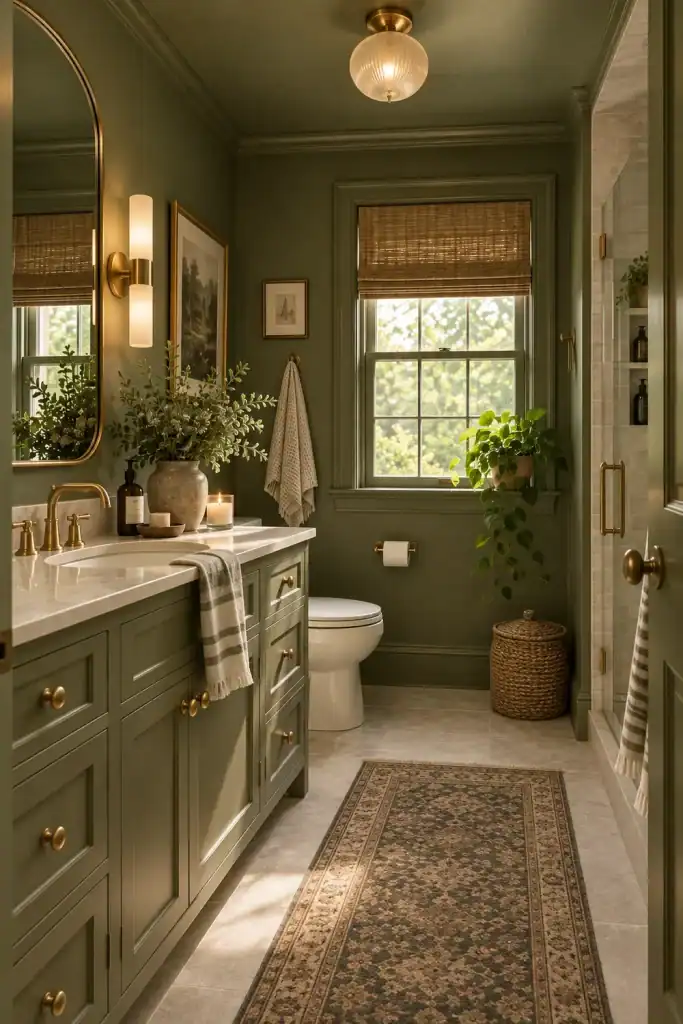
11. Choose Charcoal Instead of Black
Charcoal gives you the drama of a dark bathroom without feeling quite as harsh as true black.
It’s also easier to pair with warm wood, stone, and other neutral finishes.
12. Paint the Bathroom Door to Match
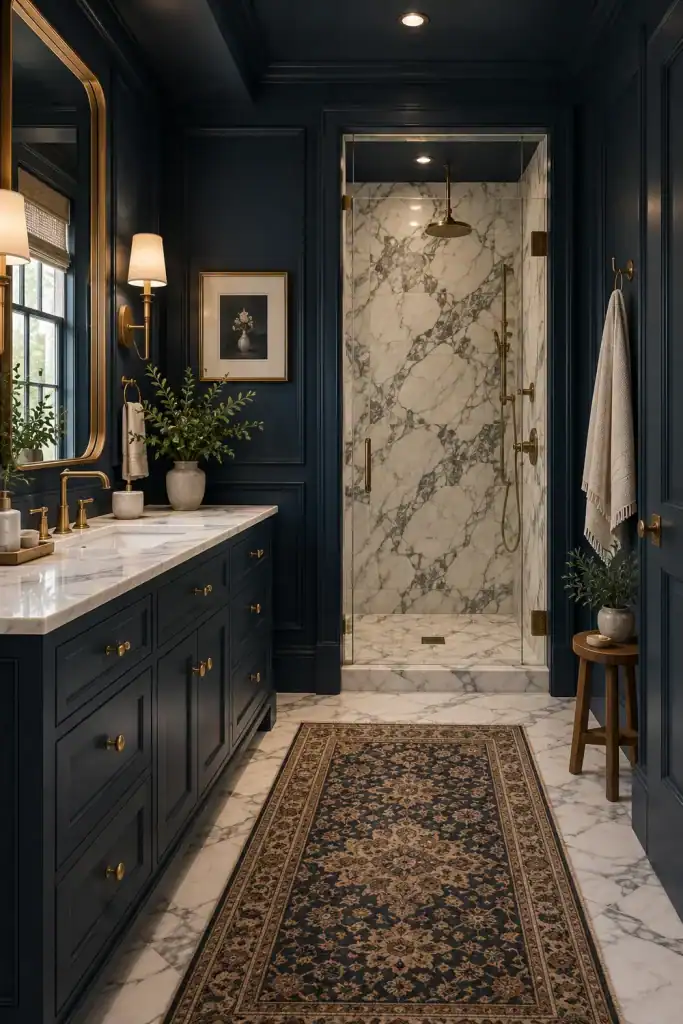
Leaving the door bright white can interrupt a color drenched space.
Painting the door and frame in the same color as the walls gives the room a much more complete look.
13. Don’t Forget the Ceiling
Painting the ceiling is one of the things that really separates color drenching from simply painting a room one color.
The ceiling becomes part of the design rather than a blank white surface.
14. Color Drench the Vanity Too
If your vanity is paintable, consider using the same color as the walls.
This can make the vanity visually blend into the room and create a more custom built-in appearance.
You could also use a slightly darker or lighter version of the same shade for subtle contrast.
15. Keep the Tile Neutral
If you’re introducing a lot of color through paint, neutral tile can help balance the room.
White, cream, beige, warm gray, and natural stone are all easy choices.
This also makes it easier to change the wall color later without replacing the tile.
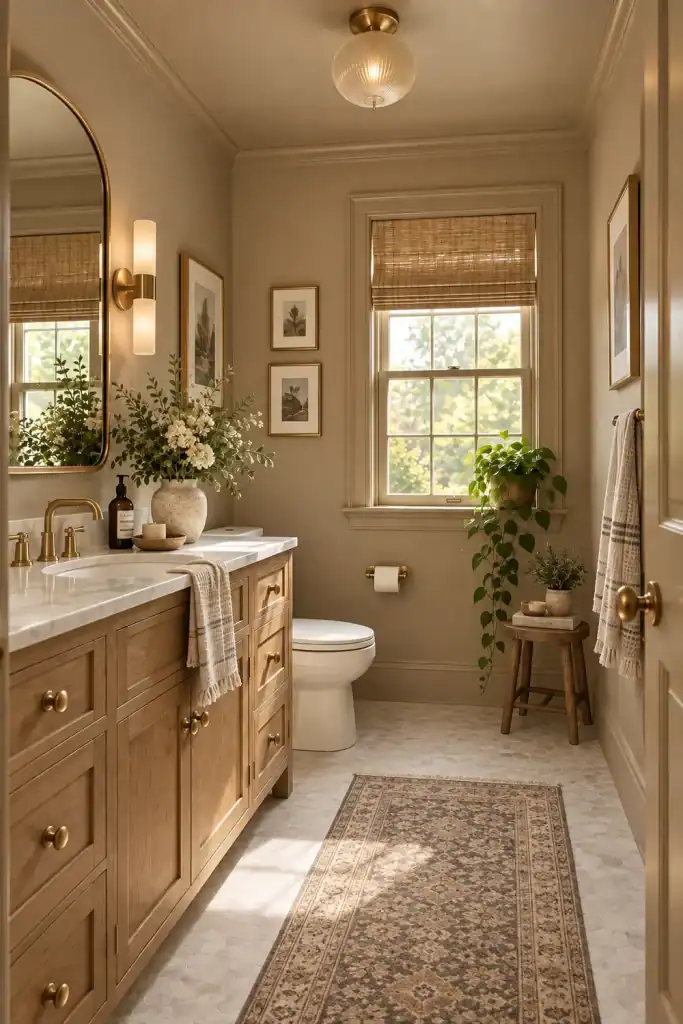
16. Pair Color Drenching With Marble
Marble and color drenching make a beautiful combination.
The natural movement in marble adds texture while the solid paint color creates a calm backdrop.
This works especially well with green, navy, charcoal, burgundy, and warm neutrals.
17. Add Warm Brass Fixtures
Brass can instantly warm up a deeply saturated bathroom.
Consider using it on:
- Faucets
- Cabinet hardware
- Mirrors
- Sconces
- Towel bars
You don’t need every metal finish in the room to match perfectly.
18. Use Wood to Add Warmth
Natural wood can keep a color drenched bathroom from feeling flat.
A wood vanity, stool, shelf, or framed mirror can provide just enough contrast.
19. Match the Trim to the Walls
White trim creates a strong outline around a room.
Painting the trim in the same color as the walls allows the architecture to blend in instead.
You can still highlight the trim by using a different sheen.
20. Paint the Window Trim
If your bathroom has a window, continuing the color onto the window trim can make a big difference.
It helps the room feel more cohesive and lets the natural light become the focal point.
21. Use Tone-on-Tone Towels
Your towels and textiles don’t need to match the walls exactly.
Choosing shades within the same color family can make the room feel layered.
For example, a green bathroom might include olive walls, sage towels, and cream bath mats.
22. Add One Contrasting Color
A monochromatic room often looks best with one contrasting accent.
Try combinations like:
- Green + burgundy
- Navy + camel
- Brown + dusty blue
- Beige + black
- Burgundy + olive
The contrast gives the room a little more personality.
23. Color Drench Around Existing Tile
You don’t have to renovate the entire bathroom to try this look.
If you already have neutral tile, simply painting the remaining walls, trim, and ceiling one color can completely change the space.
This can be one of the easiest ways to update a builder-grade bathroom.
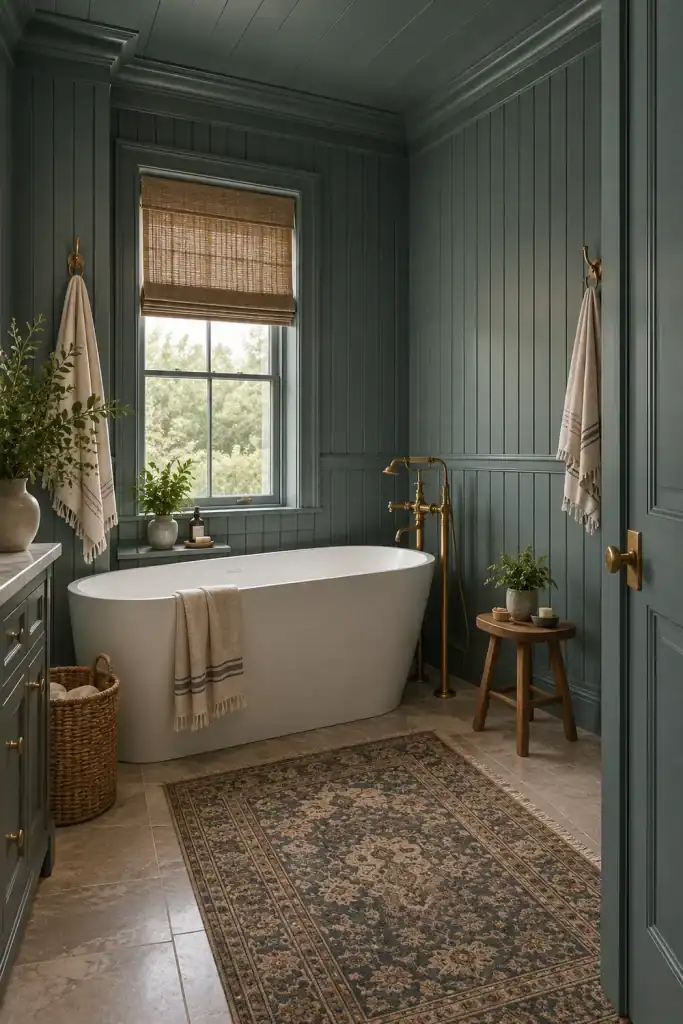
24. Use Color Drenching With Wall Paneling
Panel molding, beadboard, shiplap, and other wall treatments can look especially beautiful painted in one continuous color.
Instead of using contrasting colors above and below the molding, painting everything the same shade lets the texture become the detail.
25. Keep Accessories Simple
Once you’ve drenched a bathroom in color, you don’t need a lot of extra decor.
A few intentional pieces usually look better than lots of small accessories.
Try:
- One piece of artwork
- A vase with greenery
- A pretty soap dispenser
- A tray
- Folded towels
- A small lamp if space allows
26. Try Color Drenching With Wallpaper
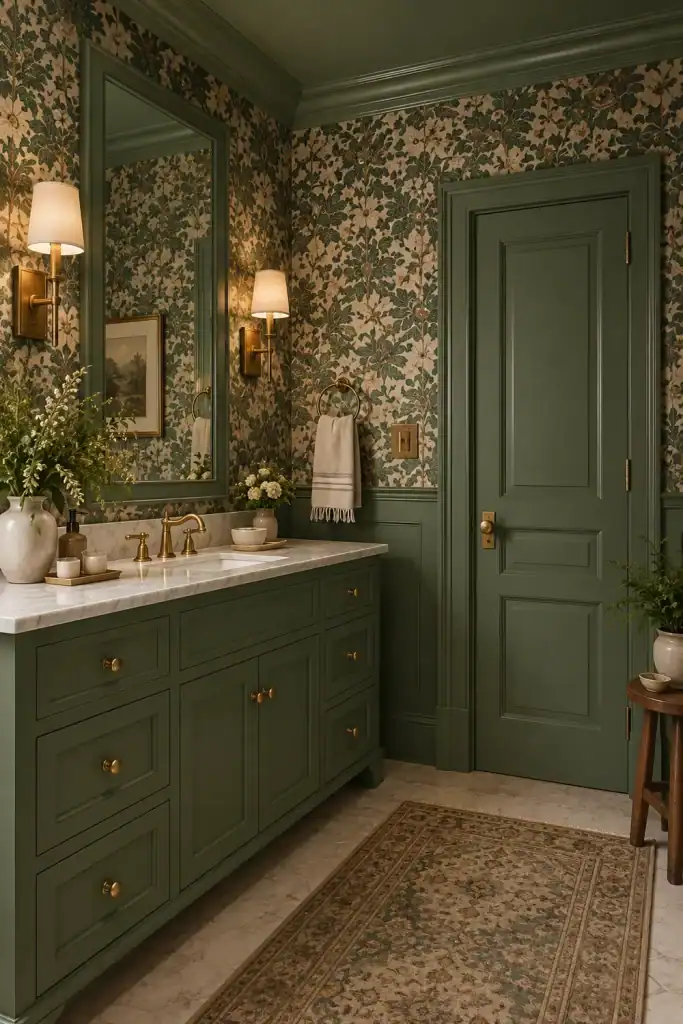
Wallpaper and color drenching can work together beautifully.
One approach is to use wallpaper above wall paneling and paint the paneling, trim, doors, and ceiling in a coordinating color.
Another option is to use wallpaper on one wall while keeping everything else in one saturated paint color.
27. Use Different Sheens for Depth
Using the same paint color does not mean every surface has to look exactly the same.
Different finishes can create subtle contrast.
You might use:
- Matte or eggshell on walls
- Flat on the ceiling
- Satin or semi-gloss on doors and trim
The light will hit each finish differently while the color remains cohesive.
Tips for Color Drenching a Bathroom
Before you start painting, there are a few practical things to keep in mind.
Choose a Paint Made for Bathrooms
Bathrooms deal with more moisture than bedrooms or living rooms.
Use a paint and finish appropriate for high-humidity areas and follow the manufacturer’s recommendations for walls, ceilings, trim, and cabinetry.
Test the Color in Your Lighting
Bathrooms often have unusual lighting.
Some have very little natural light, while others get strong daylight through a single window.
Look at your sample throughout the day before committing to the entire room.
Consider Your Fixed Finishes
Pay attention to the undertones in:
- Tile
- Countertops
- Flooring
- Stone
- Vanity
- Fixtures
A cool blue-gray may not work well with very warm beige tile, while an olive or warm taupe might.
Keep Some Contrast
The room does not need to be literally one color.
Cream towels, warm wood, brass fixtures, natural stone, and artwork can keep the space feeling layered.
Does Color Drenching Work in a Small Bathroom?
Yes.
Small bathrooms and powder rooms are actually some of the best places to try it.
Using one color throughout the room can reduce visual clutter and make the space feel more intentional.
You can use a lighter shade if you want the bathroom to feel airy, or choose a darker color and fully embrace a cozy, dramatic look.
Should You Paint the Bathroom Ceiling?
If you want a true color drenched effect, painting the ceiling makes a big difference.
A white ceiling creates a clear stopping point.
Painting it the same color as the walls creates a more seamless feeling.
If the exact same shade feels too dark, you could use a lighter version of the wall color instead.
Should the Bathroom Vanity Match the Walls?
It doesn’t have to.
You can color drench the walls, trim, doors, and ceiling while leaving a wood vanity natural.
In fact, that contrast can look beautiful.
But if you have a paintable vanity and want a more immersive look, painting it to match the room can make it feel custom and built in.
Can You Color Drench a Bathroom With White Tile?
Absolutely.
White or cream tile can provide a nice break from the painted surfaces without ruining the color drenched effect.
Focus on keeping the walls, trim, doors, and ceiling cohesive.
The tile then acts almost like another texture in the room.
Final Thoughts
Color drenching can turn even a simple bathroom into a room that feels thoughtful and designer-inspired.
Whether you choose a soft sage, dusty blue, warm beige, deep green, navy, chocolate brown, burgundy, or charcoal, carrying the color across the walls, trim, doors, and ceiling can make the entire space feel more cohesive.
And you don’t need a full bathroom renovation to get the look.
Sometimes a few cans of paint, updated lighting, and a handful of carefully chosen accessories are enough to completely change the way the room feels.
For even more inspiration, visit my complete guide to color drenching and these color drenching bedroom ideas.