
25+ Color Drenching Bedroom Ideas for a Cozy, Designer Look
Color drenching has quickly become one of my favorite ways to make a bedroom feel more intentional, cozy, and completely pulled together.
Instead of stopping the wall color at the trim or ceiling, color drenching carries the same color — or closely related shades — across the walls, molding, doors, and sometimes even the ceiling.
The result is a bedroom that feels enveloping rather than busy. And while you might immediately picture a dark, moody room, color drenching can work just as beautifully with soft blues, warm neutrals, muted greens, and even dusty pinks.
If you’ve been thinking about trying this look, these color drenching bedroom ideas will show you just how many directions you can take it.
If you’re new to the idea, you may also want to start with my complete guide to color drenching before choosing your bedroom paint color.
What Is a Color Drenched Bedroom?
A color drenched bedroom uses one dominant color across most or all of the painted surfaces in the room.
That can include:
- Walls
- Baseboards
- Crown molding
- Window trim
- Doors
- Door frames
- Built-ins
- Ceiling
You don’t necessarily have to use the exact same paint finish everywhere. In fact, using a flatter finish on the walls and ceiling with a slightly higher sheen on the trim can add just enough variation to keep the room from feeling flat.
The goal is for your eye to move around the room without constantly stopping at contrasting white trim, doors, or ceiling lines.
That seamless look is one reason color drenching can make a bedroom feel especially calm.
Why Color Drenching Works So Well in Bedrooms
Bedrooms are one of the easiest places to experiment with color drenching because they already benefit from a cozy, cocoon-like feeling.
Painting the walls, trim, and ceiling in one color can soften all the visual breaks in a room and make the entire space feel more cohesive.
It can also make architectural details look more intentional. Picture molding, crown molding, paneling, and built-ins often look even more expensive when they are painted the same color as the walls.
And despite what you may have heard, color drenching isn’t only for large rooms.
A small bedroom can look fantastic drenched in color because eliminating contrasting trim can actually simplify the room visually.
Best Colors for Color Drenching a Bedroom
Almost any color can work, but some shades are especially easy to live with in a bedroom.
For a relaxed look, consider:
- Sage green
- Dusty blue
- Warm beige
- Greige
- Soft taupe
- Muted blush
For something moodier:
- Olive green
- Forest green
- Navy blue
- Burgundy
- Charcoal
- Chocolate brown
- Deep blue-gray
If you already love green interiors, you can also pull inspiration from my guides to colors that go with sage green and colors that go with olive green.
Color Drenching Bedroom Ideas
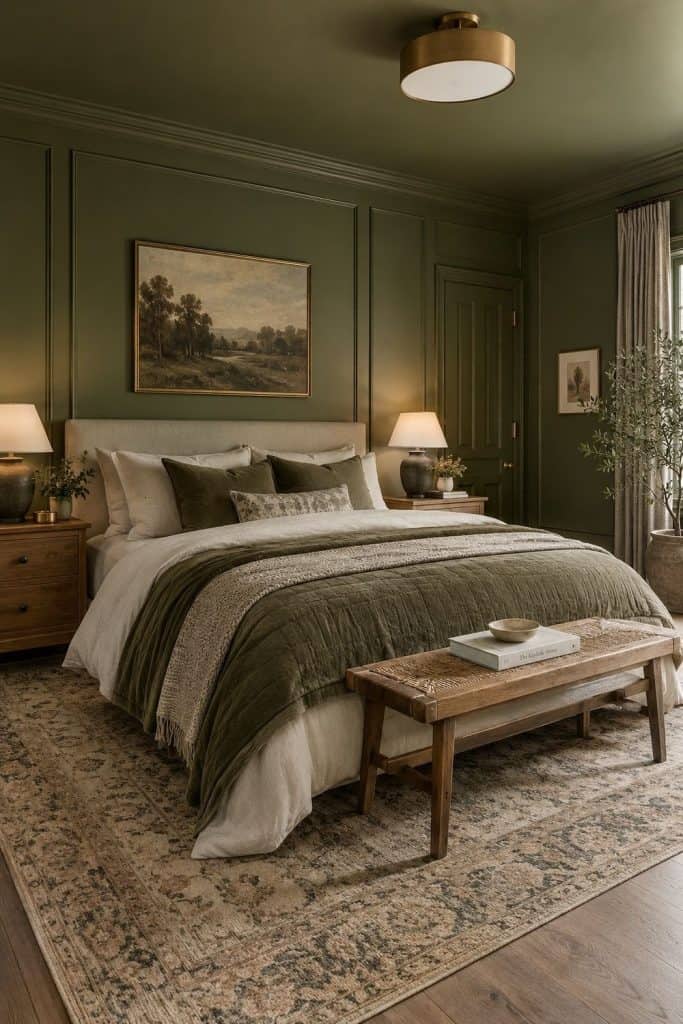
1. Try a Deep Green Bedroom
Deep green is one of the most natural choices for a color drenched bedroom.
Painting the walls, trim, and ceiling in the same earthy green can create a cozy atmosphere without making the room feel overly dramatic.
Pair it with warm wood furniture, linen bedding, aged brass, and cream accents to keep the space from feeling too heavy.
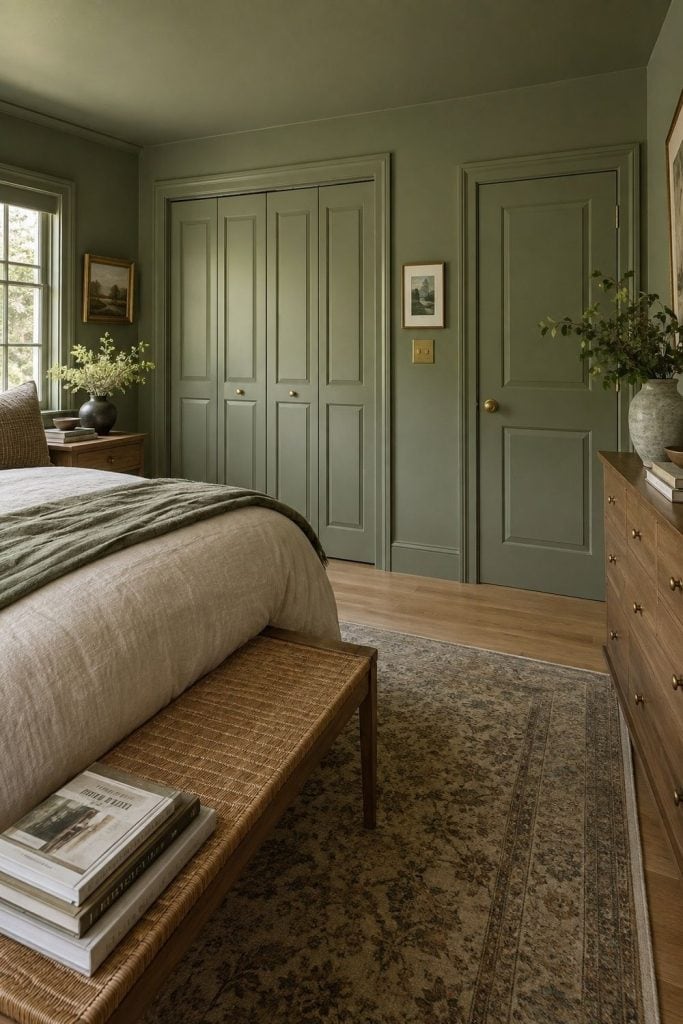
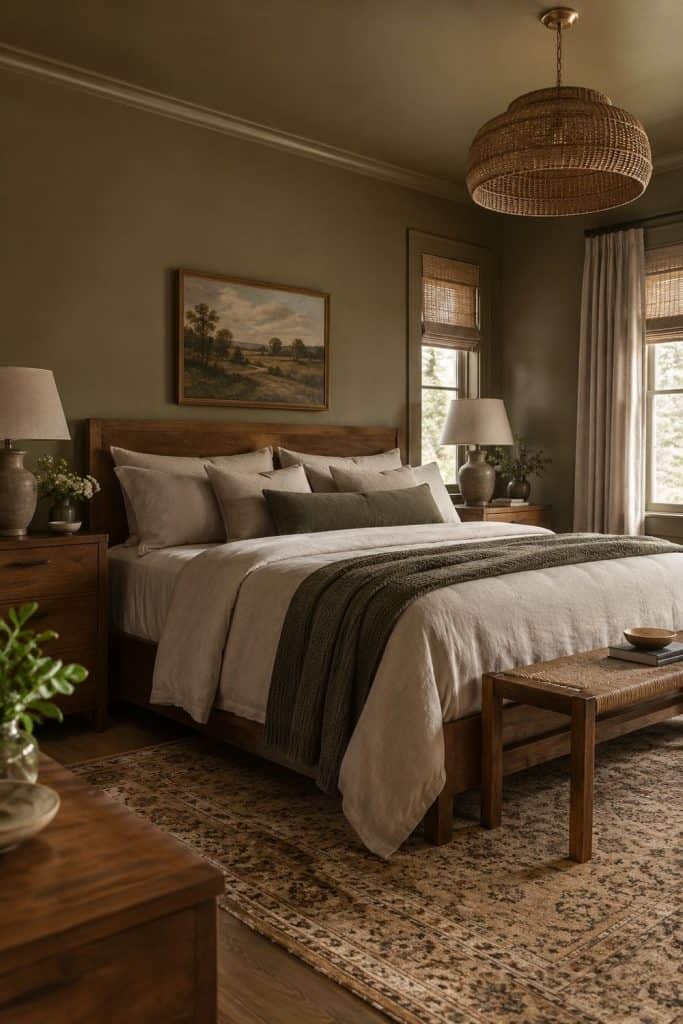
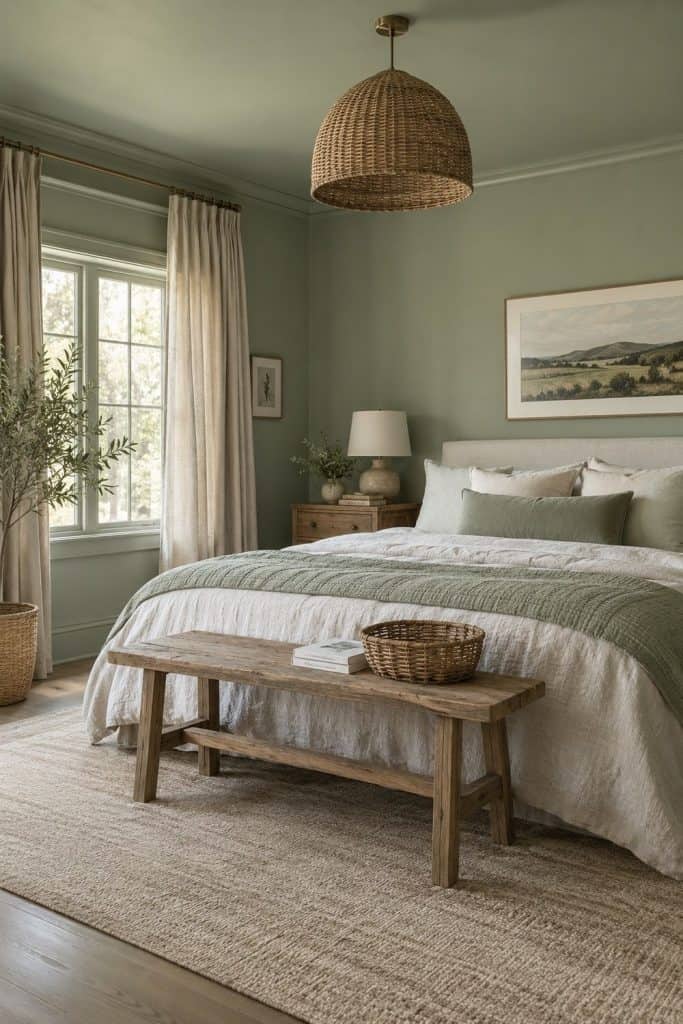
2. Use Sage Green for a Softer Look
If dark green feels like too much of a commitment, sage is a beautiful alternative.
A sage green color drenched bedroom still has that enveloping feeling, but the lighter tone keeps the room soft and airy.
It works especially well in bedrooms with natural wood, woven textures, vintage furniture, and warm whites.
3. Create a Moody Navy Bedroom
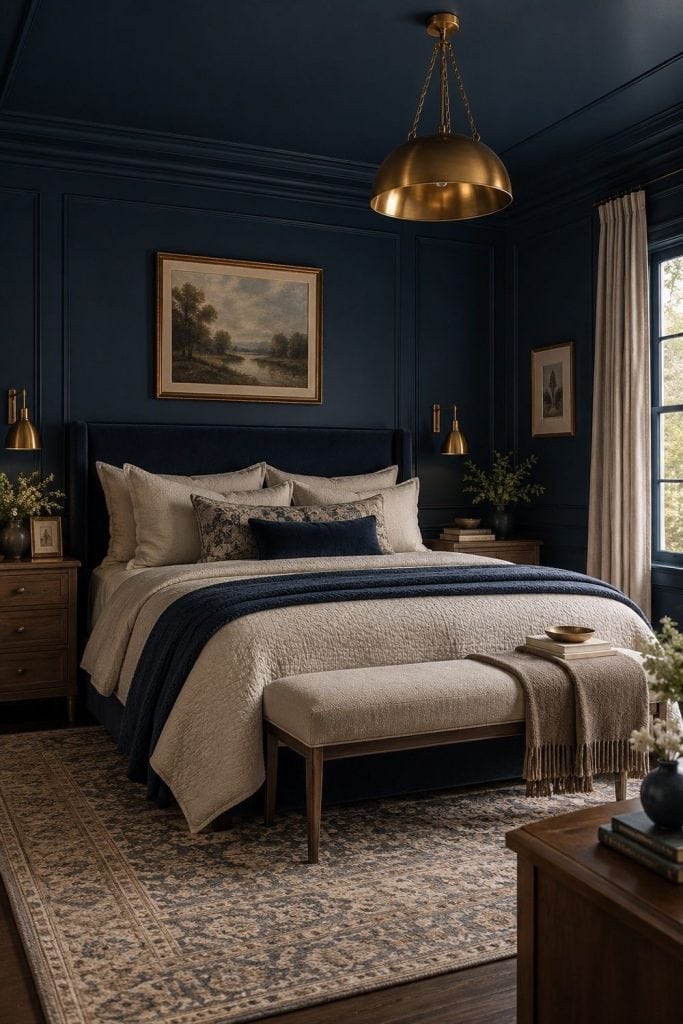
Navy makes a bedroom feel sophisticated almost instantly.
Instead of pairing navy walls with bright white trim, continue the blue onto the doors, baseboards, and ceiling.
The effect is much more seamless.
If you love this color family, my guide to colors that go with navy blue can help you choose bedding and accent colors.
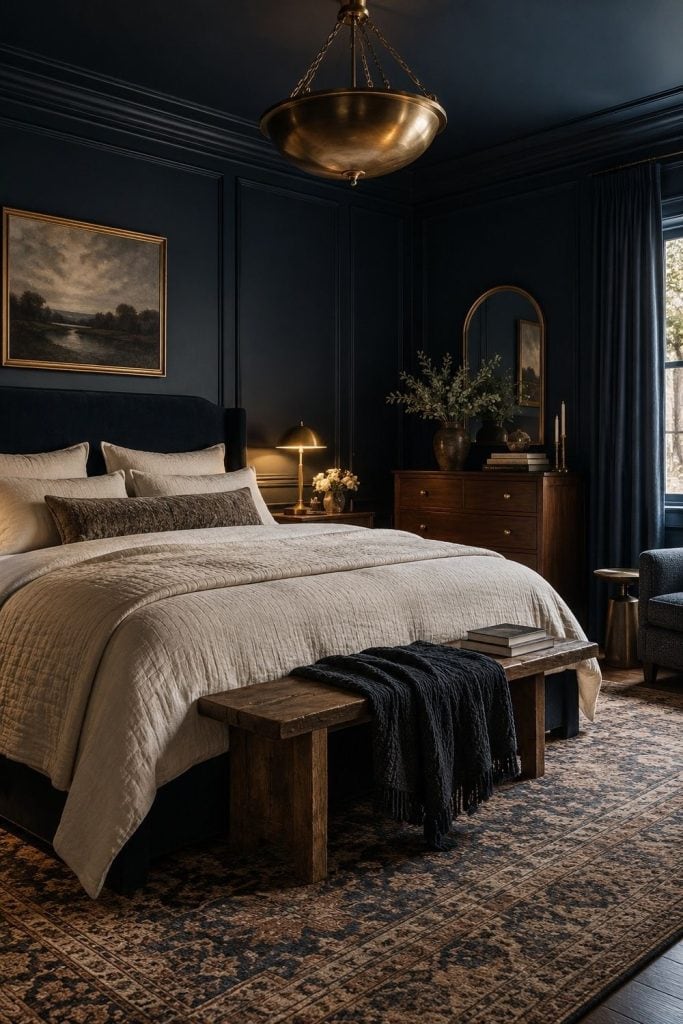
4. Go Even Deeper With Nearly Black Blue
A blue-black or ink-colored bedroom can look incredibly high-end.
The trick is adding plenty of texture.
Think upholstered headboards, layered bedding, wood nightstands, woven shades, antique brass, and soft lamps rather than relying on lots of contrasting colors.
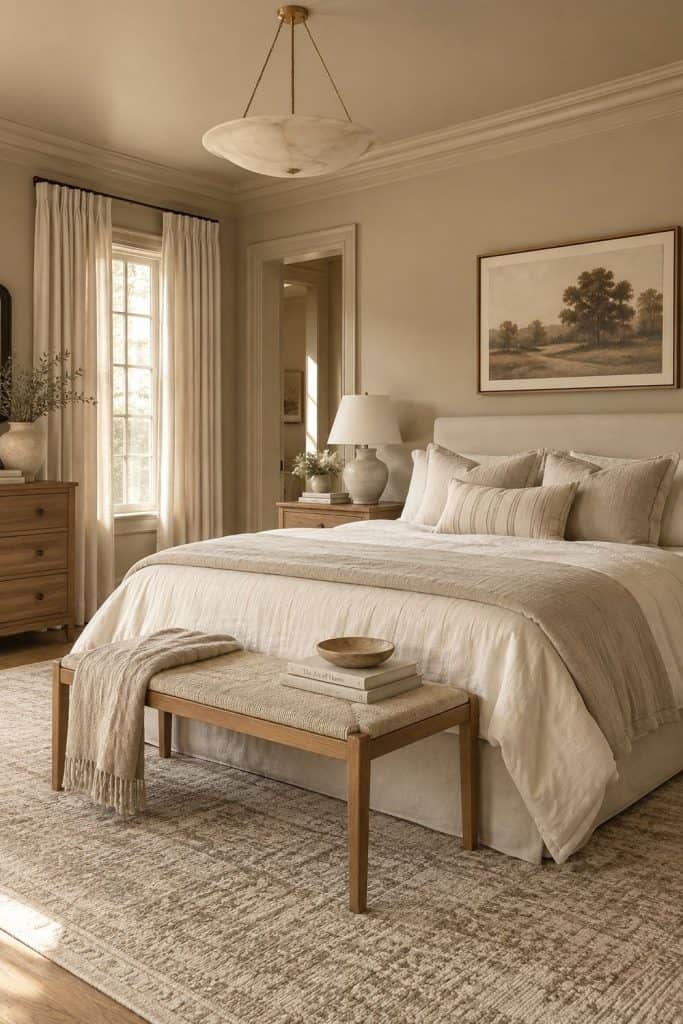
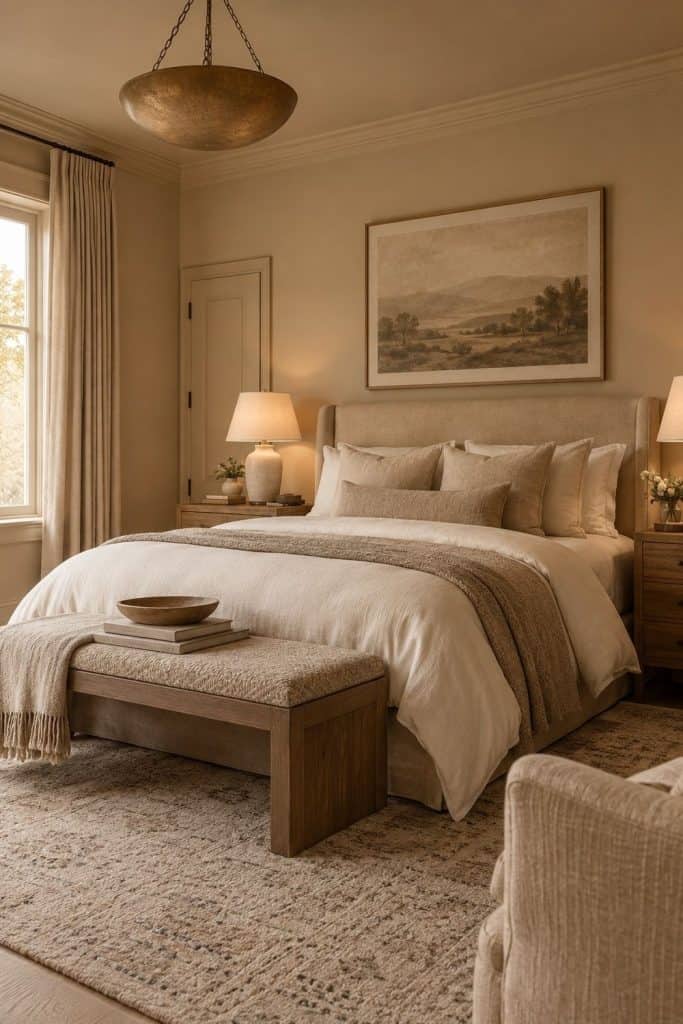
5. Color Drench a Bedroom in Warm Beige
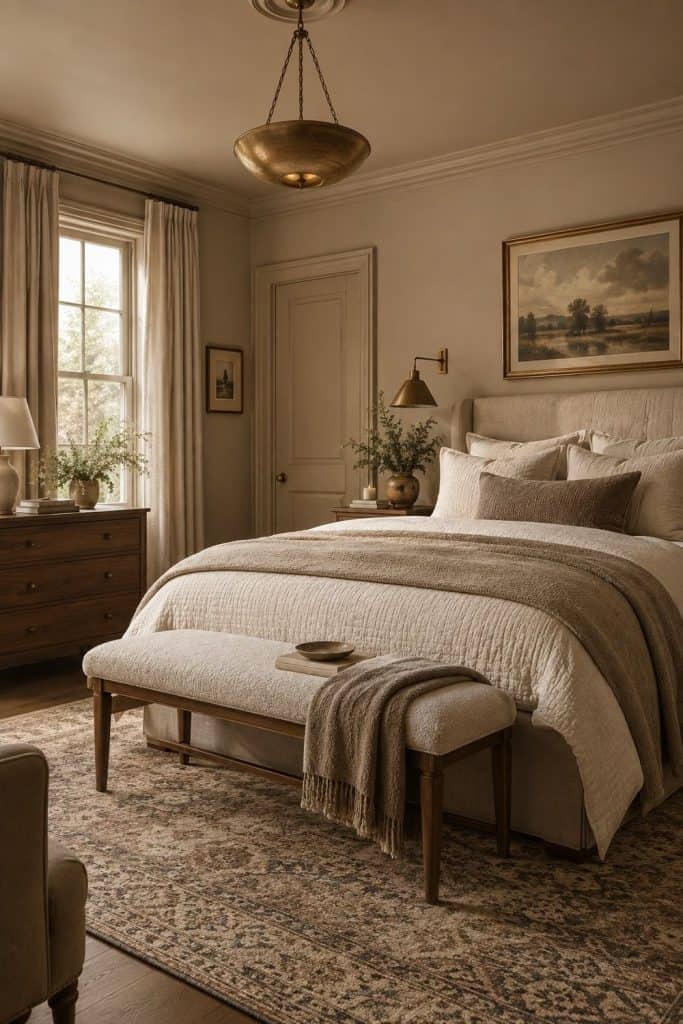
Color drenching doesn’t always mean bold color.
Painting an entire bedroom in a warm beige can create a soft, tonal look that feels calm and expensive.
The walls, doors, trim, and ceiling blend together while darker wood furniture and creamy bedding provide just enough contrast.
6. Try Mushroom or Taupe
Mushroom and taupe are great choices when you want something more interesting than white but aren’t ready for a dramatic color.
These earthy neutrals work beautifully with:
- Chocolate brown
- Cream
- Black
- Aged brass
- Natural oak
- Dark walnut
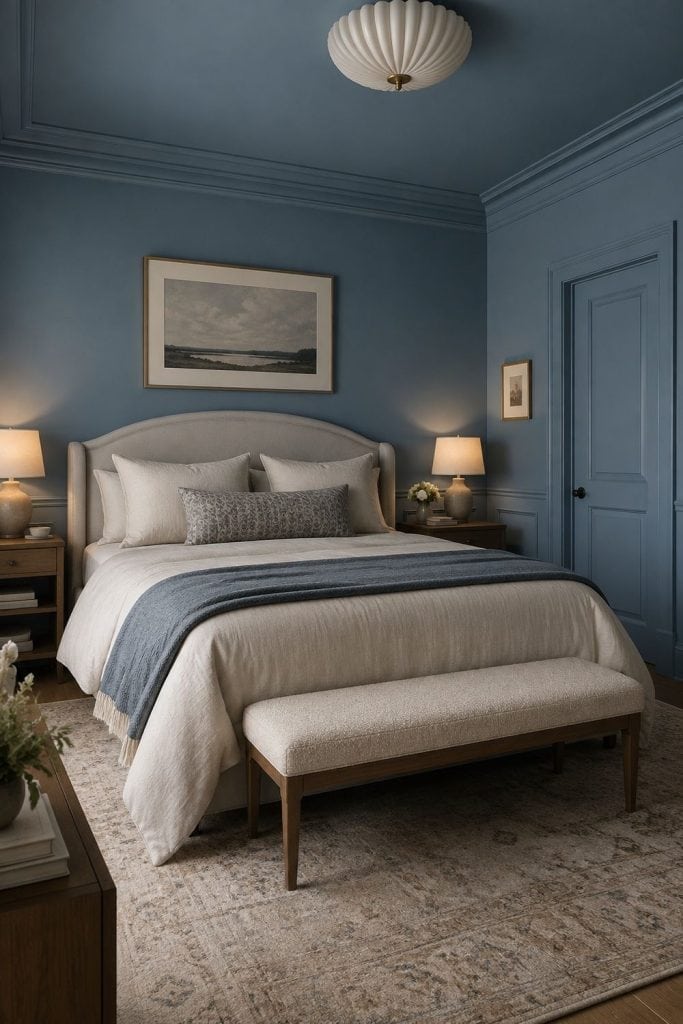
7. Use Dusty Blue
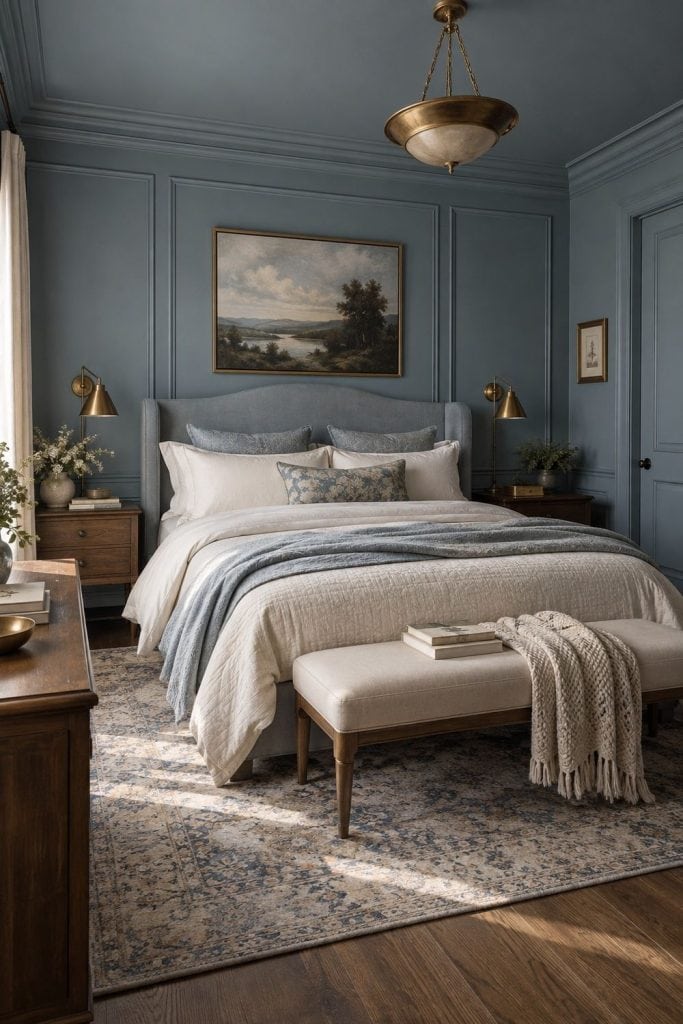
Dusty blue is another easy bedroom color because it feels peaceful without looking overly coastal or juvenile.
Carry the color across the ceiling and trim and combine it with soft white bedding, warm woods, and antique-inspired accents.
8. Try a Blue-Gray Bedroom
Blue-gray gives you the softness of blue with the versatility of a neutral.
It’s especially pretty in rooms with traditional molding because the monochromatic paint lets the architectural details provide the interest.
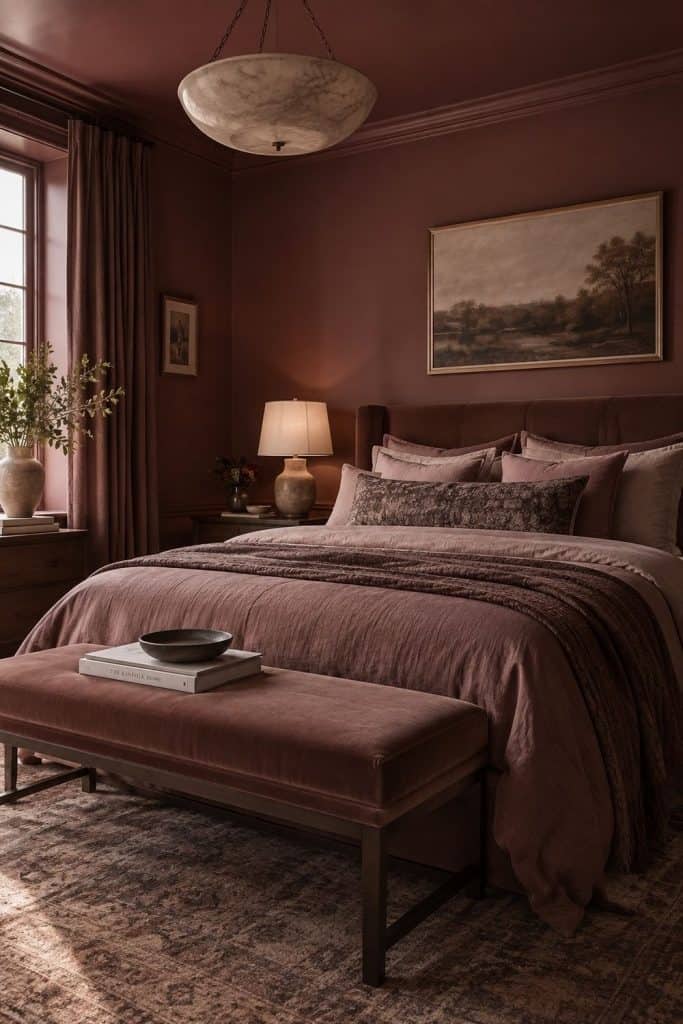
9. Create a Burgundy Color Drenched Bedroom
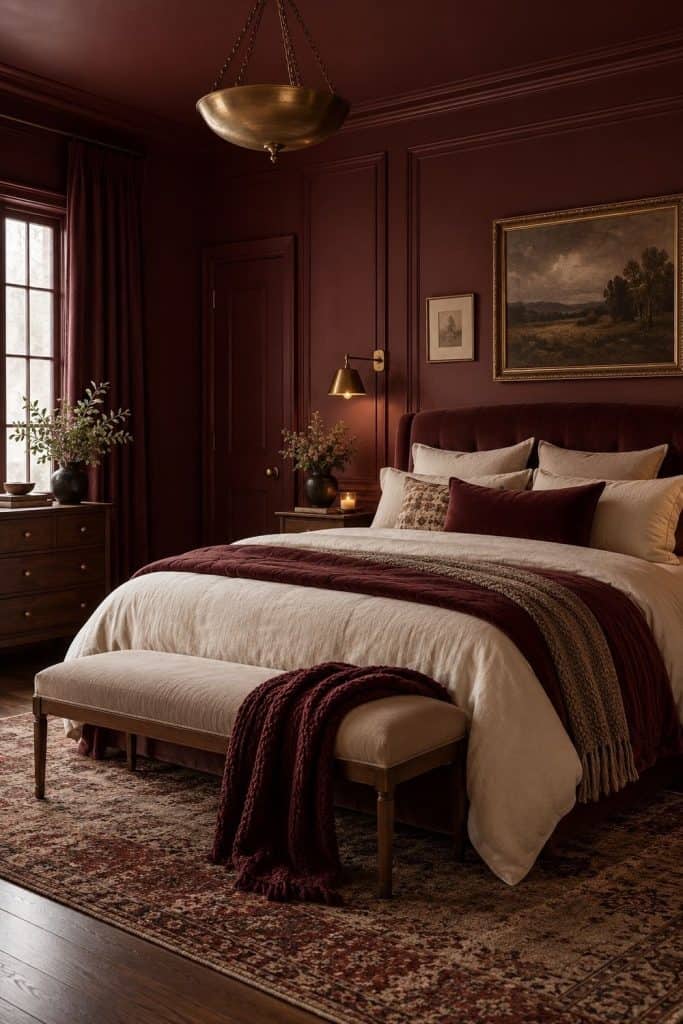
Burgundy is perfect if you love warm, dramatic bedrooms.
Because it is a strong color, keep the rest of the room fairly simple.
Cream bedding, dark wood, brass lighting, and a few vintage-inspired pieces are usually enough.
10. Use Dusty Mauve Instead of Pink
A muted mauve bedroom can feel much more sophisticated than a traditional pink room.
Look for shades with brown, gray, or plum undertones rather than anything too bright.
The result can feel warm, romantic, and surprisingly neutral.
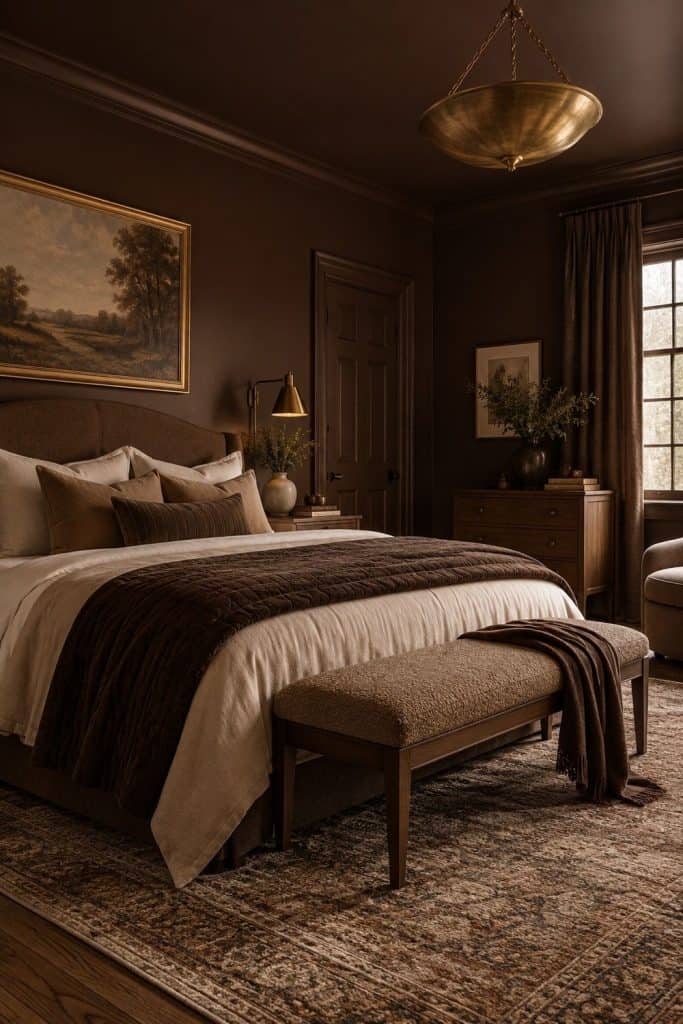
11. Try Chocolate Brown
Brown has made its way back into interiors in a big way, and bedrooms are one of the easiest places to use it.
A chocolate brown color drenched bedroom looks especially beautiful with cream bedding, camel leather, woven shades, and medium-to-dark wood.
For more pairing ideas, see my guide to colors that go with dark brown.
12. Choose Charcoal for a Softer Alternative to Black
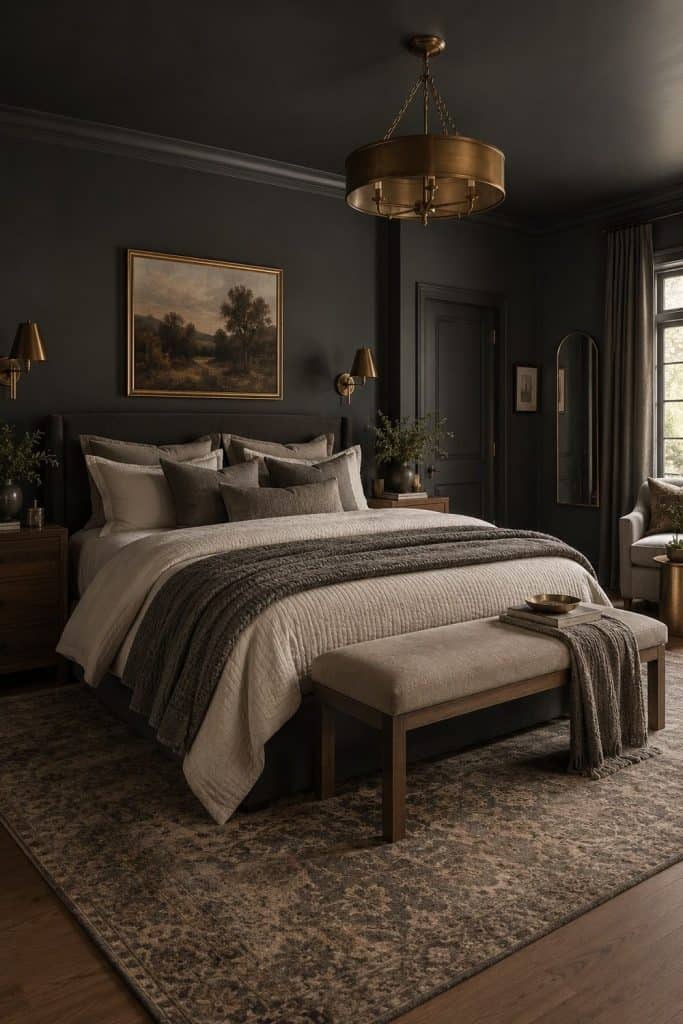
If you love the idea of a dark bedroom but true black feels too harsh, charcoal can be the perfect compromise.
It gives you plenty of drama while still allowing the undertones of the paint to soften the overall look.
13. Color Drench a Small Bedroom
Don’t automatically rule out dark colors in a small bedroom.
Using one continuous color can actually make a small room feel more cohesive because your eye isn’t constantly stopping at contrasting trim and ceiling lines.
If you want to play it safe, start with a muted mid-tone shade rather than the darkest color on the paint strip.
14. Use Color Drenching in a Guest Bedroom
A guest bedroom is a great place to experiment with a shade you may not be ready to use in your primary bedroom.
Try olive green, dusty blue, warm clay, or even burgundy to give the room a memorable boutique-hotel feeling.
15. Paint the Closet Doors Too
Closet doors can easily interrupt a color drenched room if they’re left bright white.
Painting them to match the walls helps them visually disappear and gives the room a more polished look.
16. Don’t Forget the Bedroom Door
The same rule applies to the main bedroom door.
Painting both the door and door frame in the room color creates a much more complete effect.
17. Continue the Color Onto the Ceiling
The ceiling is what really takes a room from “monochromatic” to fully color drenched.
Leaving the ceiling white creates a hard visual stopping point.
Painting it the same color can make the room feel softer and more enveloping.
18. Try a Slightly Lighter Ceiling
If you’re nervous about painting the ceiling the exact same dark shade, use a slightly lighter version of the wall color.
You will still get a tonal effect without making the ceiling feel quite as dramatic.
19. Highlight Picture Molding With One Color
If your bedroom has picture molding, panel molding, or decorative trim, color drenching can make those details stand out without relying on contrasting paint.
Light and shadow naturally highlight the molding.
This is one of my favorite ways to make builder-grade walls feel more architectural.
20. Paint Built-Ins to Match
Built-in bookcases, wardrobes, and cabinetry can also be included in the color drenching.
Keeping them the same color as the wall gives them a custom, built-in appearance rather than making them look like separate pieces of furniture.
21. Layer Similar Colors in the Bedding
A color drenched bedroom does not mean everything needs to match exactly.
Instead, choose bedding and textiles within the same general color family.
For example, a green room might include olive walls, sage pillows, cream bedding, and a darker forest green throw.
This creates depth while keeping the room calm.
22. Add Warm Wood for Contrast
Wood is one of the easiest ways to keep a color drenched bedroom from feeling flat.
Dark walnut looks beautiful with green, blue, beige, and burgundy.
Lighter oak works especially well with sage, dusty blue, and warm neutral rooms.
23. Use Brass or Aged Metal Accents
Metal finishes can provide just enough contrast against a room filled with one dominant color.
Aged brass adds warmth to green, navy, brown, and burgundy.
Black metal works well in lighter neutral and sage rooms.
24. Keep the Bedding Lighter
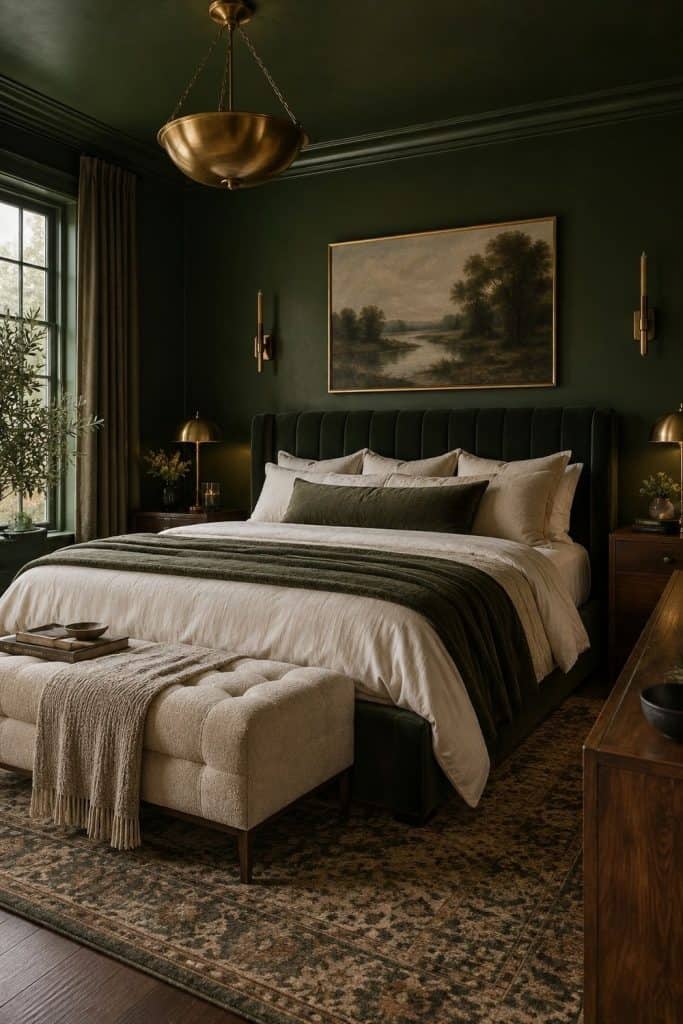
One of the easiest formulas for a dark color drenched bedroom is:
Dark walls + dark trim + lighter bedding.
Cream, oatmeal, ivory, and warm white bedding can break up all that saturated color without taking away from the cozy feeling.
25. Match the Curtains to the Walls
If you really want a seamless look, use curtains that closely match your wall color.
They don’t need to be identical.
A slightly lighter or darker fabric can add texture while still keeping the room visually quiet.
26. Add One Strong Contrasting Color
Even a monochromatic room benefits from a little contrast.
Try introducing one accent through pillows, artwork, flowers, or a chair.
For example:
- Green + burgundy
- Navy + camel
- Brown + dusty blue
- Mauve + olive
- Beige + black
One strong accent often looks more intentional than adding several unrelated colors.
27. Let Texture Do the Decorating
When most of the room is one color, texture becomes especially important.
Mix smooth painted surfaces with:
- Linen
- Velvet
- Wool
- Woven shades
- Natural wood
- Bouclé
- Aged metal
- Vintage rugs
The room can stay simple without feeling boring.
Tips for Pulling Off Color Drenching in a Bedroom
Before you start painting everything in sight, there are a few things worth considering.
Test the Paint Throughout the Day
A color can look completely different in morning light than it does at night.
Paint a large sample and look at it throughout the day before committing to the walls, ceiling, and trim.
Pay Attention to Undertones
This matters even more when you’re using a color across an entire room.
A gray with blue undertones will feel very different from a warm mushroom gray.
Choose a shade that works with your floors, furniture, and natural light.
Use Different Paint Finishes
Using the same color doesn’t necessarily mean using the same finish.
You might use:
- Matte or eggshell on the walls
- Flat on the ceiling
- Satin or semi-gloss on doors and trim
The slight difference in sheen adds subtle dimension.
Bring in Natural Materials
Wood, linen, wool, stone, and woven textures can soften a fully painted room and keep it from feeling overly styled.
Don’t Overdecorate
Color drenching already makes a statement.
You don’t need every wall filled with artwork or every surface covered with accessories.
A few larger, intentional pieces usually look better.
Is Color Drenching Good for Small Bedrooms?
Yes.
In fact, small bedrooms can be some of the best spaces for color drenching.
Contrasting white ceilings, baseboards, closet doors, and trim create a lot of visual lines in a small space. Painting them in the same color reduces those interruptions.
The room may feel cozier, but it can also feel more finished and intentional.
If you’re concerned about making a small bedroom too dark, choose a softer shade such as sage green, mushroom, dusty blue, light taupe, or muted beige.
Dark colors can still work beautifully — especially if you’re intentionally going for a moody, cocoon-like bedroom.
Should You Paint the Ceiling When Color Drenching?
For a true color drenched look, yes.
The ceiling is one of the biggest surfaces in the room, so leaving it bright white changes the effect considerably.
That doesn’t mean you have to paint it the exact same shade.
You could use a lighter tint of the wall color if you want a softer transition.
But if you’re going for a dramatic designer look, painting the ceiling to match is hard to beat.
Does the Trim Have to Be the Same Color?
Not technically, but painting the trim is what gives color drenching its seamless appearance.
White baseboards and crown molding create borders around the room.
Painting them the same color allows the architecture to blend into the overall design.
You can still create subtle contrast by choosing a different paint sheen.
What Is the Best Paint Finish for Color Drenching?
There isn’t one finish that works for every surface.
A common approach is to use a lower-sheen finish on the walls and ceiling with a more durable satin or semi-gloss on doors and trim.
That keeps everything within the same color family while making the architectural details subtly reflect light.
Always choose finishes based on how much wear the surface receives and the recommendations of the paint manufacturer you’re using.
25+ Color Drenching Bathroom Ideas
Final Thoughts
Color drenching can completely change the feeling of a bedroom without requiring a major renovation.
Whether you choose soft sage, warm beige, dusty blue, deep navy, rich brown, or dramatic burgundy, carrying the color across the walls, trim, doors, and ceiling creates a room that feels intentional and beautifully finished.
And you don’t have to fill the room with expensive furniture or decor to make it work.
Start with the paint color, layer in texture, add warm lighting, and let the simplicity of the room do the rest.
If you love experimenting with color, be sure to browse my other color combination ideas for even more inspiration.


2 Comments