Basement Bedroom Ideas: How to Make a Basement Bedroom Feel Warm, Bright & Comfortable
Basement bedrooms can be some of the coziest rooms in the house.
They are often quieter, more private, and separated from the main living areas, which can make them perfect for guests, teenagers, college-age kids, or even a primary bedroom.
But basement bedrooms also come with a few challenges.
They can feel dark. They can run colder than the rest of the house. Windows are often smaller, ceilings may be lower, and ducts or bulkheads can make furniture placement a little tricky.
The good news is that most of these problems can be solved with a few smart design choices.
These basement bedroom ideas will help you create a room that feels comfortable, inviting, and intentional — instead of simply feeling like a bedroom that happens to be downstairs.
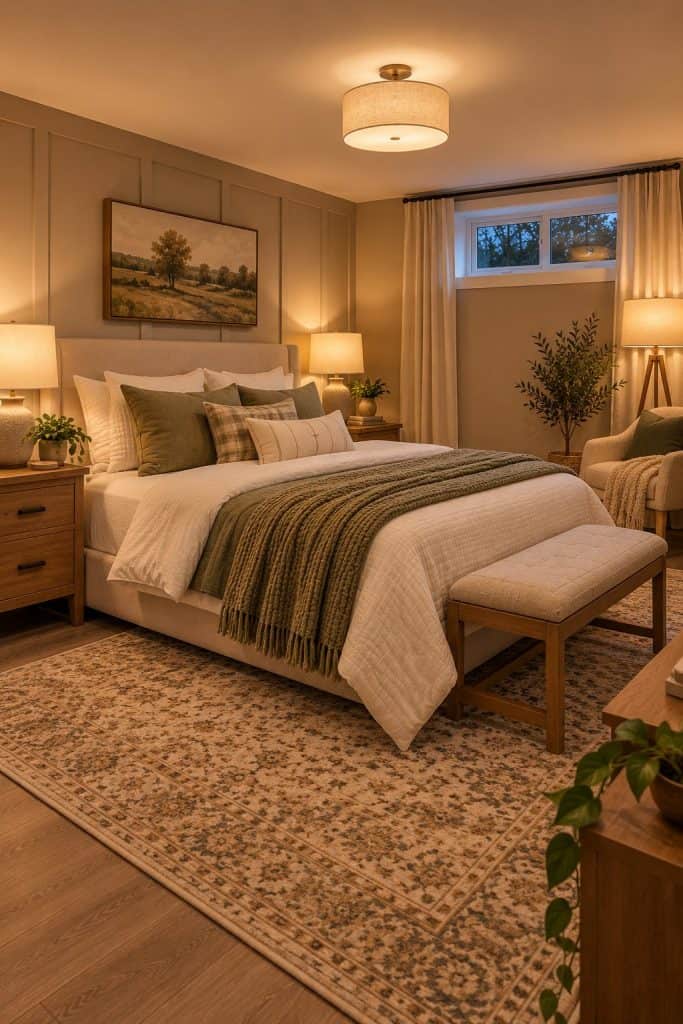
Start With the Practical Stuff First
Before choosing paint colors or shopping for bedding, make sure the room itself works as a bedroom.
Basement bedrooms may have additional requirements for things such as emergency exits, windows, smoke alarms, ceiling height, ventilation, and heating.
Requirements vary depending on where you live, so check your local building codes before turning a basement room into an official bedroom.
You also want to deal with any moisture issues first.
If the basement has leaks, condensation, or that telltale musty smell, fix the source before bringing upholstered furniture, rugs, and bedding into the room.
A dehumidifier can also be helpful in basements that naturally run humid.
It is much easier to address those issues before the room is finished than to discover a moisture problem behind a dresser later.
Make the Most of the Natural Light You Have
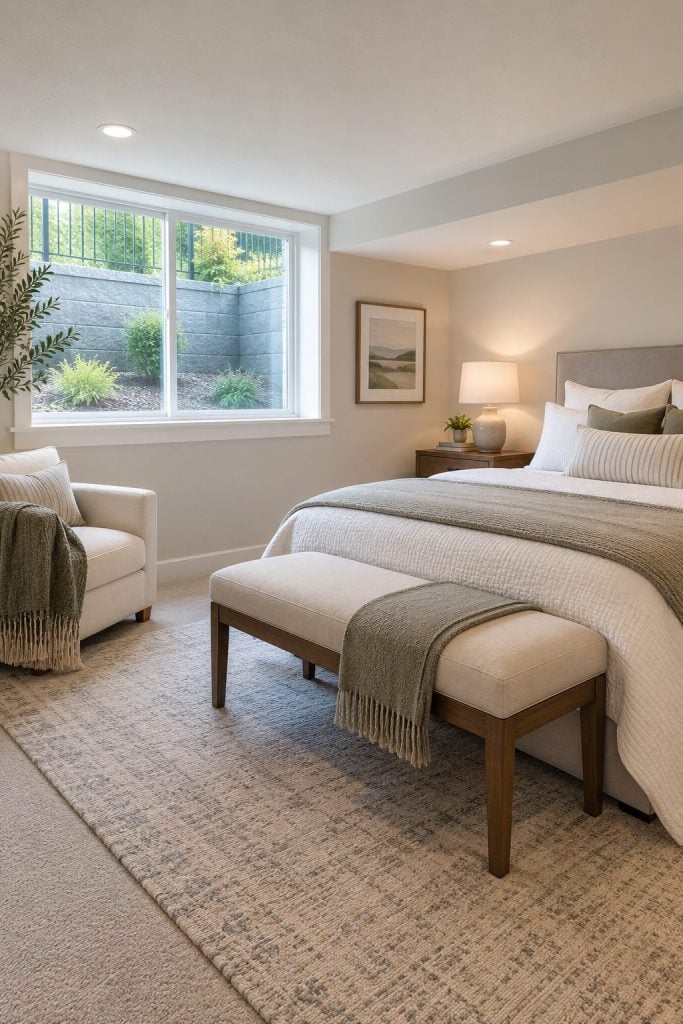
Basement windows are often smaller and higher on the wall, but even a small window can make a big difference.
Try not to block it with tall furniture or heavy window treatments.
Instead, keep the area around the window relatively open so as much daylight as possible can reach the room.
Light walls and trim around the window can also help bounce that light farther into the space.
If the window looks into a window well, keep that area clean and attractive too. Even simple gravel, plants, or a tidy window well can make the view feel more intentional.
Mirrors are another simple way to make a basement bedroom feel brighter.
Place one near or across from a window when possible so it can reflect natural light back into the room.
A large mirror over a dresser or a tall floor mirror can also make a smaller basement bedroom feel more open.
Layer the Lighting
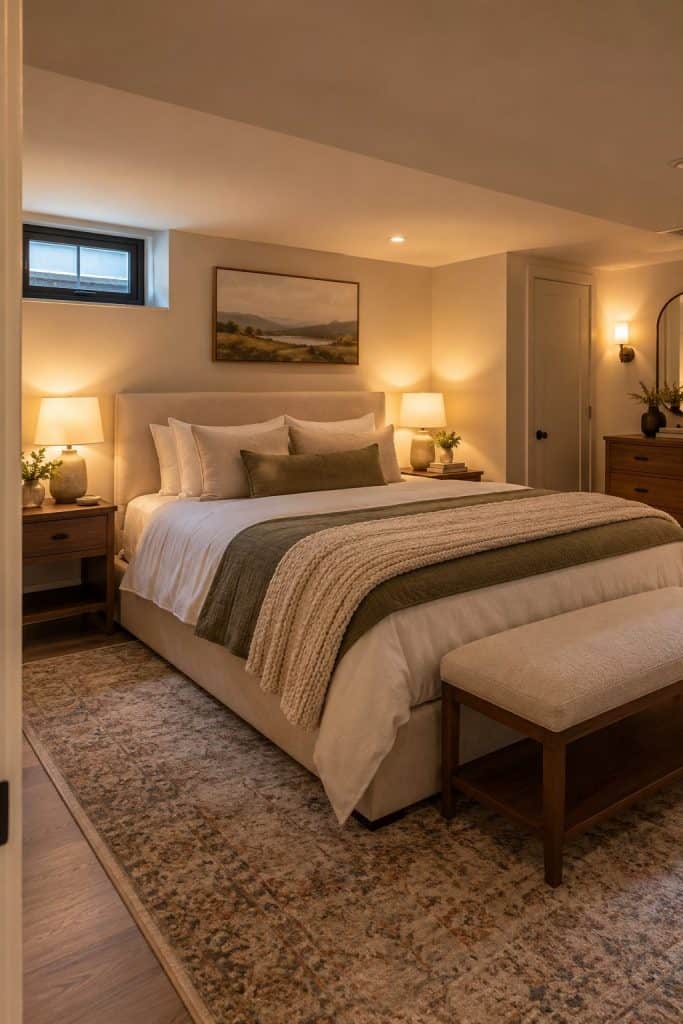
One ceiling fixture usually is not enough in a basement bedroom.
Basements tend to have less natural light, so the goal is to create several smaller pools of light throughout the room.
A good basement bedroom might include:
- recessed ceiling lights
- bedside lamps
- wall sconces
- a floor lamp
- task lighting near a desk
- lighting around shelves or built-ins
Wall sconces are especially useful in smaller basement bedrooms because they provide bedside lighting without taking up valuable nightstand space.
And pay attention to the color of your bulbs.
Very cool or blue-white bulbs can make a basement feel more like an office.
Warmer bulbs usually make bedrooms feel softer and much more inviting.
Make Sure the Bedroom Is Actually Warm Enough
This is one thing I would absolutely think about before finishing a basement bedroom.
Basements naturally tend to stay cooler than the rest of the house.
That can be wonderful in summer, but in colder months it can make the bedroom uncomfortable.
One of the best things we did in our own basement bedroom was install a wall heater.
It allows us to warm that room without turning up the heat throughout the entire house.
It is not necessarily the most exciting thing to think about when you’re designing a bedroom, but it is one of those features you really appreciate once you actually start using the room.
If you’re planning a basement renovation, think about heating before the walls and electrical work are completely finished.
Depending on the type of heater and where you live, professional installation may be required.
Comfort should always come before decorating.
Plan the Bed Placement Before Anything Else
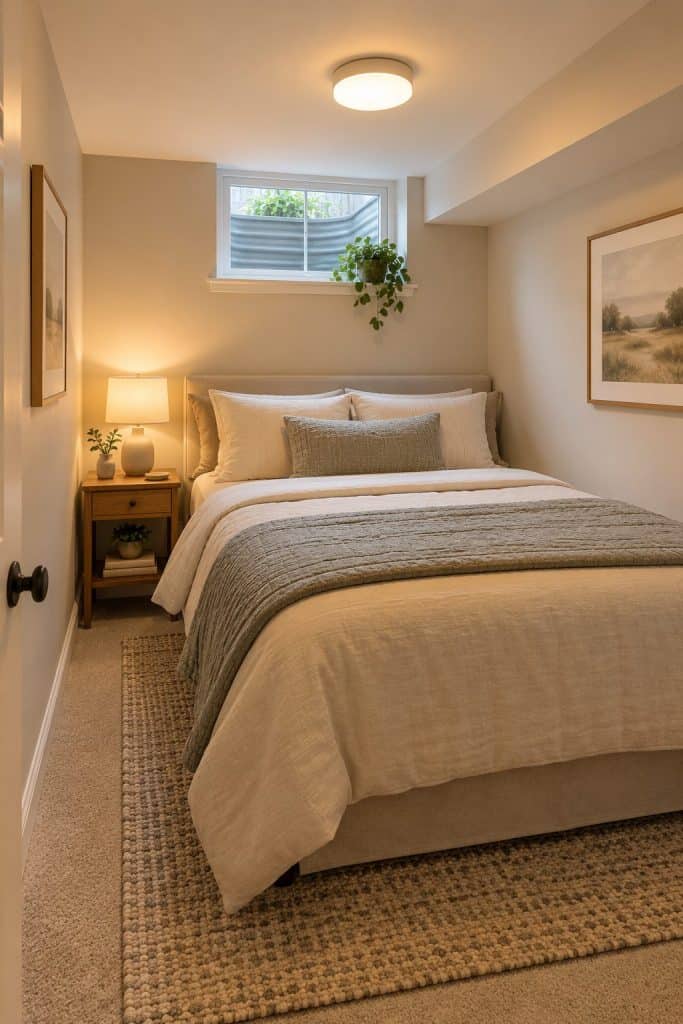
The bed is usually the biggest piece of furniture in the room, so start your layout there.
Basement bedrooms often have windows, support columns, soffits, vents, or mechanical areas that limit where furniture can go.
Before placing the bed, think about:
- where the basement window is located
- where ceiling height changes
- door clearance
- heating and cooling vents
- room for nightstands
- walking space around the bed
Don’t automatically place the bed against the first empty wall.
Sometimes shifting the bed just a few feet creates a much more balanced layout.
If your basement bedroom is small, you may also find ideas in my Small Bedroom Ideas for making the most of limited space.
Work With Bulkheads, Beams and Low Ceilings
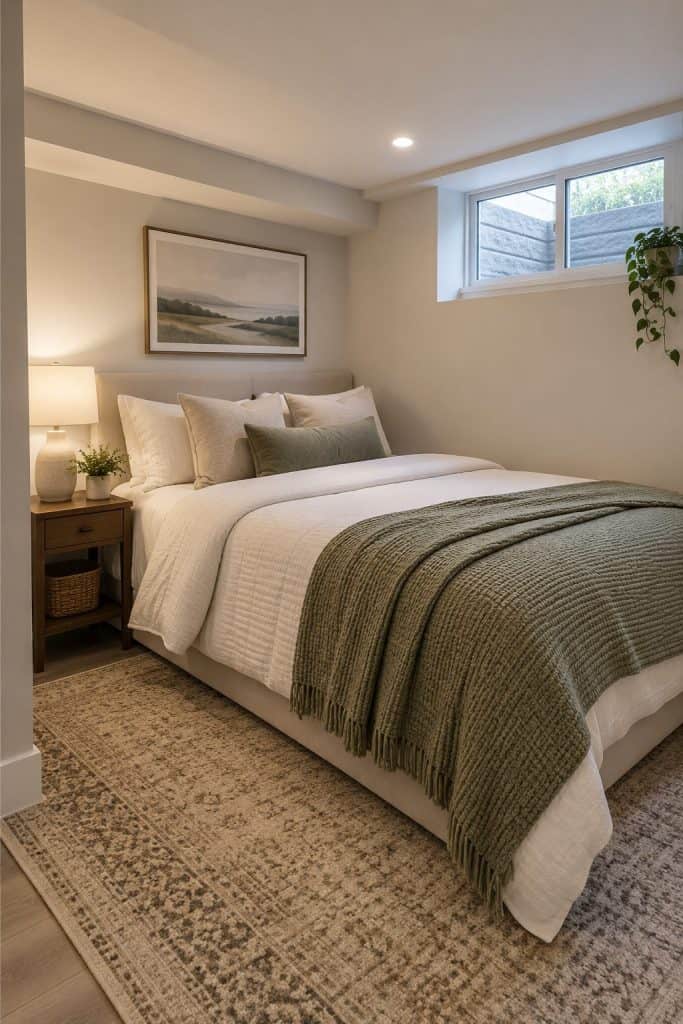
Almost every basement has something awkward.
There may be ductwork running across the ceiling, a support beam in an inconvenient location, or a section of the ceiling that suddenly drops several inches.
Instead of fighting those features, make them part of the design.
Painting a bulkhead the same color as the ceiling often helps it visually disappear.
In larger rooms, you can even use ceiling changes to define different zones.
For example, one side of the room might hold the bed while another becomes a desk or sitting area.
If you’re planning more than just a bedroom downstairs, you can see how we handled other basement design challenges in our Finished Basement – Industrial Farmhouse Design.
Consider an Exposed Basement Ceiling
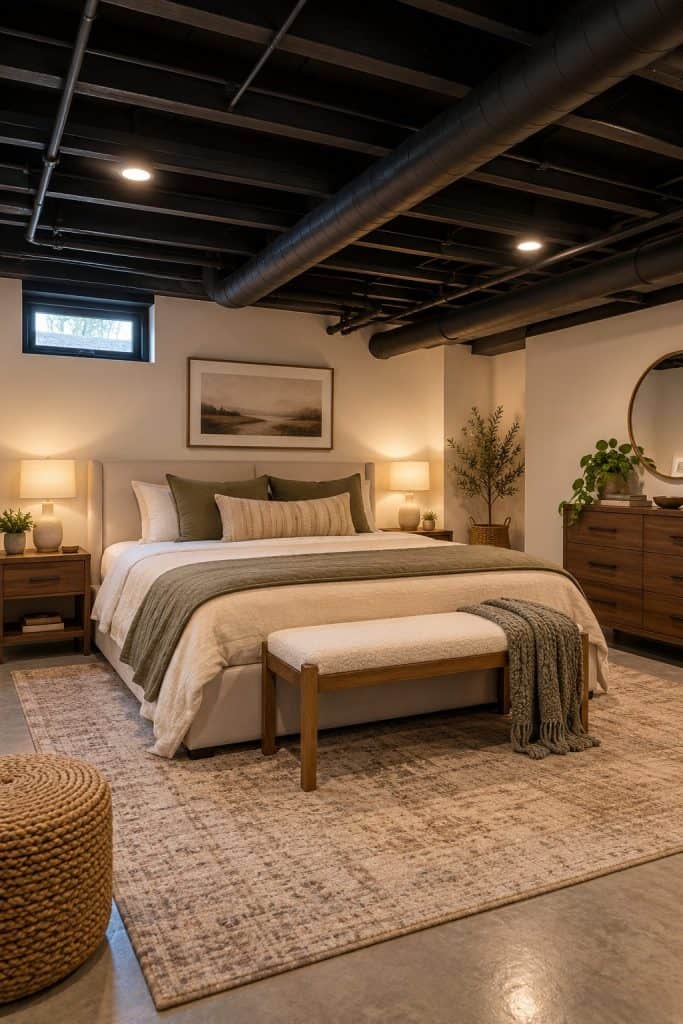
Sometimes covering all of the pipes and ductwork would make a basement ceiling too low.
In that case, leaving the ceiling exposed can actually be a great design choice.
Painting the joists, pipes, ductwork, and ceiling all one dark color helps everything blend together.
An exposed black ceiling works especially well with industrial, rustic, modern, or masculine bedroom styles.
Instead of making the basement look unfinished, it can make the room feel intentionally designed.
If you like that look, you may also want to see our Industrial Basement Dry Bar.
Decide Whether You Want Light and Airy or Dark and Cozy
There is no rule that says a basement bedroom has to be painted white.
Light colors can certainly help a room feel brighter.
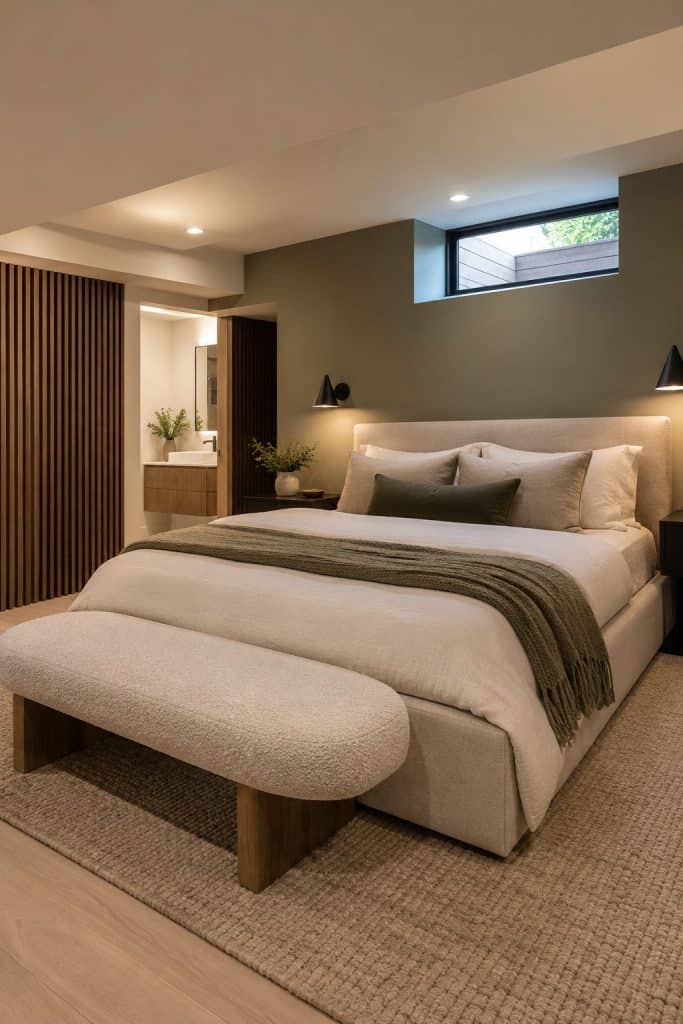
Warm whites, soft beige, cream, and light greige are all good choices when you want the room to feel airy.
But sometimes embracing the naturally cozy feeling of a basement works even better.
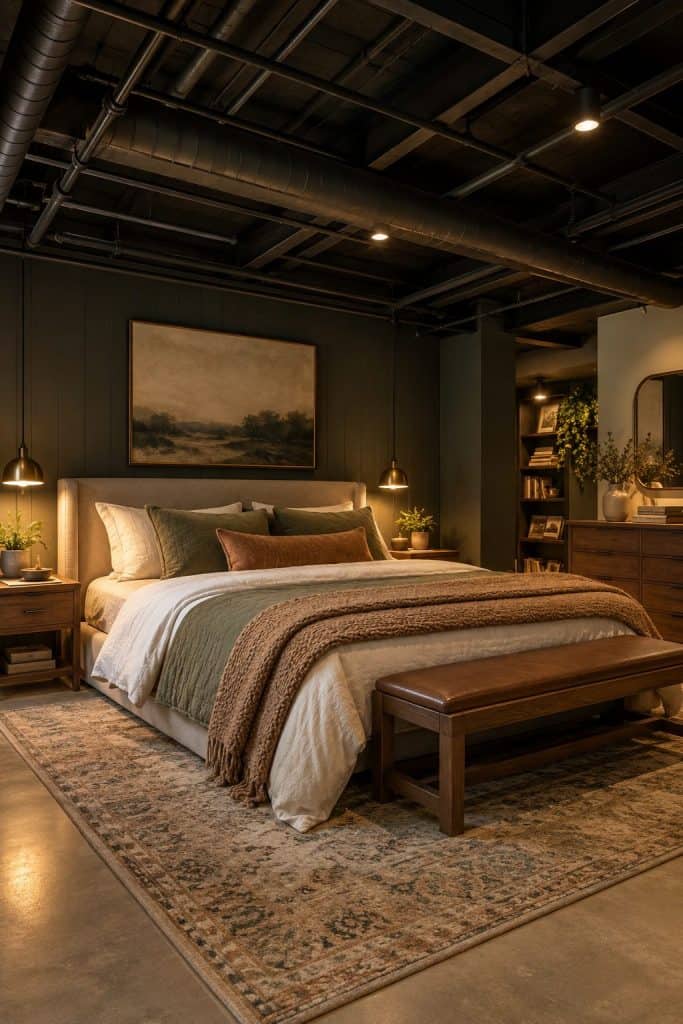
Deep olive, charcoal, navy, or warm brown can make the room feel like a retreat.
The key is being intentional.
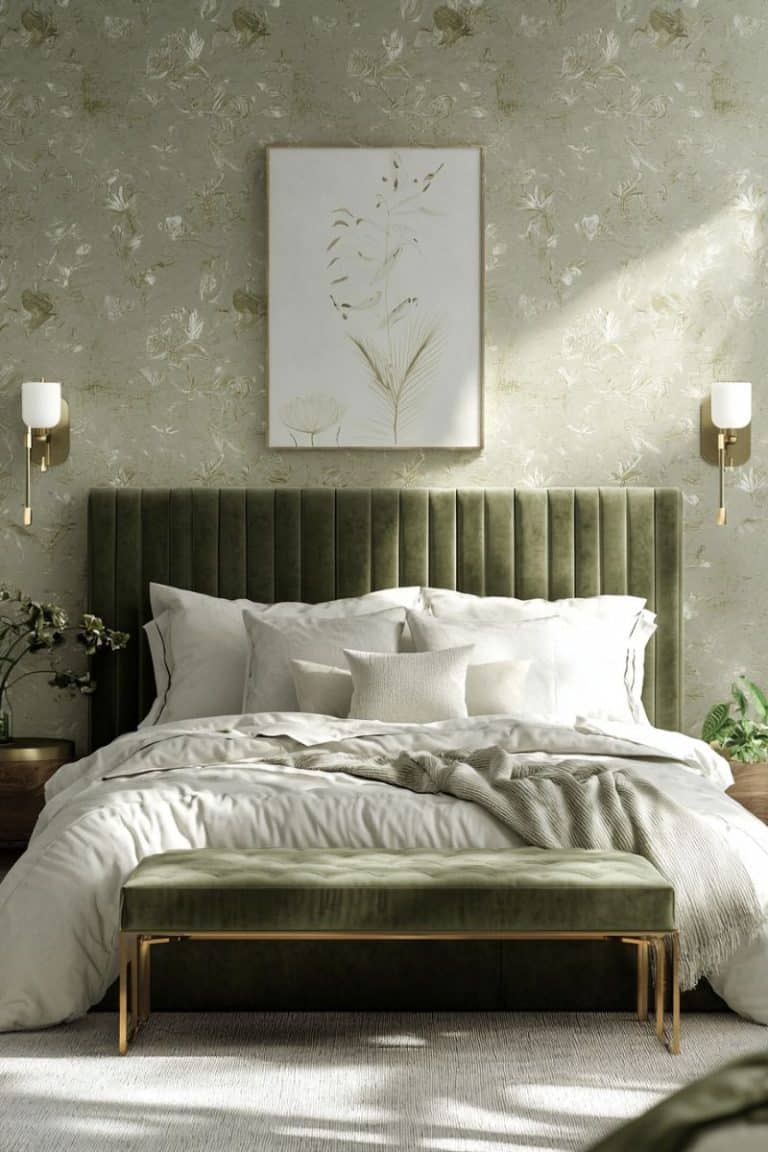
If you use a darker wall color, balance it with warm lighting, soft bedding, wood tones, and lighter textiles so the room still feels comfortable.
Add Warmth With Rugs and Texture
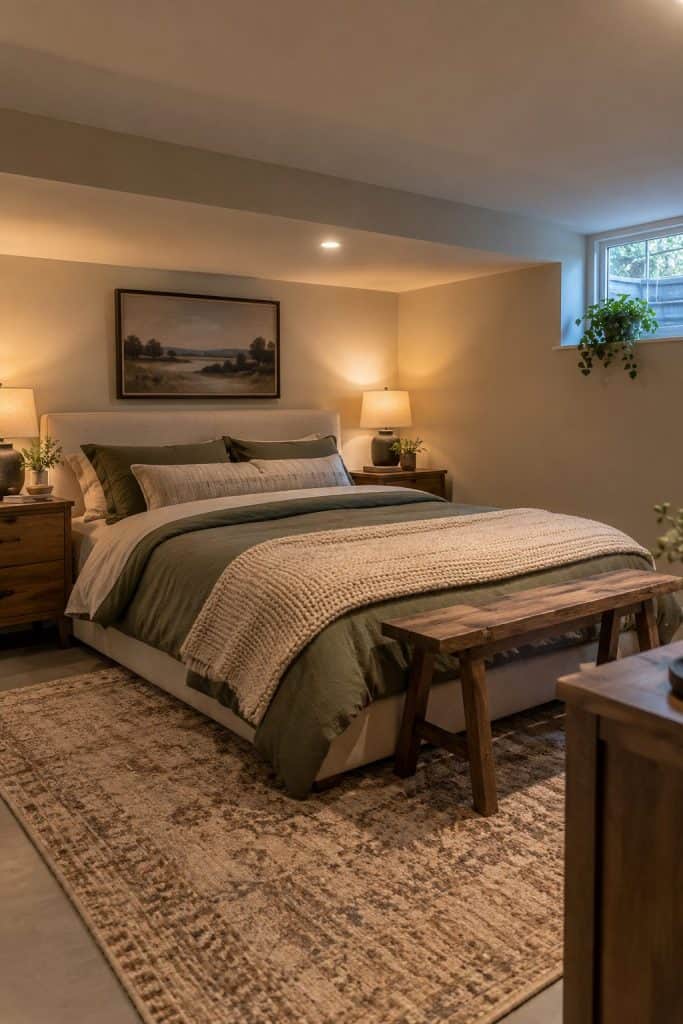
Basements can sometimes feel a little hard and cold, especially if they have vinyl, laminate, tile, or concrete flooring.
A large area rug can instantly make the bedroom feel warmer.
Make sure the rug is large enough to extend beyond the sides and foot of the bed.
A tiny rug floating in the middle of the floor usually makes the room look smaller.
Texture is just as important.
Layer in things like:
- cotton or linen bedding
- chunky knit throws
- upholstered headboards
- woven rugs
- wood furniture
- textured pillows
- baskets
- soft seating
You do not need a complicated color palette to create a cozy bedroom.
Sometimes creams, wood tones, and one accent color are enough.
If you love this softer style, you’ll find more inspiration in my Cozy Bedroom Ideas.
Create Storage Without Crowding the Room
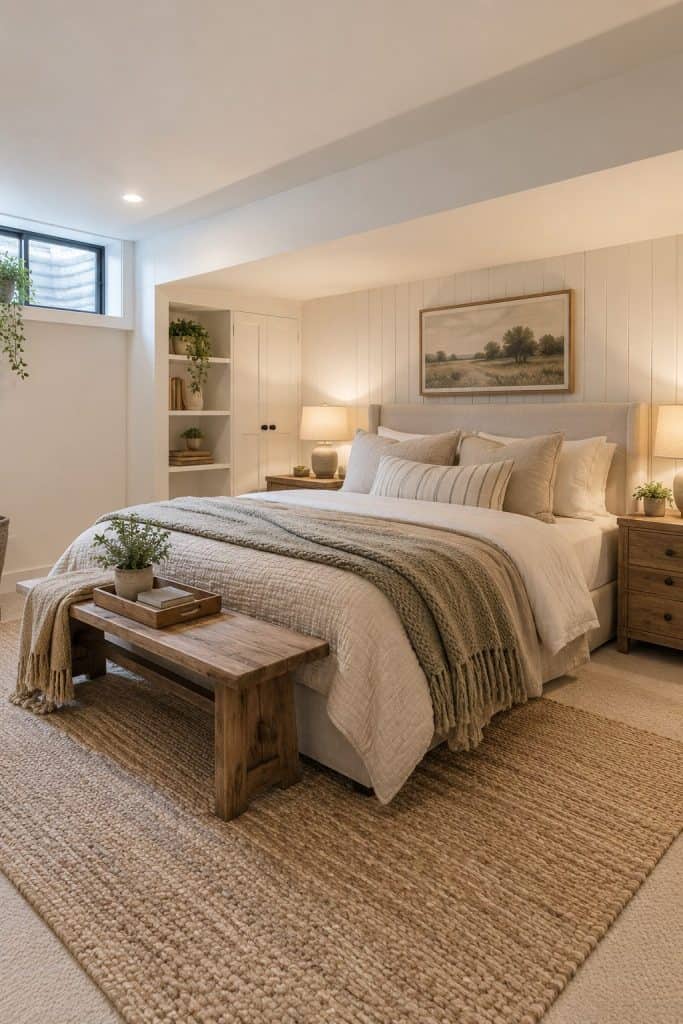
Basement bedrooms sometimes have less closet space than bedrooms upstairs.
That means furniture needs to work a little harder.
Look for ways to use storage vertically rather than filling every open wall with bulky furniture.
Tall dressers, wall shelves, built-ins, and storage beds can all help.
Built-ins are especially useful if your basement has recessed areas created by foundation walls or mechanical systems.
Instead of treating those awkward spaces as wasted space, turn them into shelves or cabinets.
Under-bed storage is another easy solution.
Storage beds can hold:
- extra bedding
- seasonal clothing
- shoes
- luggage
- sports gear
This can be especially helpful in a guest room where you want the room to feel uncluttered.
Make the Bedroom Work for the Person Using It
A basement bedroom used by a teenager or college-age child probably needs more than just a bed and dresser.
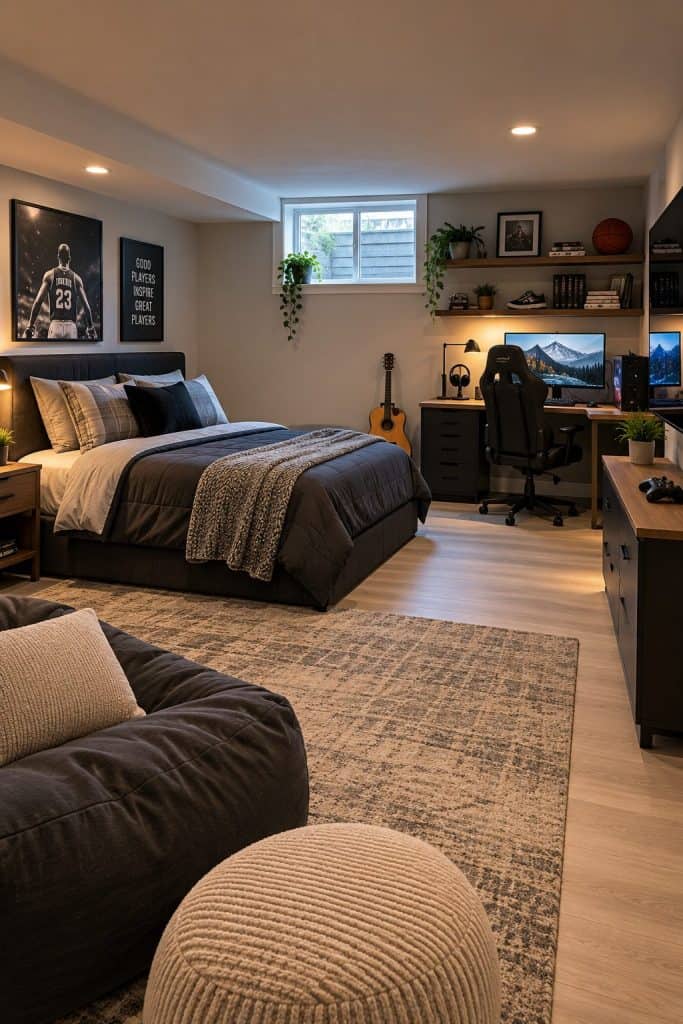
They may also need space to study, relax, play games, listen to music, or hang out with friends.
A desk, comfortable chair, shelving, and good lighting can turn the room into more of a private living space.
That can be especially nice for older kids living at home.
The room should also reflect the person using it.
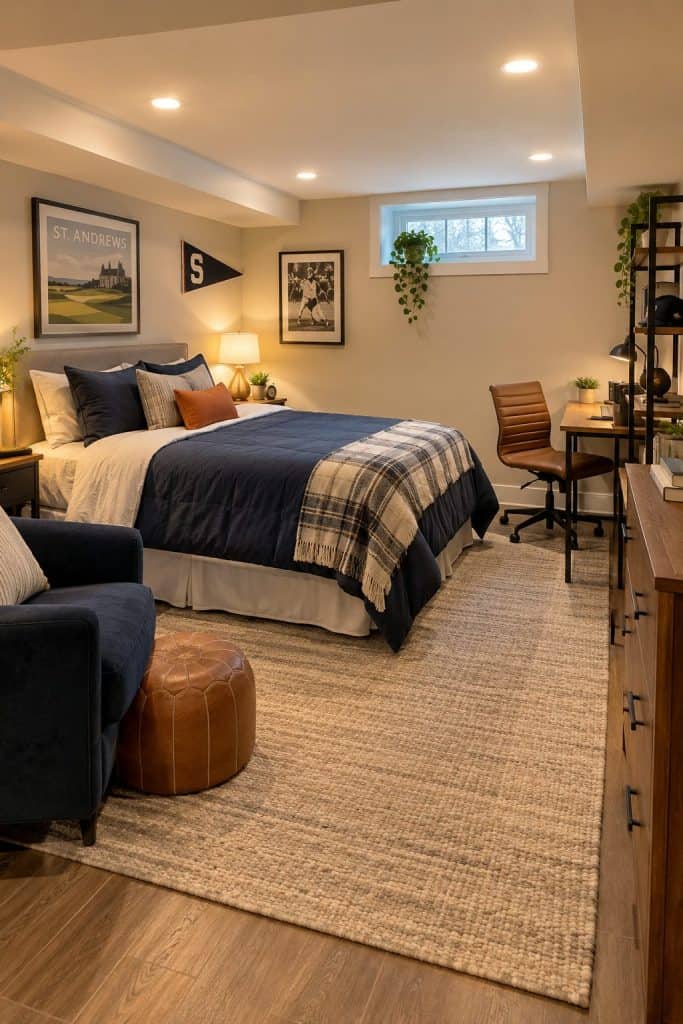
Sports memorabilia, books, artwork, photos, music gear, or favorite colors can make the room feel personal without making it look childish.
The same idea works for a young woman’s bedroom.
Soft colors, a vanity, layered bedding, pretty artwork, and meaningful accessories can make the room feel youthful while still sophisticated.
Add a Desk, Vanity or Small Sitting Area
If you have enough space, give the basement bedroom another purpose.
A desk can create a quiet place for homework or working from home.
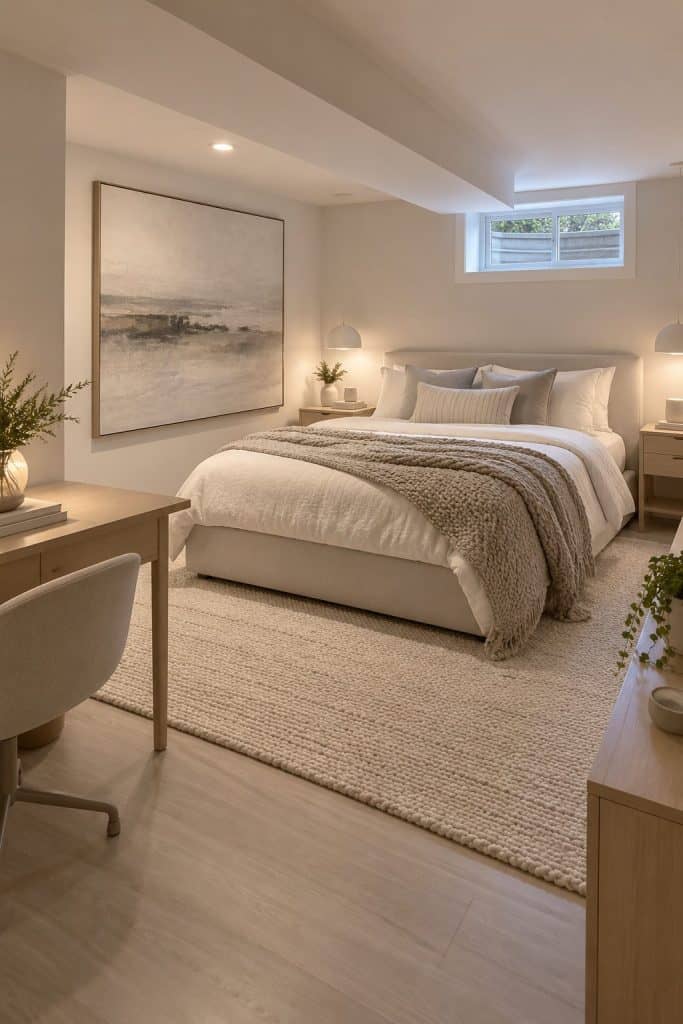
Place it near a window when possible so the person using it gets some natural light during the day.
Then add a good desk lamp for nighttime.
A vanity can work the same way.
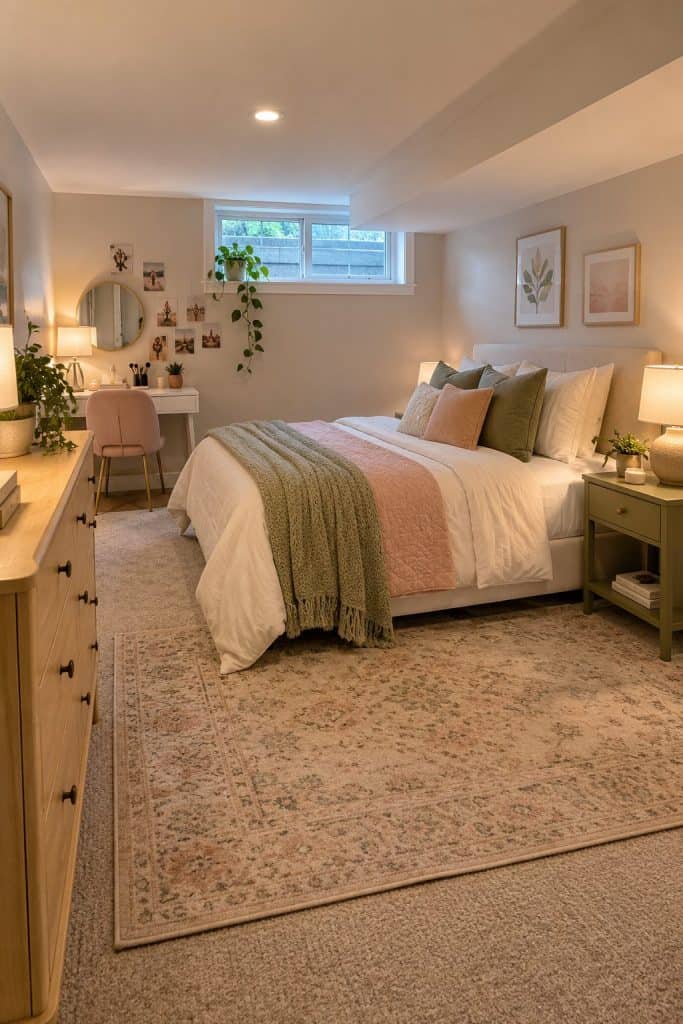
You don’t need a large piece of furniture.
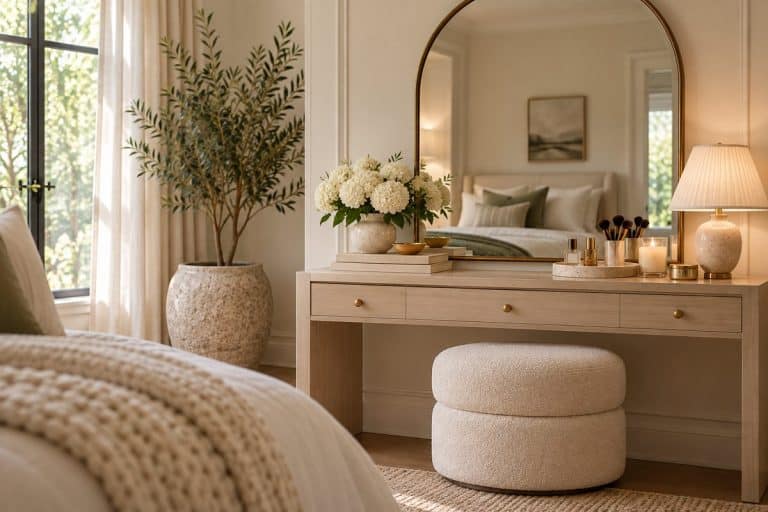
A narrow desk or console with a mirror and good lighting can easily function as both a vanity and workspace.
For more ideas, see my Bedroom Vanity Ideas.
If the room is large enough, you can also add a reading chair or small sitting area.
That extra seating can make a basement bedroom feel less like a spare room and more like a private retreat.
Try a Daybed, Trundle or Twin Beds in a Smaller Room
Not every basement bedroom needs a queen-size bed.
For a small basement guest room, a daybed or trundle can be incredibly practical.
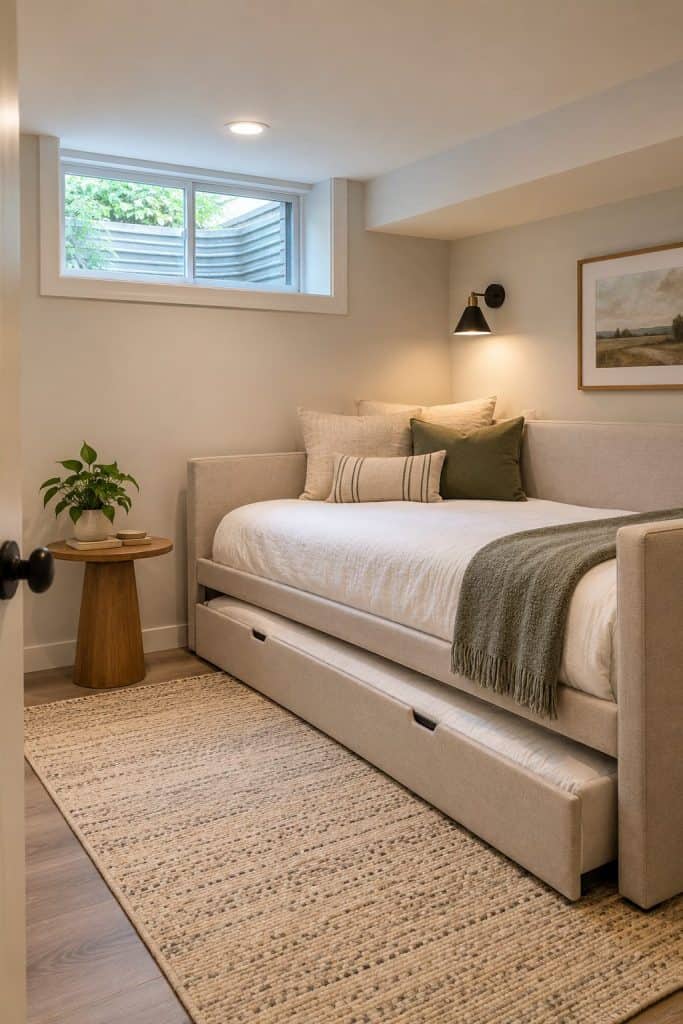
During the day, it can function more like a sofa.
At night, it provides sleeping space without permanently filling the room with a large bed.
Two twin beds are another smart choice for a guest bedroom.
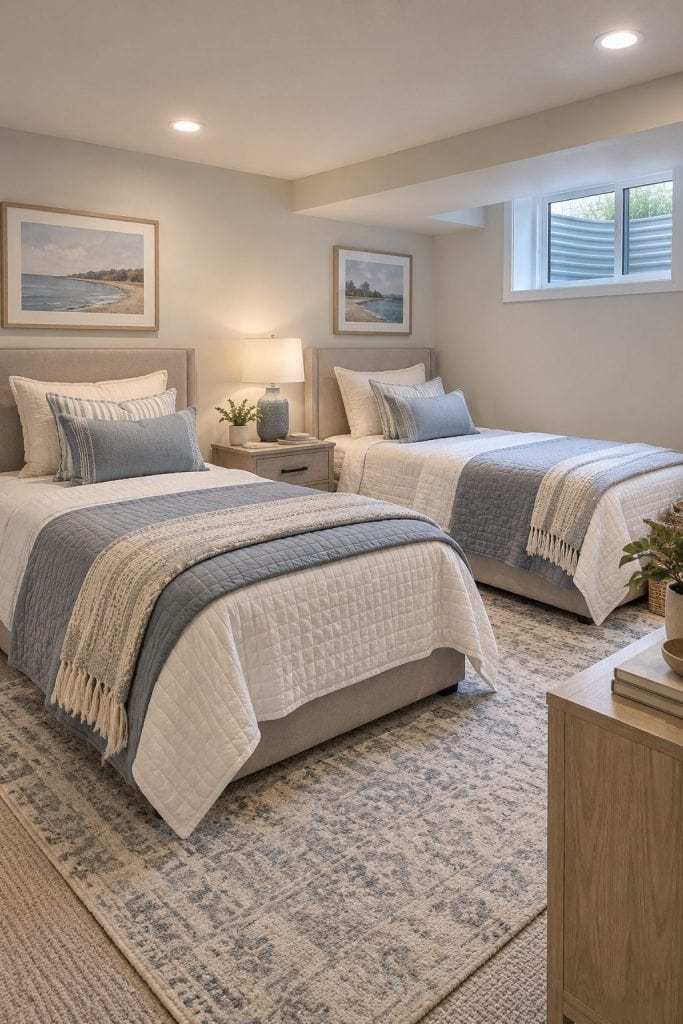
Twin beds work well for grandchildren, siblings, friends, sleepovers, or adult children coming home to visit.
They also give you more flexibility than one large bed.
Think About Soundproofing and Privacy
This is one of those basement bedroom details that people sometimes don’t think about until the room is already finished.
Basements can be noisy.
You might hear:
- footsteps from the floor above
- plumbing
- furnaces or HVAC equipment
- televisions
- laundry machines
- people using other basement rooms
If you’re renovating from scratch, consider adding insulation between the basement ceiling and the floor above.
Rugs, upholstered furniture, curtains, and other soft surfaces also help absorb sound.
A solid bedroom door can make a noticeable difference too.
If you’re working with a tight basement hallway, a sliding door may sometimes make more sense than a traditional swinging door.
Before installing one, take a look at our Basement Barn Doors – What You Need to Know.
Don’t Forget About Mechanical Access
Basements often contain things you don’t normally have to design around in upstairs bedrooms.
You may have:
- electrical panels
- water shutoffs
- plumbing access
- sump pumps
- HVAC equipment
- cleanouts
You can make these areas look better, but don’t permanently block something that needs to remain accessible.
If you have an electrical panel in a visible location, I have several ideas in How To Hide An Electrical Panel That Looks Good.
The goal is to make the room attractive while still allowing your home’s systems to function properly.
Make a Basement Guest Bedroom Feel Thoughtful
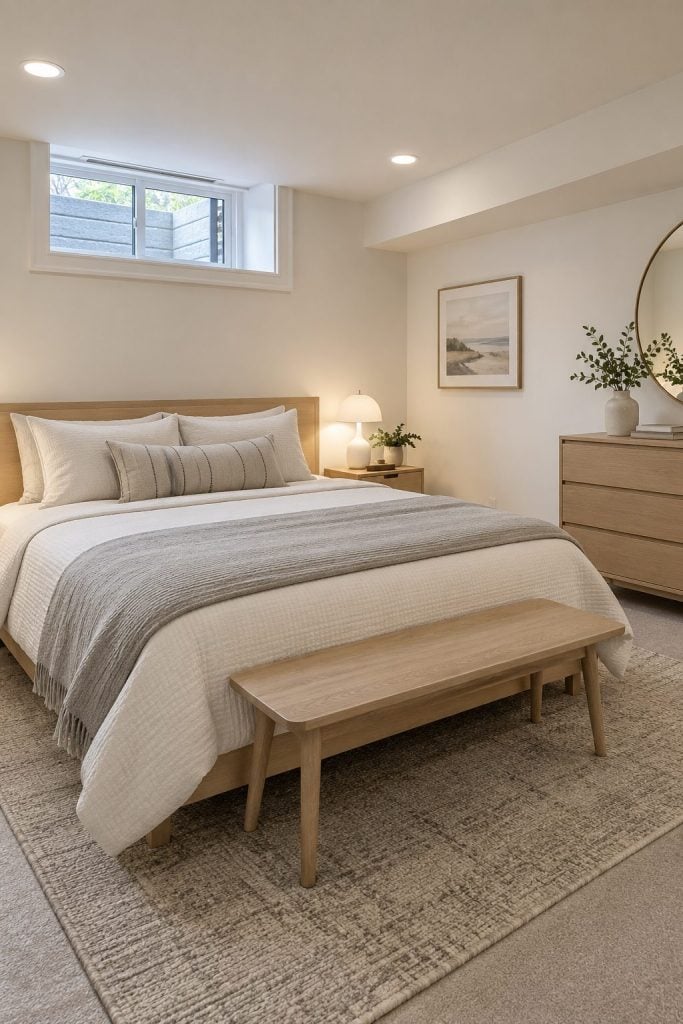
If the basement bedroom is mainly for guests, a few little details can make a huge difference.
Give guests somewhere to:
- charge their phone
- place a suitcase
- hang clothing
- sit while putting on shoes
- set down a drink
- read in bed
A bench at the end of the bed is one of my favorite additions to a guest room.
It gives visitors somewhere to place luggage and also makes the room feel more finished.
Keep an extra blanket nearby too.
Remember, basements often run cooler than the rest of the house, and guests may not be used to the temperature.
You can find even more ideas in my Guest Bedroom Ideas and Guest Bedroom Essentials.
The Little Details Make the Room Feel Finished
Sometimes it is not the big decorating decisions that make a basement bedroom feel comfortable.
It is the little things.
Think about whether someone can easily reach an outlet from bed.
Make sure there is a lamp that can be turned off without getting up.
Add a mirror.
Leave a little empty drawer or closet space for guests.
Put a basket somewhere for extra blankets.
Use a plant or two near the window if the room gets enough light.
And if a real plant will not survive in the space, there is absolutely nothing wrong with decorating with faux plants.
The goal is to make the room feel welcoming and connected to the rest of the house.
More Basement Ideas You’ll Love
If you’re working on more than just the bedroom, these basement projects and ideas can help you finish the rest of the space:
- 14 Basement Ceiling Ideas
- Drop Ceiling Alternatives
- 10 Ways To Make Your Basement Family Room More Cozy & Functional
- 30 Basement Bar Ideas You’ll Absolutely Love
Final Thoughts on Creating a Basement Bedroom
It is easy to focus on paint colors, furniture, rugs, and bedding when you’re designing a basement bedroom.
But the rooms that really work are the ones that solve the practical problems first.
Make sure the room is dry.
Make sure there is enough light.
Think about sound.
Plan the furniture around windows and ceiling changes.
Make sure there is enough storage.
And most importantly, make sure the room is comfortable.
For us, adding a wall heater to our basement bedroom was one of the smartest decisions we made.
It isn’t the feature that gets noticed first, but it is the feature that makes the room more comfortable every single day.
Once you have those basics figured out, the basement stops feeling like the leftover space downstairs.
It starts feeling like a real bedroom.