How to Brighten Up a Dark Room (Without Major Renovations)
A dark room can feel heavy, cramped, and hard to decorate—but it doesn’t have to stay that way.
With a few smart tweaks, you can make even the dimmest space feel lighter, airier, and more inviting. These ideas work for renters and homeowners alike.
Below are simple, high-impact ways to brighten up a dark room without tearing down walls or replacing windows.
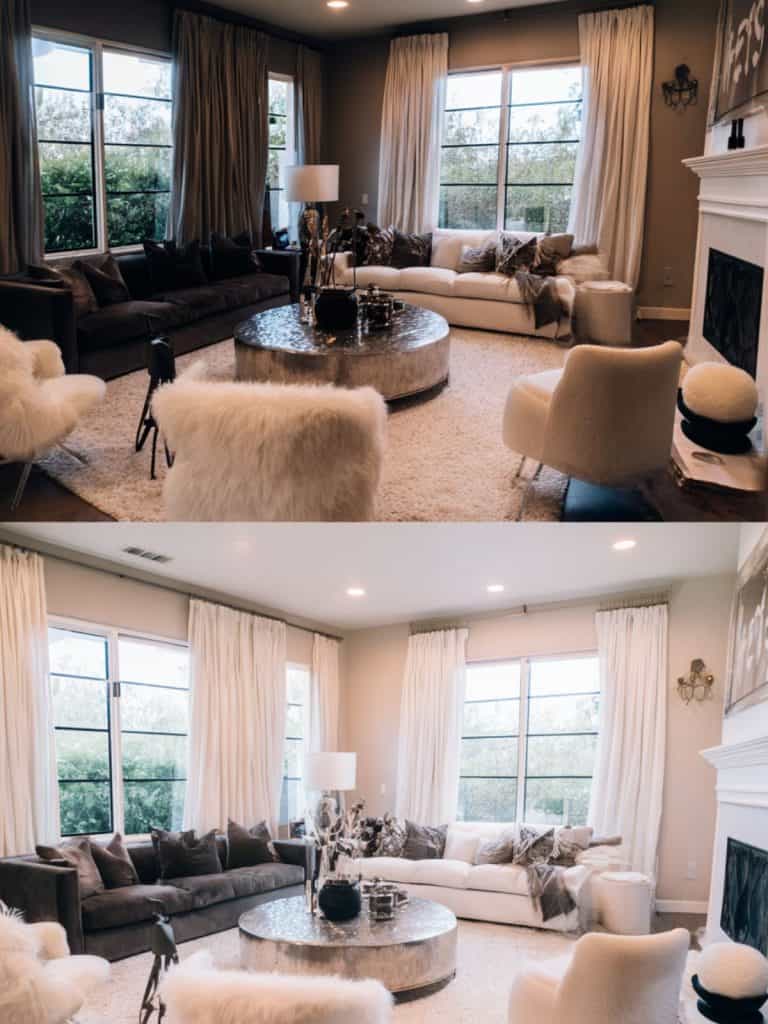
Quick Wins That Make an Immediate Difference
- Swap heavy curtains for light-filtering panels
- Add one oversized mirror across from a light source
- Replace warm bulbs with bright soft-white LEDs
- Paint trim and ceilings a lighter color
- Layer lighting instead of relying on one fixture
- Choose furniture with legs to allow light to flow
- Style with lighter textiles and decor
Use Light Colors Strategically
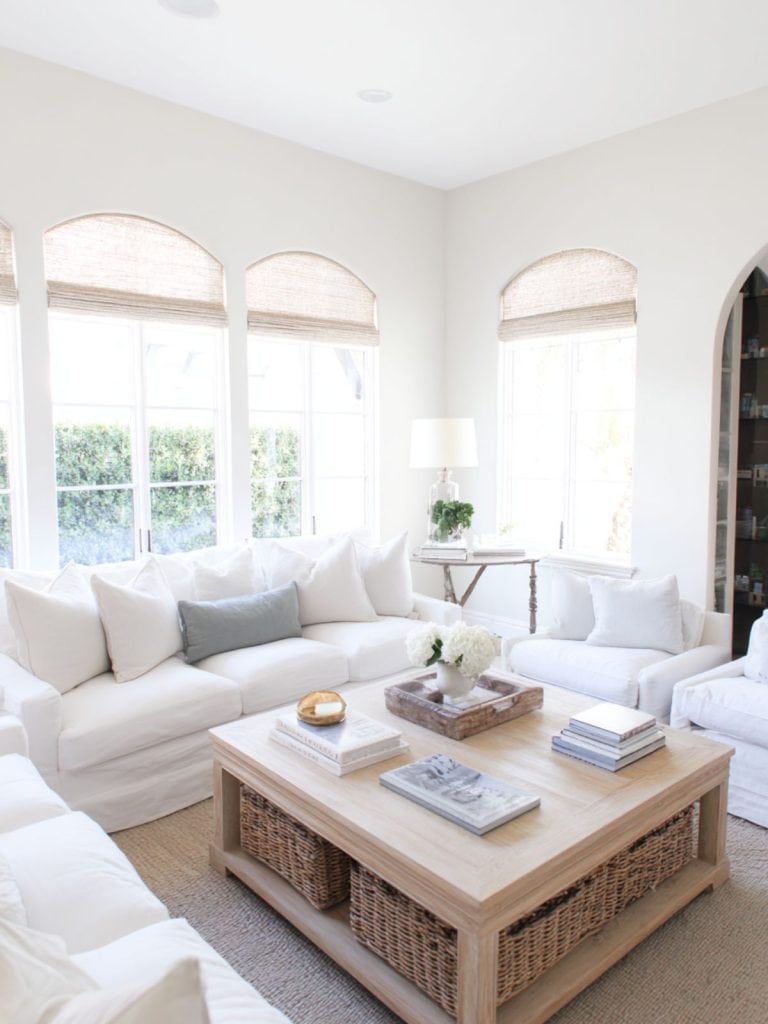
Light colors don’t just brighten a room—they reflect light around it.
Stick to soft whites, warm creams, pale greiges, and light taupes. These tones bounce light instead of absorbing it like darker colors do.
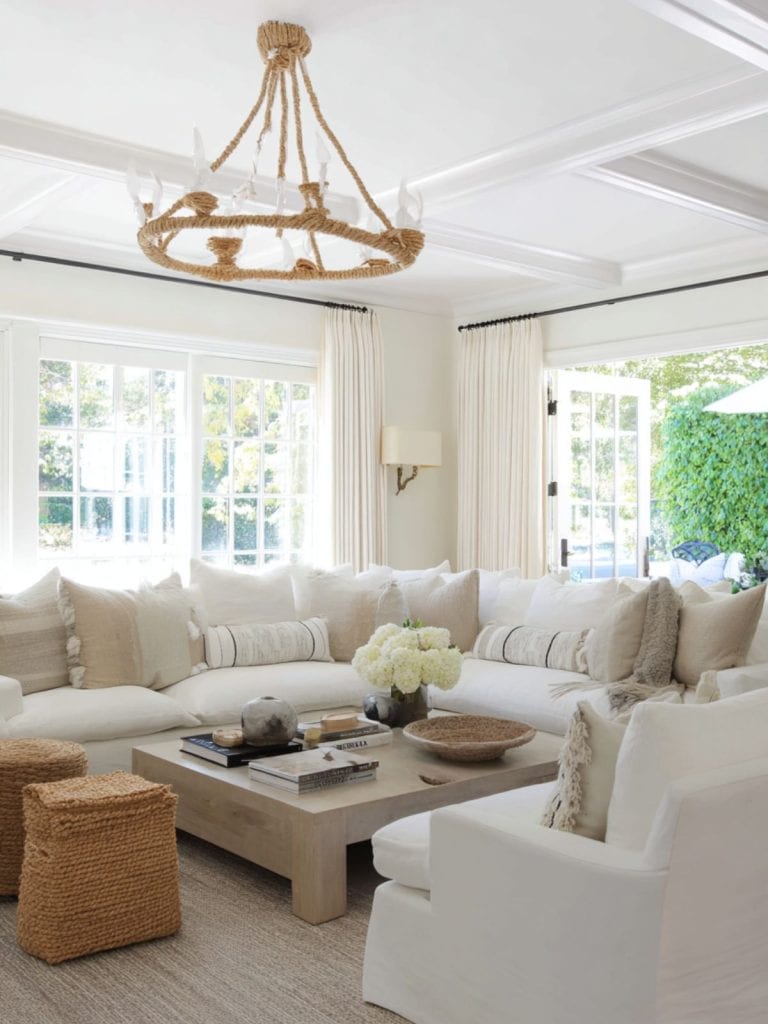
Why it works
- Reflects both natural and artificial light
- Makes walls visually recede
- Creates an open, airy feel
Pro tip
If repainting isn’t an option, use light-colored art, pillows, and throws to get a similar effect.
Add Mirrors (But Place Them Right)
Mirrors are one of the fastest ways to brighten a dark space.
Hang them across from windows, lamps, or doorways to bounce light around the room and visually expand the space.
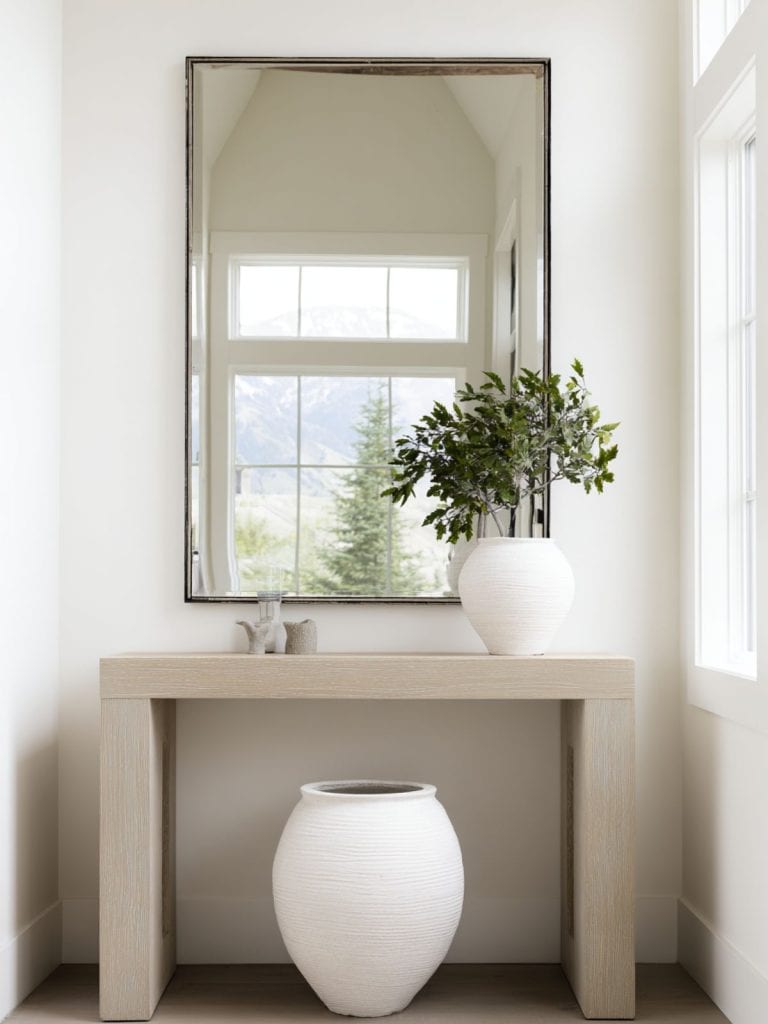
Best placements
- Opposite a window
- Behind table lamps
- At the end of a dark hallway
Avoid
- Tiny mirrors that don’t reflect much light
- Placing mirrors where they reflect clutter or blank walls
Layer Your Lighting (This Is Huge)
One overhead light isn’t enough—especially in a dark room.
Layer three types of lighting to eliminate shadows and create a warm, balanced glow.
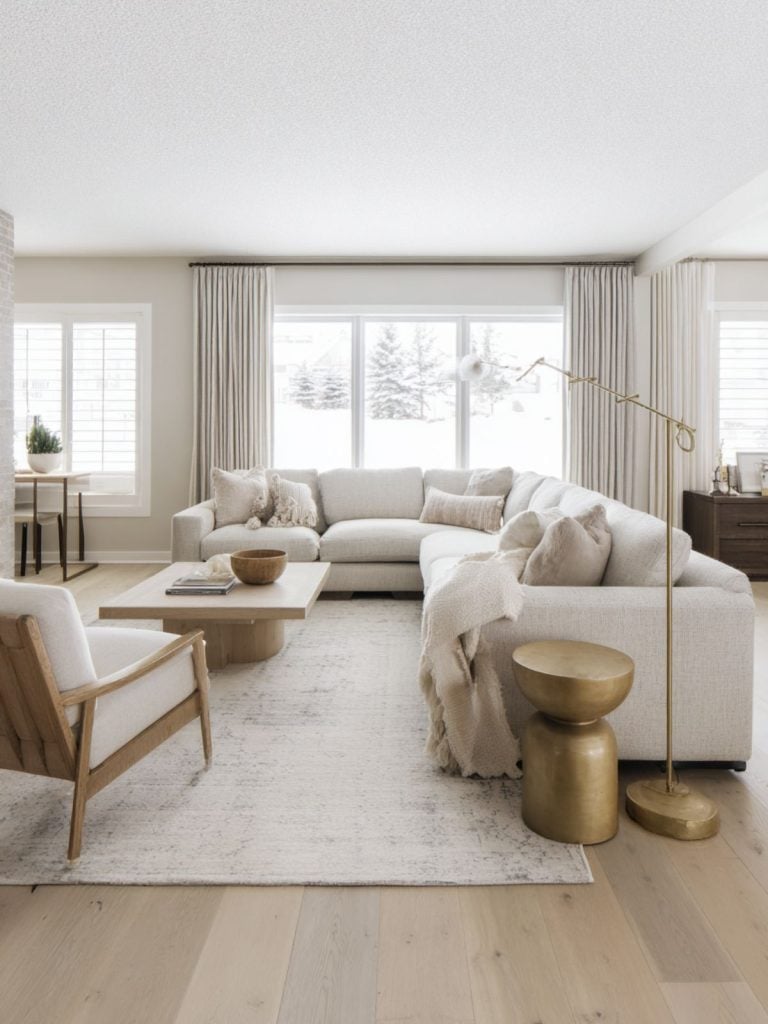
Lighting layers
- Ambient: ceiling lights or flush mounts
- Task: table lamps, reading lamps
- Accent: sconces or picture lights
Pro tip
Use the same bulb temperature throughout the room so the light feels consistent and intentional.
Choose Light-Reflecting Decor
Decor finishes matter more than you think.
Glossy, glass, metallic, and ceramic pieces help bounce light instead of absorbing it.
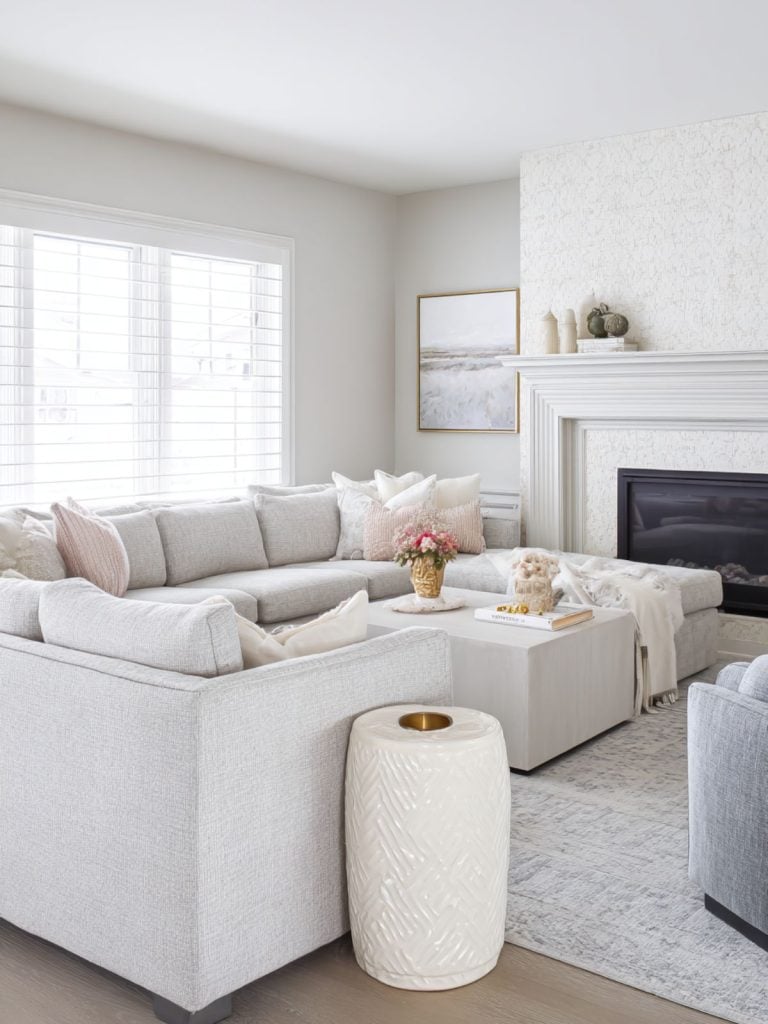
Great options
- Glass-top coffee or side tables
- Acrylic or lucite accents
- Brass or champagne gold finishes
Keep Windows Bare (or Lightly Dressed)
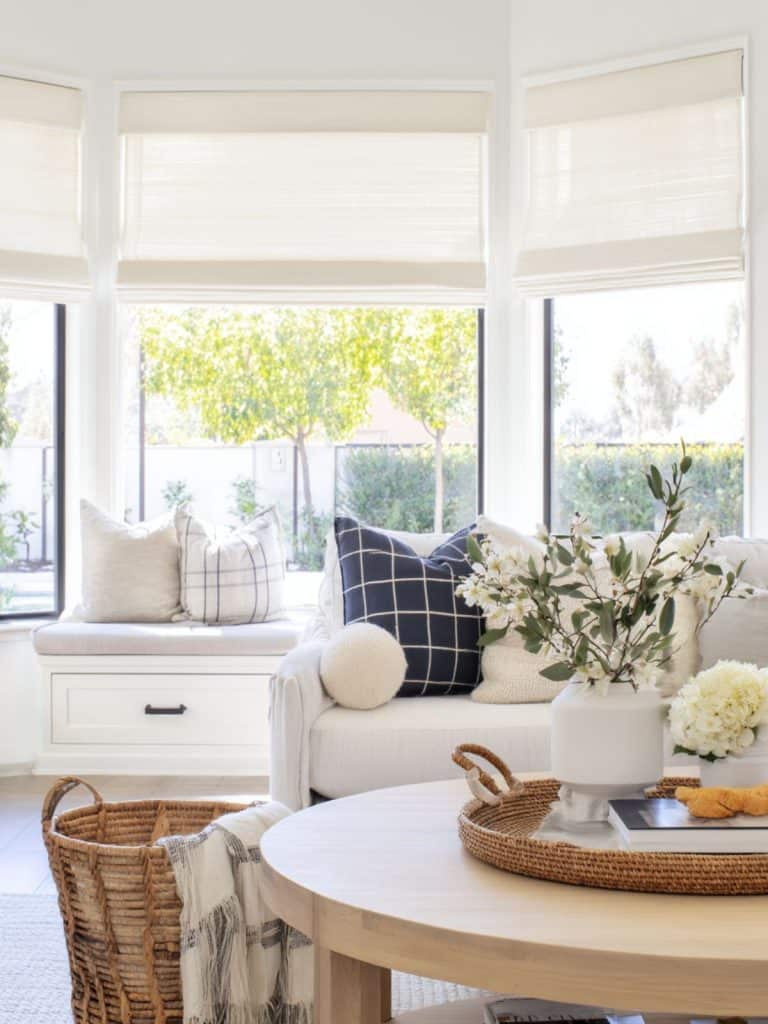
Another way to brighten a dark room is to keep the curtains light. Heavy curtains block precious light—even when they’re open.
Switch to sheer panels, woven shades, or simple Roman shades to let in as much daylight as possible.
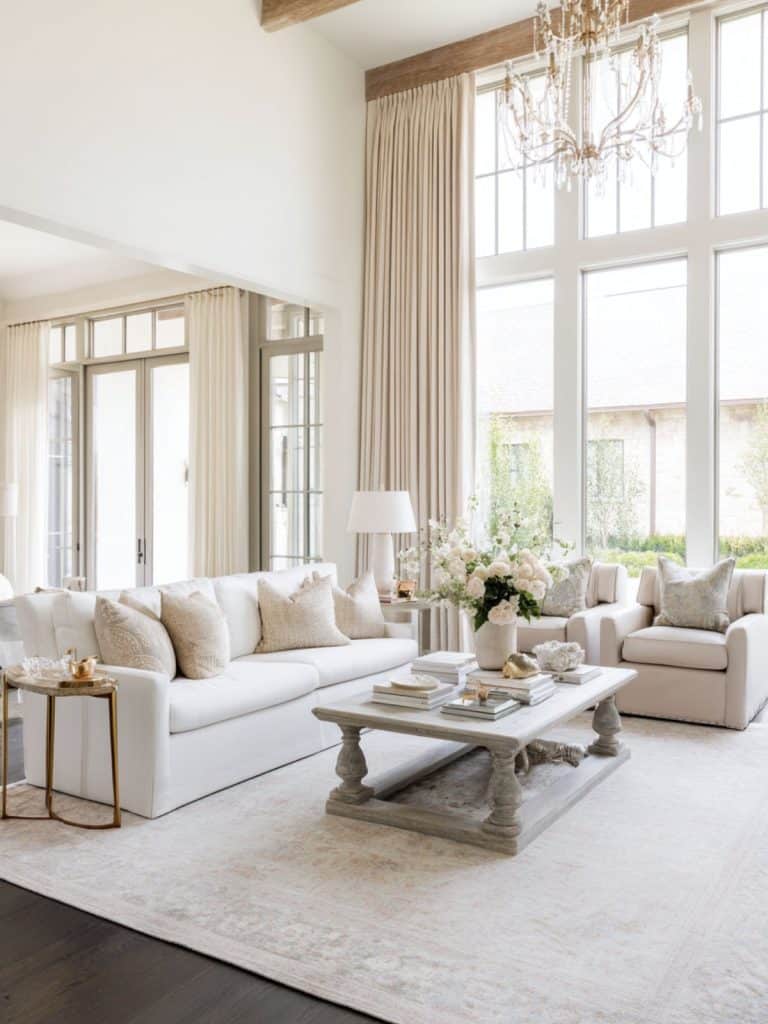
Best options
- White or ivory sheers
- Natural woven shades
- Top-down bottom-up blinds
Use Rugs to Lift the Space
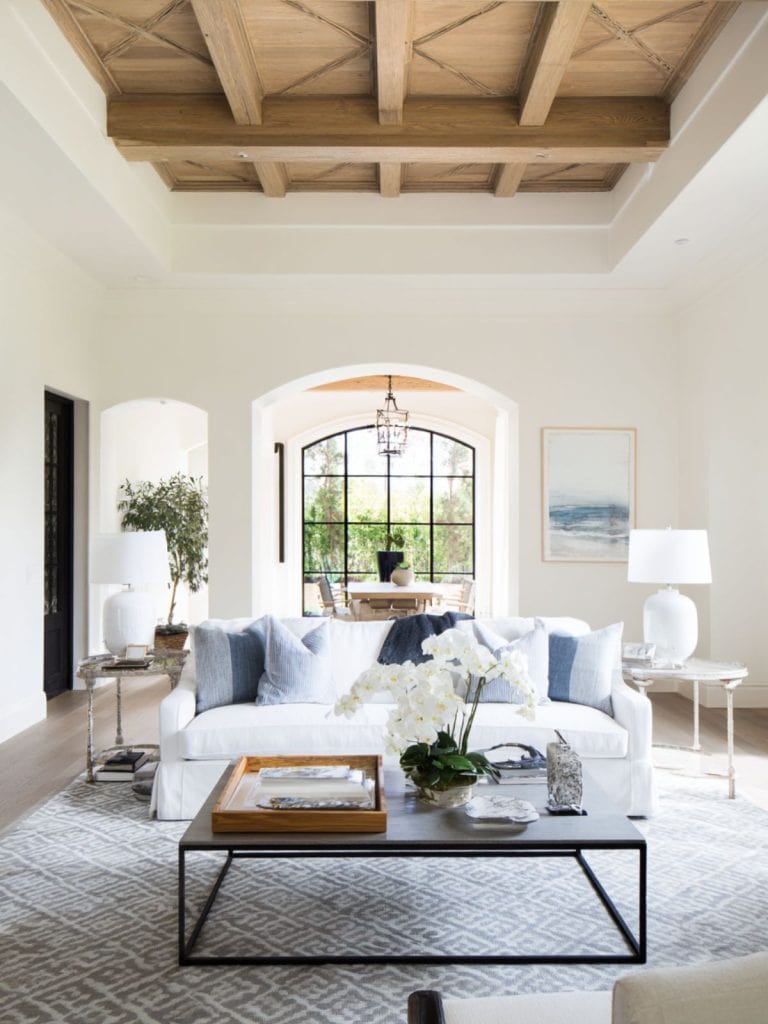
Dark floors can drag the whole room down visually.
A light area rug instantly lifts the space and helps reflect light upward.
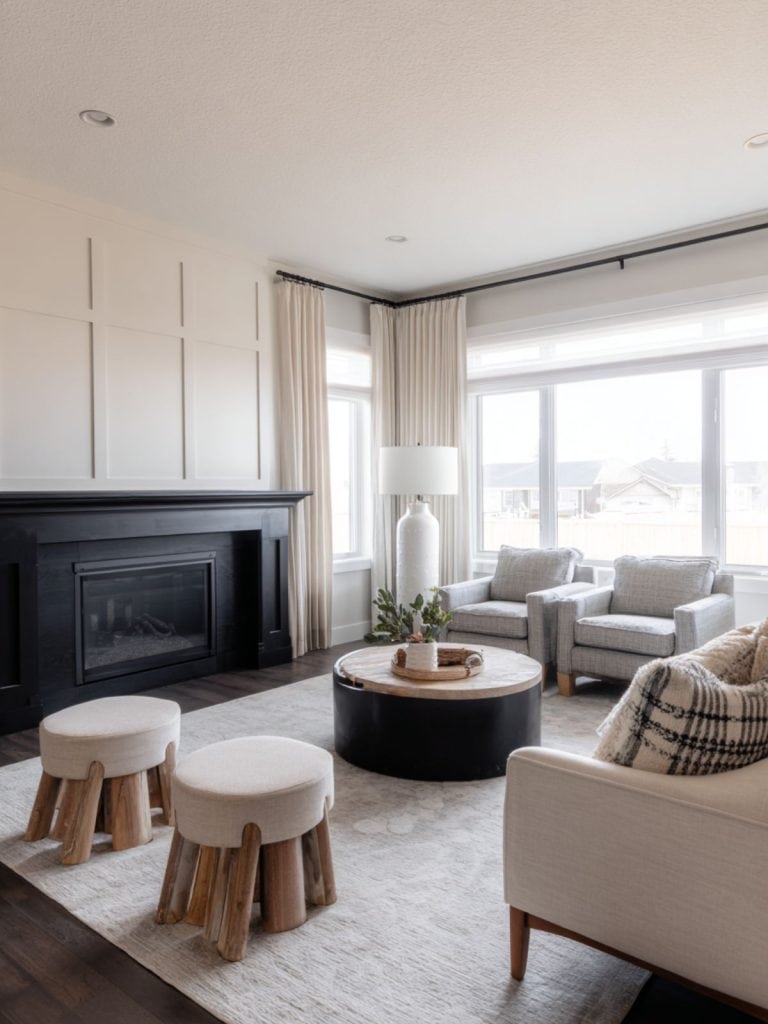
Look for
- Cream, beige, or soft gray tones
- Subtle patterns instead of busy designs
- Low-pile rugs for better light bounce
Do This, Not That (Before You Add More Decor)
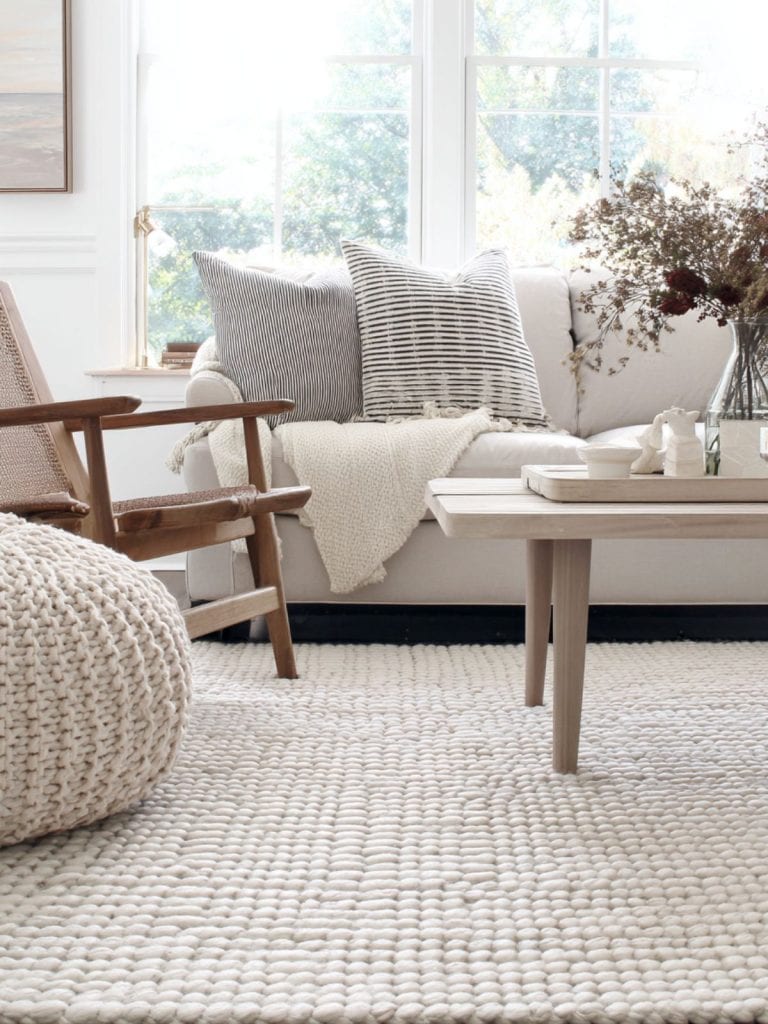
Do
- Add multiple light sources
- Use light wall art and frames
- Choose furniture with visible legs
Don’t
- Paint everything dark
- Rely on one ceiling light
- Overcrowd the room with decor
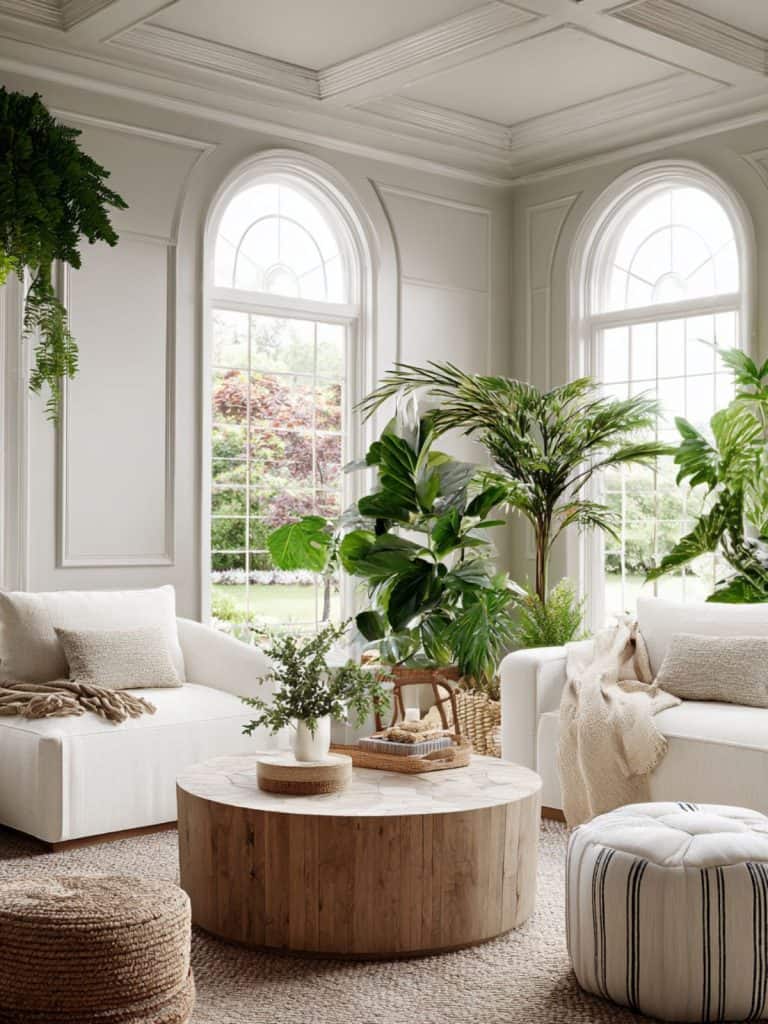
Bring in Natural Elements
Natural textures keep a bright room from feeling flat or sterile.
Light wood, linen, and greenery add warmth without darkening the space.
Best picks
- Light oak or maple furniture
- Linen or cotton fabrics
- Medium-sized plants placed near light
Common Mistakes (That Make It Look Off)
- Using only warm yellow bulbs
- Hanging curtains too low
- Choosing dark, bulky furniture
- Ignoring the ceiling color
- Skipping lamps entirely
- Overusing matte black accents
- Blocking windows with furniture
- Overloading shelves with dark decor
- Using mirrors that are too small
- Keeping outdated light fixtures
Quick Checklist Before You Copy This Look
- Are your bulbs bright enough?
- Do you have at least three light sources?
- Is your largest mirror facing a light source?
- Are your window treatments light and airy?
- Is the ceiling lighter than the walls?
- Does the furniture feel visually light?
- Are dark floors balanced with a rug?
FAQs
How can I brighten a room with no windows?
Use layered lighting, mirrors, and light paint colors to simulate daylight.
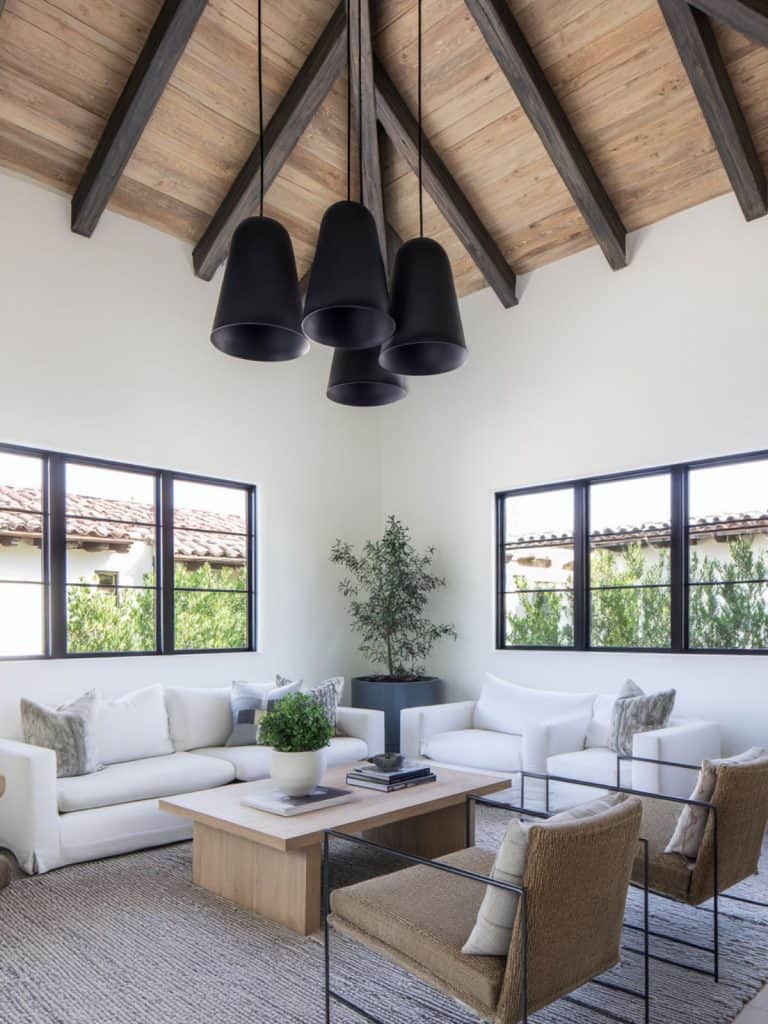
Do white walls always work best?
Not always. Soft neutrals often feel warmer while still reflecting plenty of light.
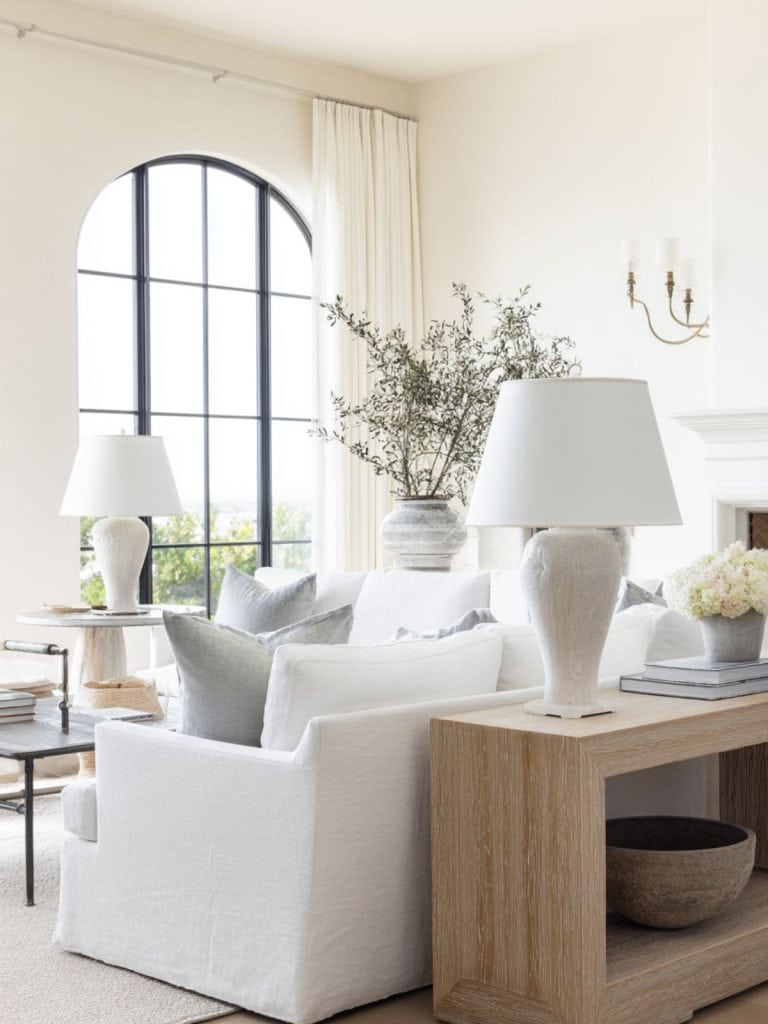
What bulb color is best for dark rooms?
Soft white bulbs in the 3000–3500K range keep rooms bright without feeling harsh.
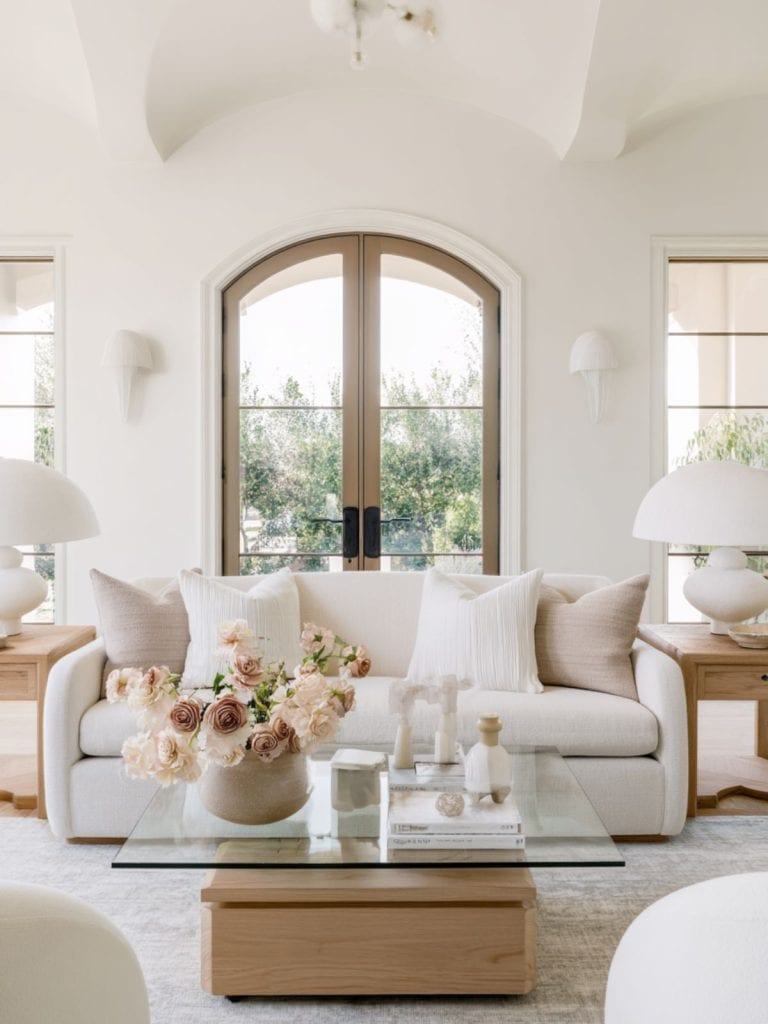
Can dark furniture still work in a dark room?
Yes, as long as it’s balanced with light walls, rugs, and layered lighting.
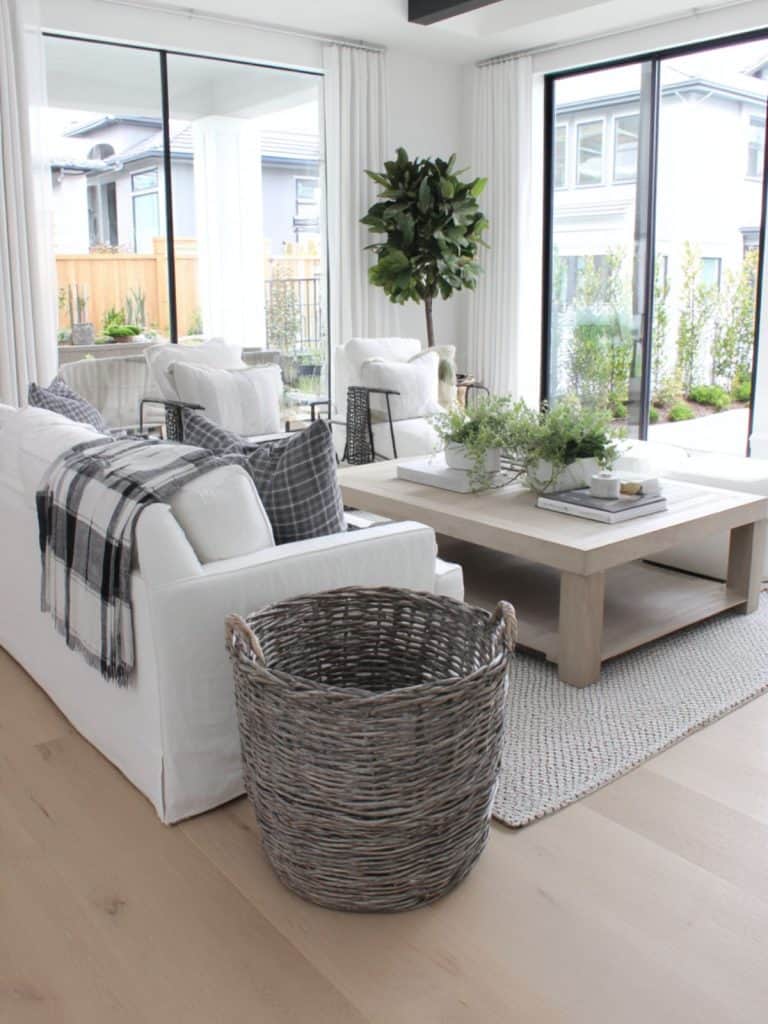
Paint Colors To Brighten a Dark Room
If a room feels dark, paint color is the fastest way to shift the whole vibe. The goal isn’t always “bright white”—it’s choosing a shade that reflects light well and doesn’t turn muddy in low light.
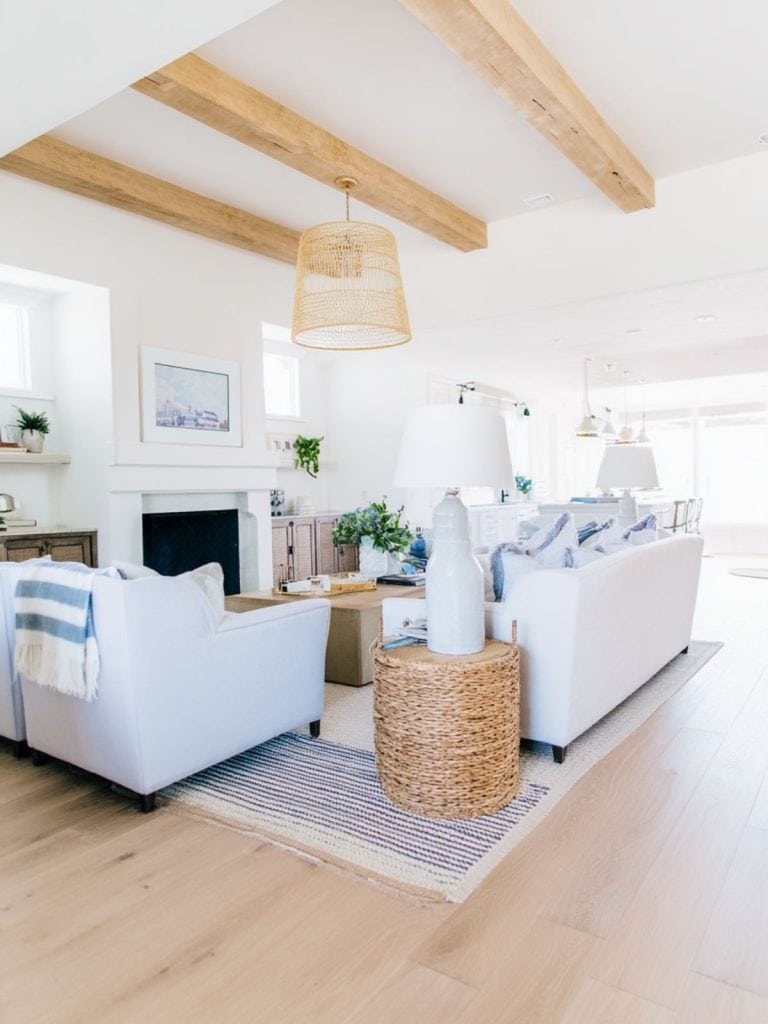
1) Warm whites (best for north-facing or shadowy rooms)
Warm whites keep things bright without looking icy or gray
Good options to look at:
- creamy white
- soft ivory
- warm off-white
- white with a hint of beige
2) Light greige (brightens without feeling stark)
A pale greige is great if you want a neutral that still bounces light, but feels a little more forgiving than white
Look for:
- light greige
- warm gray-beige blends
- neutrals with warm undertones (not cool blue-gray)
3) Soft warm beige and sand tones (cozy + brighter)
If your room already has warm floors or wood trim, light beige shades can make the space feel brighter and more inviting
Try:
- light sand
- oatmeal
- pale tan
- warm linen tones
4) Pale blush or warm taupe (adds warmth and glow)
This is a sneaky trick for rooms that feel flat—soft blush or warm taupe can reflect light beautifully and make the space feel “alive” without screaming pink
Look for:
- muted blush
- pink-beige
- warm taupe
5) Light sage or soft olive (fresh without going dark)
Yes, green can work in a dark room—as long as it’s a lighter, muted green with warmth
Go for:
- soft sage
- dusty light olive
- pale eucalyptus tones
Quick tips so your paint doesn’t look darker than expected
- Avoid cool grays in low-light rooms—they can read gloomy or blue
- Use eggshell or satin on walls to reflect a little more light (flat can absorb it)
- Always test paint in morning + afternoon + night because the undertone changes fast in dark spaces
Final Thoughts
Brightening up a dark room is all about reflection, layering, and balance—not expensive renovations. Start with lighting and mirrors, then build from there.
If this helped, save it for later or keep browsing for more easy home upgrades that make a big impact.